


.png)
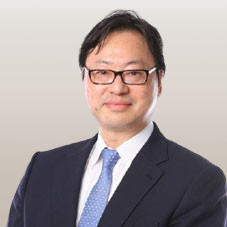
Dr Makoto Sawaguchi
Chief Executive Officer
Japan's pharmaceutical and Contract Research Organization (CRO) sectors are globally prominent, with pharma ranking third worldwide, producing around $63.95 billion. Japan’s CRO industry is forecasted to reach $7.36 billion by 2030, growing at 9.8 percent CAGR. Yet, Japanese industry grapples with several critical challenges, such as drug lag and loss. These challenges have squeezed profits and slowed innovation. Moreover, limited globalization and relatively weak industry-academia collaboration hinder Japan’s ability to fully engage in cutting-edge research and international clinical trials. It's astonishing how Dr Makoto Sawaguchi, CEO at Ppro-Japan, has been tackling these challenges head-on, thanks to his more than four decades of rich experience in the pharmaceutical and CRO industries. His track record of improving work environments and operations of organizations by resolving issues promptly before they become critical has been a boon to the industry at large. Leading the CRO industry into the future, Makoto has been involved in addressing several operational challenges in Japan. After leaving Medpace in August, he has already taken up a new challenge with Ppro-Japan. We have Makoto with us for an exclusive interview.
What are the latest tech innovations speeding up clinical trials in Japan?
In recent years, particularly during the COVID-19 pandemic, Japan has witnessed small but crucial progress in clinical trials through digital biomarkers such as wearable devices. These innovations have made it possible for patients in remote locations previously excluded due to geographic or logistical barriers to actively participate, a vital step forward for both patient inclusion and trial efficiency. From both the patient and decentralized clinical trial (DCT) perspectives, digital biomarkers represent a powerful evolution. Likewise, use of real-world evidence (RWE) is now being applied to streamline trials and accelerate drug approvals by drastically downsizing the study scale.
However, hurdles for digital biomarkers still remain, including privacy concerns, data standardization, and divergent regulatory frameworks. Nonetheless, the future of clinical trials is advancing in a direction full of potential and meaningful transformation.
Talent is the engine behind every successful CRO
What are the latest challenges facing the clinical trials industry?
Not only the digital biomarkers mentioned above, but the recent evolution of Digital Transformation (DX) has been tremendous, and DX has already begun to contribute greatly to the efficiency of clinical trials. DX has a wide range of impacts on clinical trials, including the efficiency of subject recruitment and selection, electronic consent, decentralized clinical trials, ePRO, and real-time data management. On the other hand, new challenges when using DX in clinical trials include system compatibility and stability, consistency with GCP and personal information protection, consideration for the elderly and those with low IT literacy, the development of alternative means of Source Data Verification, and procedure manuals, education, and QA support when introducing new technologies. However, there is no doubt that DX can be the key to achieving both quality and efficiency in clinical trials.
What do you consider the most significant achievements in your career?
Over my four decades in the healthcare industry, I’ve navigated complex challenges with strategic clarity and a deep understanding of team dynamics. One major achievement involved responding to a sudden directive to eliminate overtime payments in Japan, a change that risked staff demotivation and attrition. I led a communication-driven strategy, guiding line managers to shift messaging from “stop working overtime” to “support teammates with heavy workloads”. Weekly feedback sessions ensured consistent messaging, resulting in a 92 percent overtime reduction and $420,000 in savings within two months without compromising service quality or morale.
In another initiative, I transformed team performance by hiring experienced, cooperative CRAs from pharmaceutical companies and rival CROs. Rather than urging low performers to leave, I elevated team standards, leading to voluntary attrition and a 95 percent replacement in staffing within two years.
Following a local CRO acquisition, I enabled early cultural integration by forming balanced mixed-project teams and promoting respected line managers from the acquired firm. The key was selecting individuals recognized for both excellence and a cooperative mindset, fostering mutual respect and synergy across legacy teams.
These achievements reflect a leadership style rooted in strategic foresight, emotional intelligence, and the ability to inspire lasting organizational change.
Tell us about your plans for the next few years.
With my long-standing clear vision in this industry, I strive to build a best-in-class team, cultivate a worldclass organization, and shape a top-tier company within the CRO and pharmaceutical landscape. Central to achieving this is identifying and nurturing talented individuals who work with collaboration at heart. In CROs, where people are the sales product and treasure, attracting cooperative, skilled professionals is not just important, it’s essential. Talent is the engine behind every successful CRO.
Looking ahead, my greatest goal is to develop a capable successor who shares my aspirations and values. I am deeply committed to passing on this legacy and ensuring the future is in good hands. That, to me, is the ultimate destination.
Fortunately, I'm happy to share that I`ve been appointed CEO at the local CRO, Ppro-Japan, since September 2025. I've just started striving to achieve a new goal: building a best-in-class, high-performing and healthy company.
What would be your advice for aspiring leaders in the clinical trials industry?
Clinical research demands precision and ethical leadership. Even small errors can compromise study outcomes and delay treatment access. Source data verification, though repetitive, is vital for ensuring trial accuracy. Leaders must instill pride, commitment, and a deep understanding of how each task impacts patient safety and lives.
Dr Makoto Sawaguchi, PHD (Medical Science) & MBA, Chief Executive Officer, PPRO-Japan
Makoto brings over four decades of business experience in the pharmaceutical and CRO industries, including 17 years in executive leadership and people management across global and Japanese CROs. He has embarked on a new chapter as CEO of Ppro-Japan, a local CRO, where he is now leading the company into its next phase of growth.
•Hobby: Driving, traveling, ukulele collection, and playing guitar
•Favorite Travel Destination: Hawaii, Europe, and Japan
•Favorite Cuisine: French, Italian, and Japanese
•Favorite Books: Business Books by Peter F Drucker