


.png)
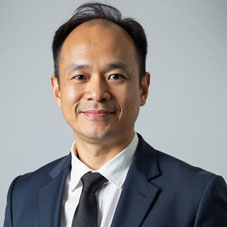
Kai-Wen Chung
Founder
In an era where data informs decisions, organizations face the challenge of transforming fragmented information into actionable insights. Digital platforms and AI-powered innovations will transform how products and payments flow across borders, resulting in faster, smarter, and more resilient supply chains.
At the helm of this transformation is Kai-Wen Chung (Kevin Chung), Founder of Digital Veda, which has built a trusted, self-updating knowledge graph (SEEO) that reveals everything from automation rate to time-to-carriers integrated, annual payment volume and much more, enabling teams to launch reliable, explainable AI apps quickly and turn insights into revenue.
Kevin has over 26 years of experience driving and facilitating technological change across various industries. Previously, at BlueX, he served as the CTO, where he was responsible for digitalizing legacy booking systems for ocean carriers and developing AI-based workflows that reduced approval times and mitigated risk within operations.
As a key contributor and architect in the open-source initiatives for the electronic Bill of Lading (eBL), he helped develop a trusted, self-updating knowledge graph that dramatically reduces fraud risk and cuts cycle times by enabling instant, secure, and paperless transfer of cargo ownership across the global supply chain.
He began his career by building large-scale internet advertising platforms in China and developing distributed systems that can manage over 1 million requests per second with a focus on stability and reliability.
Kevin now brings this technical expertise to Digital Veda, utilizing it to help companies leverage AI effectively while collaborating with teams to create solutions that amplify human capabilities and build operational resilience. We are delighted to engage in an exclusive conversation with Kevin, who walks us through his journey, leadership approach, and more.
What strategies have you adopted to grow AI-driven FinTech infrastructure, including document comprehension and autonomous workflows?
Initially, we utilized traditional OCR technology to process documents; however, it proved unstable and labor-intensive due to the need for extensive data labeling. We shifted to multi-modal large language models, which significantly reduced manual effort by automating document classification, key information extraction, and cross-document verification. This approach lowered error rates from 10–15 percent to 1–2 percent and sped up processes like customer document collection from days to hours.
Additionally, the AI handles fuzzy matching across different document formats and units, so it is accurate even without much human training, fundamentally changing our underwriting and document processing processes.
Choose the option that best serves your goals
What guidelines or methodologies do you follow as a tech leader?
I believe in treating all team members as responsible adults, fostering trust and encouraging initiative through mechanisms like blameless post-mortems and weekly metrics reviews; mistakes are seen as learning opportunities, and decisions are made collaboratively based on data and consensus, with me acting as a guide who removes obstacles, provides resources, and supports team members to excel.
How do you stay updated on the latest industry trends and technologies?
My personal philosophy is to stay up to date by keeping a good base in core technologies and not chasing every new trend and buzzword that pops up. I read selectively and revisit developments after some time to better understand their impact.
I also participate in professional circles, both physical and virtual, with experts and alumni, where we share and filter the most valuable insights. This mix of solid basics, reading library and information sharing keeps me abreast of industry trends and technology.
What is the roadmap you envision for the next five years?
Our roadmap has two pillars: the first is to provide subscription services that create and sustain dynamic knowledge databases by capturing both structured and unstructured information, leveraging capabilities such as document layout understanding, entity extraction with cross-document linking, currency and unit normalization, and risk scoringresulting in a 90 percent reduction in error rates, a 75 percent increase in straight-through processing (STP), and a 50 percent decrease in turnaround time (TAT).
The second pillar offers consultancy and training services that empower internal teams to build AI solutions using these knowledge engines, thereby establishing human-AI synergies that enhance employee productivity and enable autonomous, AI-driven innovation.
What is the piece of advice that you would give to the upcoming leaders?
It is important that future leaders should not be afraid of AI and use it as a guide to enhance their potential rather than displace it. AI has its place in learning and challenging, but keep in mind the incomparable worth of human qualities, such as desire, individuality and judgment. Although AI can do most of the tasks, the ultimate decisions have to be made by you.
Kai-Wen Chung, Founder, Digi-Veda
Kevin is a seasoned technology leader with 26 years of experience in building large-scale platforms. He has spearheaded AI-driven innovations in global trade, from modernizing carrier systems to reimagining financing and digital documentation.
Hobbies: Swimming and jogging
Favorite Cuisine: Taiwanese
Favorite Book: Sapiens: A Brief History of Humankind By Yuval Noah Harari