


.png)
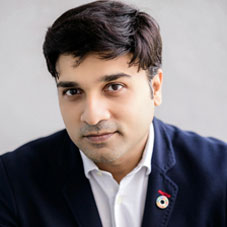
Kishore Ravuri
Director
The modern economy increasingly demands leaders who can bridge business imperatives with societal needs, creating enterprises that thrive not only in profits but also in purpose. As industries continue to evolve, the role of leadership is also transforming.
It is moving from a narrow focus on operational margins, cost optimisation and near-term profits t oward a broader narrative of efficiencies, equity, inclusion and long-term impact. At this important intersection of business, sustainability and leadership stands Kishore Ravuri.
A seasoned communications and sustainability practitioner, Kishore represents the ethos of purposeful leadership in Asia. With over two decades of experience, he has embraced multiple roles as advisor, entrepreneur, mentor and advocate, each one guided by his deep passion for shaping sustainable enterprises that are both equitable and efficient.
He currently serves as Director of the ESG Business Institute in Singapore, while also driving several initiatives that strengthen the practice of sustainability and social innovation across the region.
Kishore’s pioneering work includes the founding of Malaysia’s first homegrown sustainability advisory firm in 2016, a Certified B Corporation that continues to influence the integration of social purpose into corporate frameworks. In a world that constantly pursues growth, Kishore demonstrates that it is purpose-led leadership that truly stands the test of time. Let’s read.
Can you share the factors you consider while suggesting your offerings to customers?
I have largely embraced the role of a consultant throughout my career. Even in in-house positions, I made it a point to adopt inclusive approaches, free from assumptions. This mindset drives me to advocate continuous stakeholder engagement, particularly with customers whose expectations and behaviours keep evolving.
Offerings should address immediate needs to stay relevant, while also aligning with aspirations to build differentiation and advantage. Cultural, geographical, religious and lifestyle contexts are equally vital in shaping stakeholder response and market demand.
I aim to promote positive change, demonstrate the benefits of inclusive leadership, & create supportive ecosystems where both people & businesses can thrive
How do you perceive sustainability as a business imperative, and in what ways do you work toward reducing climate impact while creating a net positive contribution to nature and humanity?
Sustainability is not a modern buzzword. It has never been about predicting gloom, compromising profitability, or merely doing good for society and the planet. For me, sustainability has always been central to how businesses remain relevant, resilient, and rewarding over time. It involves anticipating and managing both internal and external risks, while also operating with maximum efficiency to prevent waste of resources such as raw materials, water, and energy.
Equally, it is about embedding responsible principles and practices that build lasting equity for future generations of stakeholders, including employees, consumers, shareholders, and leaders. I believe leaders must view sustainability through the dual lens of efficiency and equity.
This approach not only ensures resilience but also unlocks long-term value for businesses, stakeholders, and the planet. Profit without purpose is flawed, just as purpose without profits can be unsustainable. True sustainability fosters balance, delivering net positive outcomes for climate, nature, communities and enterprises alike.
Describe your approach to leadership and the principles or methods you follow in guiding your team.
In complex high-matrix organizations, decisions, processes, and policies are often not fully inclusive, favoring business interests over balanced stakeholder value. I aim to promote positive change, demonstrate the benefits of inclusive leadership, and create supportive ecosystems where both people and businesses can thrive.
Achieving this is not simple, as leaders bring diverse perspectives and entrenched beliefs, while rigid policies often limit flexibility and become a deterrent to positive transformation.
My approach begins with open conversations with senior leaders and extends to engaging all stakeholders within their spheres of influence, fostering a culture of equity, fairness, and shared purpose throughout the organization. This approach however, presents a huge challenge, especially in case of less innovative and change-averse organisations and leaders.
How do you keep yourself informed about the latest developments and best practices in sustainability?
I consider myself a pracademic, constantly bridging theory and practice. I study literature, research, frameworks, and emerging sustainability technologies, assessing their practical value in real business ecosystems. Every new practice, standard, or policy should be considered thoughtfully, evaluating its relevance to business priorities, stakeholder expectations, and the broader purpose of creating positive impact.
Staying current requires active engagement with industry associations, purpose-driven institutions, business coalitions, and academia, which help test and validate innovations. I believe it is critical to move beyond herd mentality, compliance-first thinking, and profits-only approaches, focusing instead on strategies that genuinely create value while driving meaningful sustainability outcomes for both business and society.
What long-term goals or vision are you striving to achieve in the future?
I stay consistent in both life and work, driven by the purpose of catalyzing positive change in everything I pursue. Professionally, I seek partnerships with people and organizations aligned with this purpose. This might also mean finding opportunities to be part of highest governing bodies i.e. Boards of companies and NGOs, where I am able to steer or influence how leaders shape a sustainable future for their own businesses and communities they serve.
Having said that, I do not aim for a single destination but to contribute where my approach to sustainability can foster a responsible business ecosystem benefiting people and the planet. I am committed to growth, creating value, and nurturing ideas that endure.
Kishore Ravuri, Director, ESG Business Institute Singapore
With over two decades of experience, board-ready Kishore Ravuri promotes sustainability, advocates responsible business practices, and steers strategies that create lasting value for stakeholders and future-ready organizations. He is Director at ESG Business Institute, Singapore, Founder & Director of IMPACTO, a Certified B-Corp, and IMPACTO Foundation, India, Co-Founder of CEO Action Network, Malaysia, Sustainability Advisor at Dutch Lady Milk Industries Berhad (and former Head of Sustainability & Strategy), Malaysia, and Learning Facilitator for the Business Sustainability Management course at the Cambridge Institute for Sustainability Leadership through GetSmarter, United Kingdom.