


.png)
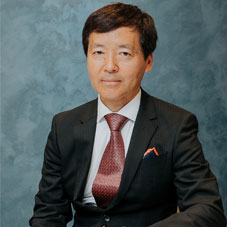
Yoshihiko Muramoto
President & CEO
Japan’s semiconductor industry has long been a cornerstone of global technology innovation, contributing significantly to fields ranging from consumer electronics to automotive systems. With the rising demand for chips across AI, 5G, electric vehicles, and renewable energy systems, leaders from Japan’s semiconductor sector are now steering their companies toward high-value domains where innovation and precision engineering define competitiveness.
At the forefront of this innovation stands Yoshihiko Muramoto, President and CEO of Nitride Semiconductors, a company that has carved out a unique position in ultraviolet (UV) LED technologies.
Nitride Semiconductors holds the distinction of being the first in the world to achieve high-intensity emission of ultraviolet LEDs at a wavelength of 350 nm, an achievement that surpassed the blue LEDs recognized with the 2014 Nobel Prize in Physics. Since 2000, under Muramoto’s guidance, the company has relentlessly advanced efficiency and output, evolving into a comprehensive UV-LED product manufacturer.
Beyond consumer use, Nitride Semiconductors has pioneered UV-LED applications in fields such as identification sensors, resin curing, sterilization, biotechnology, and medical technology. More recently, the company has made strides in micro-UV LEDs, developing chip sizes below 50 μm for full-color micro-LED displays, while also advancing mass-production technologies for metamaterials with extraordinary properties enabled through nano-scale structuring.
A hallmark of Nitride Semiconductors’ model is its focus on research and development while outsourcing mass production to partners in Korea and other regions. By monetizing intellectual property through licensing, the company sustains competitiveness despite challenges such as unregulated overproduction by Chinese manufacturers.
Under Muramoto’s leadership, Nitride Semiconductors continues to deliver high-value, innovation-driven products that reinforce Japan’s reputation for pioneering excellence in semiconductors. Let’s hear from him.
Nitride Semiconductors was founded through industry–academia collaboration, how do you view the role of proximity and other factors in shaping the effectiveness of such partnerships?
In my experience, bridging academic research and business is never simple, but it is highly rewarding when done well. After more than 25 years, I’ve come to believe that effective collaboration depends on balancing technological potential with real market needs and costs.
Universities often pursue innovation for its own sake, while companies must ensure that new technologies either lower production costs or deliver clear performance gains that make commercial sense.
By addressing both energy use and sustainability, we are helping the industry move toward greener, more efficient semiconductor manufacturing
At the same time, societal needs can be more decisive than cost alone. For example, traditional UV lamps are unsuitable for implantable medical devices because they are too large and contain mercury, which is hazardous.
Recognizing this, we developed μUV-LED light sources for implantable glucose sensors over a decade ago and worked closely with medical device firms. The long approval timelines and potential complications in medical applications taught us the importance of stable supply and adaptability.
Today, we collaborate with Tohoku University on micro- LEDs and Kyoto University on photonic crystals. These partnerships not only give us access to advanced equipment but also connect us with outstanding researchers, whose expertise provides an invaluable edge while helping us manage high development costs.
In your opinion, what will be the most significant technological innovations shaping the semiconductor industry over the next 5 to 10 years?
True innovation often emerges where few expect it. While general technological trends can be predicted, genuine breakthroughs typically result from persistent effort, experimentation, and a bit of serendipity. For those working on the technology, the outcome may seem inevitable; to outsiders, it can appear unconventional.
When we first began developing UV-LEDs, many in the industry questioned the need for ultraviolet light, believing blue LEDs already completed the primary colors. Today, mainstream micro-LED displays still rely on transferring and bonding separate red, green, and blue chips. However, mass-transferring microscopic chips, smaller than grains of flour or pollen, is extremely challenging.
Our approach uses μUV-LED excitation of RGB phosphors, enabling simultaneous bonding of all colors in a single step, much like stamping. Color-conversion layers can be made in film form, lowering costs, improving production speed, and enhancing reliability. Additionally, applying photonic crystal structures directly to LED surfaces allows precise control of emission angles and significantly increases luminous efficiency, representing the type of innovation that will shape the next decade in semiconductors.
What are the key challenges in power consumption and energy efficiency within semiconductor manufacturing, and how is your company addressing them?
Semiconductor production, from ICs and logic devices to memory and power semiconductors, relies heavily on lithography tools, which traditionally use UV lamps as light sources. Similarly, large numbers of UV lamps are needed in LCD and OLED panel manufacturing for smartphones, PCs, and TVs.
Conventional UV lamps, however, are inefficient, short-lived, and contain mercury, posing environmental and health risks. Replacing them with high-efficiency UV-LEDs can cut energy consumption by over 50 percent and reduce industrial waste due to their longer lifespans. In collaboration with lithography and flat-panel display equipment manufacturers, we have already begun this transition.
Looking ahead, our photonic crystal processing technology promises even higher efficiency, making UV-LED adoption more attractive, even to users hesitant to replace conventional UV lamps. By addressing both energy use and sustainability, we are helping the industry move toward greener, more efficient semiconductor manufacturing.
Given the global shortage of skilled labor, particularly engineers and technicians, what strategies should the semiconductor industry adopt?
Semiconductor R&D is time-consuming, and results are often not immediately visible, which can discourage young engineers. In the LED sector especially, there is a misconception that the technology is mature or has limited future potential, when in fact innovation never stops.
Addressing this requires flexible, unconventional thinking. Engineers must continually question existing methods: Why are we doing this this way? Why not try differently? Current technologies are temporary; the key is fostering creativity that can render them obsolete.
As an industry, we need to clearly define today’s technical challenges and offer young engineers a roadmap to tackle them. Beyond competitive salaries and better working conditions, it is essential to cultivate a sense of purpose and vision, inspiring the next generation to engage with cutting-edge technology and drive transformative innovation.
Could you describe your leadership approach? What principles or methodologies guide you as a leader?
I believe a leader must have a bold, forward-looking vision and actively share it with the team. Equally important is possessing the experience and knowledge to guide the team through obstacles as they arise. Clear communication is essential, assuming understanding can be risky. It’s vital to explain fundamentals patiently and repeatedly, taking responsibility for ensuring that even the smallest points are fully understood.
In development work, where outcomes are uncertain and challenges often complex, consistency and structured repetition are key. By maintaining clarity and reinforcing shared objectives, a leader can keep the team aligned, resilient, and focused, even in the face of difficult problems.
What direction do you intend to pursue in the future?
Our strategy emphasizes quality over quantity. In Japan, where demographic decline and an aging population are reshaping the market, competing on volume alone is not sustainable. Instead, we aim to drive genuine innovation by relentlessly exploring cutting-edge technologies and pursuing solutions that go beyond conventional thinking.
Drawing on your extensive experience, what advice would you offer to those aspiring to become leaders in this field?
Leadership cannot be achieved simply by aspiring to a title. True leaders emerge when they hold a compelling vision and inspire others to embrace it. While technical expertise is vital, understanding areas such as marketing, law, and society at large is equally important. Equally crucial is empathy, a leader who cannot connect with and understand their team will inevitably lose their trust and engagement.
Yoshihiko Muramoto, President & CEO, Nitride Semiconductors
Yoshihiko Muramoto is the President and CEO of Nitride Semiconductors, a pioneering company in ultraviolet (UV) LED technology. Under his leadership, the firm became the first in the world to achieve high-intensity UV emission at 350 nm and has since expanded into devices, modules, irradiation equipment, and consumer applications. Muramoto drives innovation in micro-UV LEDs, photonic crystals, and metamaterials, focusing on research, development, and high-value technological solutions.