


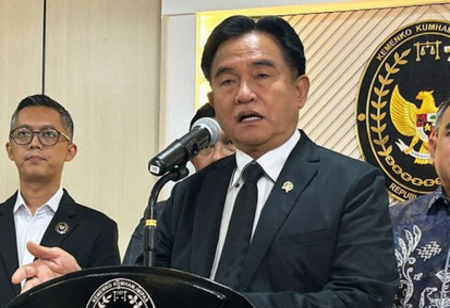
According to Yusril Ihza Mahendra, Indonesia needs to improve its legal governance and enforcement against corruption before becoming a member of the Organisation for Economic Co-operation and Development (OECD).
He cautioned that joining the OECD necessitates a strong commitment to principles of good governance, such as effective enforcement and institutional integrity, as Jakarta speeds up its efforts to meet the requirements for full membership.
He made the comments during the opening ceremony of the new Central Executive Board of the Indonesian Islamic Economists Association (IAEI) for the period from 2025 to 2030.
Mahendra stated that Indonesia plans to achieve full OECD membership within the next three years. He mentioned that this goal is in line with Indonesia's status as one of the top five or six biggest economies worldwide.
He also expressed concerns about the increasing prevalence of online gambling, stating that the illegal money obtained from these activities now exceeds the financial damage caused by corruption.
“This must be a shared concern. Issues of corruption, online gambling and narcotics must be addressed with firm action,” he said.
Erry Riyana Hardjapamekas, Chairman of the Indonesian Anti-Corruption Coalition (KAKI), previously emphasized the importance of the private sector in enhancing corporate governance in alignment with Indonesia's OECD roadmap.
“If Indonesia wants to join the OECD soon, the private sector must have robust anti-bribery compliance systems to mitigate risks,” he said.
Hardjapamekas, who used to be the vice chairman of the Corruption Eradication Commission (KPK), emphasized the importance of robust internal controls in companies for compliance with OECD standards.
He also emphasized the importance of making changes to corporate governance before the new Criminal Code takes effect on January 2, 2026. This new code will establish clear guidelines for holding corporations accountable for criminal actions.
Additionally, Indonesia's Coordinating Minister for Economic Affairs, Airlangga Hartarto, expressed that joining the Organisation for Economic Co-operation and Development (OECD) could enhance Indonesia's export opportunities and draw in increased international investments.
He pointed out that the majority of the 38 OECD member countries are highly developed and dominate about 75 percent of worldwide trade, offering Indonesia a substantial chance to boost its exports of goods and services in a more competitive global market.