


The rate of change happening in the world is similar to being in a thriller movie. Existing problems related to the environment, supply chains, social issues, COVID-19, ongoing Russia-Ukraine war are a jumpscare affecting the livelihood of people more than the damage they could do to the economy. As a result, the need for an immediate solution becomes a top priority regardless of how prepared the people are.
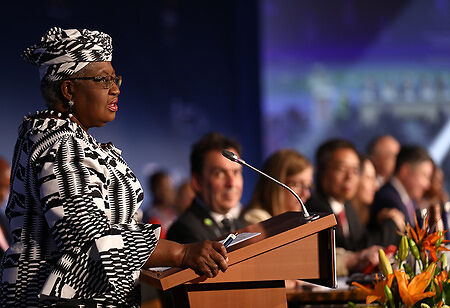
Days after many discussions, the World Trade Organization (WTO), held its 12th Ministerial Conference agreeing on a series of deals focusing on improving the way current issues are handled globally. This conference was originally scheduled to take place during 2020, but was postponed due to the pandemic. Finally this year, the objectives of the MC12 made clear about changing the way global issues are being dealt. But first let’s look into how the session was held and what are the outcomes it negotiated.
The session focused on challenges affecting the trading systems globally that received a pre-recorded, as well as, written statements were submitted by ministers and heads of the delegation. Hence, the WTO members passed down a set of multilaterally negotiated outcomes on a series of key trade initiatives.
Outcomes Adopted by WTO Members
An outcome document.
A package holding WTO’s response to emergencies which are:
- a Ministerial Declaration on the Emergency Response to Food Insecurity.
- a Ministerial Decision on World Food Program (WFP) Food Purchases Exemptions from Export Prohibitions or Restrictions.
- a Ministerial Declaration on the WTO Response to the COVID-19 Pandemic and Preparedness for Future Pandemics.
- a Ministerial Decision on the Agreement on Trade-related Aspects of Intellectual Property Rights.
Then it released a decision on the e-commerce moratorium and week program.
An agreement on fisheries subsidies.
Additionally, the ministers adopted two decisions on the Work Programme on Small Economies (WT/MIN(22)/25) and on the TRIPS non-violation and situation complaints (WT/MIN(22)/26) — and a Sanitary and Phytosanitary Declaration for the Twelfth WTO Ministerial Conference: Responding to Modern SPS Challenges
Here’s a gist of some of the key highlights of the issues.
First WTO Deal on Fishing Subsidies Hailed as Historic Agreement
Since 2001, members of the WTO have been in a constant battle to put an end to subsidies that promote overfishing which could endanger extinction of fishes. To curb harmful subsidies hooked on illegal, unreported and unregulated fishing, the WTO passed a multilateral agreement to safeguard global fish stocks.
Therefore, the WTO passed down new trading rules which became the second multilateral agreement in its history.
“WTO members have for the first time, concluded an agreement with environmental sustainability at its heart,” Okonjo-Iweala said. “This is also about the livelihoods of the 260 million people who depend directly or indirectly on marine fisheries.”
In this agreement, India and other developing countries were observed to be winning some concessions. They even succeeded in removing a section of the proposal fearing it would threaten some subsidies which would assist small scale artisanal fishing.
Piyush Goyal, Minister of Commerce & Industry, Consumer Affairs & Food & Public Distribution and Textiles, Govt. of India. Leader of the House in Rajya Sabha, commented on the agreement that artisanal and traditional farmers would not face any restrictions under this agreement.
However, critics reverted back by implying that the agreement would only restrict and not eradicate subsidies on illegal fishing.
Global Food Security
Due to food shortage, as well as, rising prices caused by the Russia-Ukraine war, the WTO members issued a declaration on the importance of trade in global food security. They also stressed that they would avoid bans on food. The WTO agreed on a binding decision to exempt food purchased by the UN’s World Food Program (WFP) for humanitarian purposes from any export restrictions.
Countries will be allowed to restrict food supplies to ensure domestic food security needs.
India’s demand to allow it to export food from its public stockings to other countries is said to be discussed for the next Ministerial Conference in 2023.
Reviewing of E-Commerce Moratorium
India asked the WTO to review the extension of the moratorium on custom duties on e-commerce transactions which includes digitally traded goods and services.
Piyush Goyal argued that this moratorium resulted in having developing countries face the brunt of financial consequences. He said that developing countries lost a potential tariff revenue of $ 50 billion on imports from only 49 digital products.
In 1998, when the internet was still fairly new, WTO members first agreed to refrain from levying customs taxes on electronic transmissions. Since then, the moratorium has been repeatedly extended.
However, until the following Ministerial Conference or until March 31, 2024, whichever comes first, all members decided to extend the long-standing ban on customs charges on electronic commerce transmissions.
Waive Off of COVID-19 Vaccine Patents
To facilitate easier local production of Covid-19 vaccines, WTO members decided to temporarily waive intellectual property patents on certain products without the approval of the patent owners for a period of five years.
The original proposal put forth by South Africa and India in 2020 has been modified to create the current accord. They want larger waivers of intellectual property restrictions for vaccines, medications, and testing.
Rich pharmaceutical corporations had fiercely resisted this, claiming that intellectual property rights (IPs) do not restrict access to Covid medicines and that the elimination of patent protections sends a bad message to researchers who promptly generated life-saving vaccinations.
(This) “will contribute to ongoing efforts to concentrate and diversify vaccine manufacturing capacity so that a crisis in one region does not leave others cut off.”, said WTO Director-General Ngozi Okonjo-Iweala.
As it did not cover all medical tools including diagnostics and therapies, advocacy groups challenged the WTO waiver as having a limited reach. “This agreement fails overall to offer an effective and meaningful solution to help increase people’s access to needed medical tools during the pandemic as it does not adequately waive IP on all essential COVID-19 medical tools and it does not apply to all countries,” said Christos Christou, international president of Doctors Without Borders.