


.png)
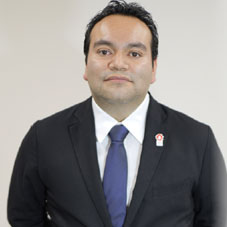
Dr Christian Penaloza
Managing Director
Osaka University has long been known for producing graduates who convert rigorous academic training into innovation with global relevance. Grounded in interdisciplinary research and real world application, the institution has shaped leaders working at the frontier of science and technology, particularly where intelligent systems meet human capability. Among its distinguished alumni is Dr Christian Peñaloza, whose career reflects the university’s emphasis on resilience, excellence, and global impact.
A technology leader, Dr Peñaloza specializes in artificial intelligence, neurotechnology, and robotics, and currently serves as Managing Director of Mirai Innovation Research Institute Japan. He holds a PhD in Cognitive Neuroscience Robotics from Osaka University, a defining milestone in a life shaped by cross-cultural perseverance.
Following his PhD, he conducted advanced research at the Advanced Telecommunications Research Institute in Kyoto, collaborating with Professor Hiroshi Ishiguro on brain–machine interfaces and human augmentation. His work has earned major recognition, including MIT Technology Review Innovator of the Year in Mexico, Excellence Research Awards from ATR in 2018 and 2020, the Distinguished Mexican Citizen Award in 2018, selection for the New York Academy of Sciences Interstellar Initiative 2021–2022, and induction into the Paseo de la Fama de Tijuana in 2022. Under his leadership, Mirai Innovation was selected by the Japanese government to showcase its WAVEX neurotechnology at the Healthcare Pavilion of World Expo Osaka 2025, underscoring the global influence of Osaka University’s alumni. Let’s dive in to know more.
As an alumnus of Osaka University, which learning experiences during your time there proved most transformative in shaping your academic outlook and professional path?
My time at Osaka University was deeply transformative and laid the foundation for my career in neurotechnology and robotics. At the Arai Intelligent Robotics Laboratory, I was immersed in a culture that blended rigorous engineering with curiosity about human–robot interaction, sharpening both my technical and creative thinking. A defining moment came during my PhD defense, when Professor Hiroshi Ishiguro invited me to join his team at the Advanced Telecommunications Research Institute in Kyoto, a step that reshaped my professional path. Developing brain–machine interfaces and witnessing users control devices through thought alone reinforced the human impact of research. Equally important, the university instilled a global, collaborative mindset that continues to guide my work at Mirai Innovation.
Dr Christian Peñaloza embodies resilient innovation, translating neuroscience, AI, and robotics into human centered technologies with global scientific and societal impact
How did your time at the University help you develop your entrepreneurial mindset and strengthen your understanding of business and innovation?
Osaka University played a pivotal role in shaping both my scientific grounding and my entrepreneurial mindset. Alongside my research, the G-TEC program provided structured training in technology commercialization, intellectual property strategy, and market validation, helping me translate research into real-world applications. Exposure to industry mentors reframed my work as a foundation for impact-driven innovation. Representing the University at a Silicon Valley pitch competition and winning first place for a brain-sensing solution affirmed the global relevance of my ideas. Together with mentorship from leaders such as Professor Hiroshi Ishiguro, these experiences sharpened my business acumen and ultimately led to the creation of Mirai Innovation and its international initiatives.
How would you describe the accessibility and approachability of the faculty during your time at Osaka University?
One of the most striking features of Osaka University was the exceptional accessibility of its faculty. Despite their global stature, professors remained open, approachable, and deeply engaged with students’ ideas, creating a strong culture of mentorship. At the Arai Intelligent Robotics Laboratory, Professor Arai encouraged open dialogue, critical questioning, and hands-on guidance, fostering confidence to pursue ambitious research. A defining moment came during my PhD defense, when Professor Hiroshi Ishiguro not only evaluated my work but personally discussed its future potential and invited me to join his team at ATR. This genuine investment in students’ growth shaped my research path and continues to influence my leadership approach today.
How did you engage with the alumni network during your time as a student, and how has it continued to support you after graduation?
During my studies at Osaka University, the alumni network served as a vital source of mentorship, offering guidance on research directions, industry pathways, and navigating Japan’s academic ecosystem. After graduation, these connections evolved into lasting professional collaborations. Today, as Managing Director of Mirai Innovation Research Institute, I actively engage alumni and faculty as guest speakers in international programs such as EMFuTech and MIRI and collaborate on joint research with Osaka University and ATR. The network has also opened pathways for young researchers, with Mirai students joining Osaka University laboratories, sustaining a cycle of global collaboration and innovation.
What is the one moment or memory from your time at Osaka University that has stayed with you most vividly?
One of my most vivid memories from Osaka University comes from my time at the Arai Intelligent Robotics Laboratory, when Professor Arai entrusted me with developing a control algorithm for a complex 7-DOF industrial robot in just three days for visiting international partners. The challenge was intense and demanded long hours of problem-solving under pressure. When the robot performed flawlessly during the final demonstration, it marked a defining moment. I realised I was ready for real world, industry level challenges, reflecting the deep trust and responsibility fostered at Osaka University.
How would you describe your leadership style, and how does it shape the future direction and destination you are working toward?
My leadership style is built on trust, purpose, and interdisciplinary collaboration, principles that directly guide the future I am working to create. I believe in giving people real responsibility and the space to grow, a philosophy shaped early on at Osaka University when mentors trusted me with high stakes challenges. At Mirai Innovation, I apply the same approach by empowering teams with ambitious goals and the autonomy to solve them.
I lead with a strong human centered mindset. My work in AI, neurotechnology, and robotics constantly reinforces that innovation must serve real societal needs. Every major initiative begins by asking who benefits and how lives are improved. Methodologically, I rely on multidisciplinary collaboration, bringing together engineers, neuroscientists, designers, educators, and business leaders from the outset.
This leadership approach defines my destination. I am working toward building Mirai Innovation into a global network of innovation centers that train future leaders and develop technologies with real-world impact. These hubs will foster research, entrepreneurship, and international collaboration, generating solutions and spin offs that expand human potential. Every project we undertake today is a step toward that long term vision.
Dr Christian Penaloza, Managing Director, Mirai Innovation Research Institute Japan
A visionary in AI, neurotechnology, and robotics, Dr Christian Peñaloza leads Mirai Innovation, bridging brain–machine interfaces, human augmentation, and global research to create technologies with real-world impact.
• Hobbies: Exploring emerging technologies, international travel, photography, and scuba diving
• Favorite Cuisine: Mexican food especially traditional dishes that connect to heritage, flavor, and home.
• Favorite Book: The Future of the Mind by Michio Kaku — a book that aligns perfectly with his passion for neuroscience, cognition, and the future of human–machine integration.
• Favorite Travel Destination: The Mayan Riviera in Mexico — for its beautiful beaches, rich culture, and world-class scuba diving, including exploration of underwater caves (cenotes), one of the most extraordinary diving experiences in the world.
Awards & Recognition:
• MIT Technology Review Innovator of the Year – Mexico (Innovators Under 35)
• Excellence Research Awards (2018, 2020) from the president of the Advanced Telecommunications Research Institute (ATR) in Kyoto
• Distinguished Mexican Citizen Award from the Government of Mexico (2018)
• Selected by the New York Academy of Sciences for the Interstellar Initiative 2021–2022
• Honored in the Paseo de la Fama de Tijuana (2022)
• Led Mirai Innovation to be selected by the Japanese government for Expo Osaka 2025 to showcase advanced neurotechnology
• Additional academic and industry recognitions for contributions to AI, robotics, and neurotechnology