


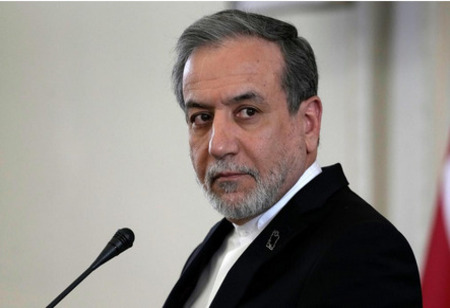
Iranian Foreign Minister Abbas Araghchi has recently arrived in Geneva for imperative discussions with the US centered around nuclear matters, with the primary goal being to alleviate tensions and prevent potential military hostilities that may escalate into a broader regional conflict, as cautioned by Iran's Supreme Leader Ayatollah Ali Khamenei.
Earlier this month, Iran and the US reconvened diplomatic discussions to address their protracted disagreement concerning Tehran's nuclear program. Concurrently, the US has dispatched naval vessels, such as an additional aircraft carrier, to the area as facilitators endeavor to avert military conflict.
Also Read: Lao PM Pushes for Revenue Reform on Path to Self-Reliant Economy
Araghchi engaged in a meeting with Rafael Grossi, who serves as the director of the International Atomic Energy Agency (IAEA). Prior to this encounter, Araghchi had mentioned that his team of nuclear experts were anticipating an in-depth technical dialogue.
The International Atomic Energy Agency (IAEA), a branch of the United Nations specializing in nuclear oversight, has been requesting authorization to visit Iran's primary nuclear installations which sustained damage from airstrikes by the United States and Israel in a conflict lasting 12 days in June.
The Iranian government has expressed concerns about possible radiation exposure, insisting on the need for a formal agreement to be established in order to facilitate the exceptional mission of inspecting the heavily fortified uranium believed to be hidden beneath the aftermath of the destruction.
Araghchi further indicated his intention to convene with his Omani counterpart, Badr bin Hamad al-Busaidi, who played a mediating role in the initial dialogue between Iran and the US following the recent conflict. Iran has consistently made known its stance that it will not consent to the US's insistence on complete elimination of nuclear enrichment, and views its missile development as a non-negotiable boundary.
The US is currently increasing its military influence in the area amidst ongoing developments, as enunciated by President Donald Trump who expressed his preference for a regime change in Iran while deploying an additional aircraft carrier. Trump is once more expected to assign his special envoy Steve Witkoff and his son-in-law Jared Kushner to represent the White House at the Geneva discussions.
Also Read: GM Korea to Boost Local Production of Cars
Brad Cooper, the highest-ranking US military officer in the area, made a surprise addition to the US delegation during the Muscat negotiations on February 6.
The United Nations and various international human rights groups have attributed the extensive use of lethal force against peaceful demonstrators in Iran to the Iranian government, resulting in the deaths of thousands, primarily occurring on the evenings of January 8 and 9. The conservative factions in Tehran are primarily focused on the possibility of making any compromises during the impending negotiations with the United States.
Also Read: Driverless Robotaxis to Hit Seoul Streets this Year: Mayor
During a public session, a prominent lawmaker known for his strict views in Iran's parliament advised security leader Ali Larijani to prioritize safeguarding Iran's territorial boundaries, protecting nuclear facilities and personnel, and utilizing nuclear energy for peaceful civilian purposes under the Nuclear Non-Proliferation Treaty (NPT) before granting inspection permissions to the International Atomic Energy Agency (IAEA).