


The Ministry of Science announced the successful conclusion of a program designed to offer innovative water management solutions to Southeast Asian nations situated along the Mekong River. By leveraging the advanced technologies of South Korea, this initiative aims to combat the effects of climate change.
The Ministry of Science and ICT announced the transfer of control of the facility constructed in southern Vietnam to the Vinh Long provincial government.
Also Read: PM Kim Says Trump Positive About Dialogue With N.Korea's Kim
This action is a key component of the program that was initiated in 2021 with a budget of $4 million.
The initiative, implemented in collaboration with the United Nations Development Program and the United Nations Office for South-South Cooperation, was initiated to tackle the obstacles encountered by nations residing along the Mekong River, including Vietnam, Thailand, Laos, and Cambodia, in light of climate change and swift economic advancement.
The ministry has launched an initiative titled People's Livelihoods Innovation through Nexus in the Mekong Region (P-LINK) with the goal of tackling water scarcity in the region through the utilization of cutting-edge technologies from South Korea.
In the initiative, Vietnam received a dependable water supply in regions confronting challenges in accessing potable water as a result of saltwater intrusion, whereas Thailand adopted an advanced water management system enhancing operational efficiency.
The ministry reported that South Korea implemented an artificial intelligence (AI)-powered flood warning system in Laos, while Cambodia received a water treatment system powered by renewable energy sources.
"The project is significant in that South Korea contributed to global sustainable development and offered solutions to problems faced by countries in the Mekong River region using science and technology," Science Minister Bae Kyung-hoon says.
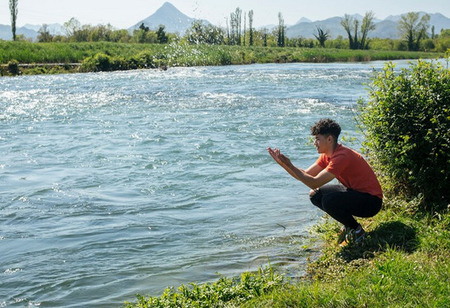
The Mekong River is recognized as one of the world's largest and most diverse rivers, stretching nearly 5,000 kilometers from China to Vietnam. This river serves as a valuable transboundary asset, contributing significantly to the socio-economic, environmental, and cultural aspects of the region.
Also Read: Dubai Chamber of Commerce Discusses Essential Goods Availability
It plays a crucial role in sustaining the livelihoods of millions of people residing in its basin, facilitating irrigation, producing energy, and promoting the preservation of various ecosystems. As all countries in the region rush to undergo industrialization in order to achieve rapid economic progress, the water resources of the Mekong River are facing increased and continuous demand due to various infrastructure projects such as extensive irrigation for agriculture and hydropower development.
While these projects have the potential to boost economic growth in the region and help alleviate poverty in line with the Millennium Development Goals (MDGs), they also have environmental implications and can lead to transboundary impacts and conflicts.
Therefore, effective governance of the Mekong River's water resources is not just an economic issue, but also a social and political challenge that necessitates a coordinated approach to management, dialogue, and cooperation among sectors and countries to ensure sustainable development of the river basin.
Also Read: Indonesia Boosts Energy Self-Sufficiency through Bioenergy
The global recognition of Integrated Water Resource Management (IWRM) as a method to mitigate transboundary repercussions and social disputes arising from overlapping water requirements, demonstrates its importance in promoting efficient and enduring water resource development.
IWRM, characterized by its inclusive multi-sectoral perspective, aims to harmonize conflicting resource demands across various sectors, in contrast to the traditional single-sector approach which only caters to the needs of a specific sector.
The concept of integrated planning is highly pertinent in the management of vast and intricate rivers like the Mekong River Basin, where water, fish, sediment, and other valuable resources flow seamlessly across international borders, showcasing a deeply intertwined ecosystem.