


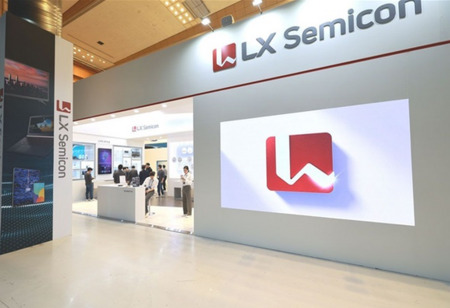
LX Semicon has started delivering its initial automotive microcontroller unit (MCU) to Hyundai Motor and Kia, representing the first concrete success of its automotive semiconductor venture.
The firm announced that it has started large-scale production of the LX61101, a microcontroller designed for motor management in automotive body electronics.
Also Read: Deputy Minister Urges Digital Transformation in Education Sector
The chips will first be utilized in Hyundai Motor and Kia cars that begin production in the latter half of this year, with plans to progressively extend to a broader array of models.
Built on a 40-megahertz Arm Cortex-M3 core, the chip facilitates stable and accurate motor control by tracking speed, position, rotational direction, and torque in real time.
The chip will be utilized in vehicle window safety mechanisms that automatically reverse when an object is sensed during window closure, as well as in systems that manage vehicle aerodynamics.
LX Semicon announced that the chip represents the company’s initial significant success in its automotive MCU sector, a burgeoning area it has been nurturing since 2022 to broaden its range beyond display-centric chips.
This will be the first occasion that Hyundai Motor and Kia incorporate domestically produced MCUs in their cars.
In 2023, LX Semicon was chosen as a new supplier for motor-control MCUs and successfully began mass production of the LX61101 following three years of development and testing, meeting reliability and safety standards such as AEC-Q100 and ISO 26262.
The company announced that the LX61101 was produced in large quantities through a supply chain with Korean firms throughout the entire procedure, from semiconductor design and foundry manufacturing to back-end processing, marking a significant achievement for the local automotive semiconductor ecosystem.
LX Group celebrated its fifth anniversary as an independent conglomerate on May 1, after splitting from LG Group in 2021. Challenging early concerns regarding its sustainability as a standalone business entity during the extended global economic downturn, the group has consistently broadened its range of operations and solidified its revenues, fostering an optimistic perspective for its future development.
Also Read: Vietnam-Australia Partnership Set for New Breakthrough
The organization reported that the total assets of its subsidiaries reached 12.67 trillion won ($9.04 billion), a 33.37 percent increase from 9.5 trillion won in 2021. The count of affiliates rose to 17 as of April, increasing from 11 when it separated from LG Group.
Following its separation, LX Group initiated operations with LX Holdings as its parent company, managing four main subsidiaries: LX International, a trading firm; LX Hausys, a housing materials company; LX Semicon, a fabless semiconductor company; and LX MMA, a chemical company.
Since that time, the group has implemented a bold expansion strategy, acquiring glass manufacturer Han Glas, presently known as LX Glas, in addition to other companies in biomass and logistics to further broaden its portfolio.
Due to these efforts, the organization was initially classified as a conglomerate by the Fair Trade Commission in 2023, holding the 44th position, and advanced to 43rd in this year's list published on May 1. The group’s profits experienced swift increases throughout 2022. In 2020, prior to the disaffiliation, the total sales and operating profit of its four primary subsidiaries were 16.02 trillion won and 402.5 billion won, respectively, but these numbers surged to 25.27 trillion won and 1.35 trillion won by 2022.
Also Read: Regional De-Escalation Efforts Bolster QSE Performance
Both numbers decreased in 2023, dropping to 20.63 trillion won in revenue and 656.9 billion won in operating profit, but they bounced back in 2024 to 22.94 trillion won and 888.3 billion won, respectively.