


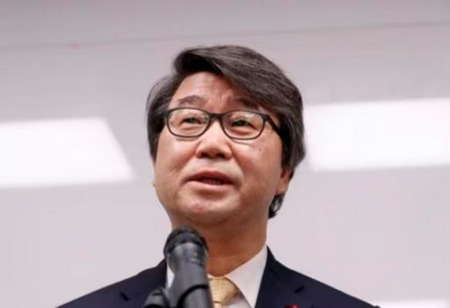
The newly appointed head of the presidential Economic, Social, and Labor Council promised to revamp a system he believes has not adequately represented the perspectives of young people, women, and independent contractors in discussions regarding employment and social benefits.
Kim acknowledged the ongoing criticism that the council has primarily been controlled by conventional labor unions, significant employers, and government officials.
Also Read: PM Chinh Urges International Financial Centre to Boost Growth
She stated that the council is committed to proactively addressing and rectifying the underrepresentation of various groups including youth, women, non-permanent workers, platform workers, and others.
Kim articulated his plan as a transition from "interactions between institutions" to a focus on engagement "with the public." He expressed that, under his guidance, the council would undergo reorganization to enable individuals most impacted by employment-related decisions and the evolving nature of work to have a more integral role in identifying challenges and influencing resolutions.
Kim highlighted the 2017 "citizens' jury" as an example of the necessity for expanded public deliberation on significant national matters. This particular jury was tasked with evaluating the potential resumption of construction for the Shin-Kori 5 and 6 nuclear reactors. Hundreds of citizens, chosen at random, were presented with unbiased information, consulted with experts and various interest groups, and subsequently delivered a recommendation that was endorsed by the government and used as the basis for policy decisions.
Also Read: ASEAN, Vietnam to Lead Recovery Among Emerging Markets
“For large, weighty issues, that kind of method can be utilized,” he says. “We could establish a dedicated public deliberation committee to consider different deliberative techniques and to hear the people’s views on what the agenda itself should be.”
This situation arises in the midst of what Kim characterized as a time of intricate and significant changes confronting Korean society, highlighting the concurrent influence of the nation's exceptionally low birth rate, swift aging population, a technological revolution led by artificial intelligence, and alterations in the global trade system.
“The era we are facing is not one where a single actor can solve problems alone,” Kim says. “From now on, social dialogue at this council should do more than simply ‘restart’ talks. It needs to go beyond that and pursue a new paradigm for dialogue itself.”
One of the main issues under consideration by the council involves the potential return of the Korean Confederation of Trade Unions (KCTU), a major labor organization in the country, to the formal tripartite structure. The individual in question expressed a sense of both prudence and optimism regarding this matter.
Also Read: Party Chief Meets With UK Deputy Prime Minister in London
Kim also immersed herself in a series of heated labor discussions, covering topics such as a suggested increase in the retirement age and fresh regulations on late-shift operations. The ongoing conversation is overshadowed by the pending "yellow envelope law," which is geared towards safeguarding labor unions from the financially debilitating lawsuits frequently utilized by businesses as a deterrent against strikes.