


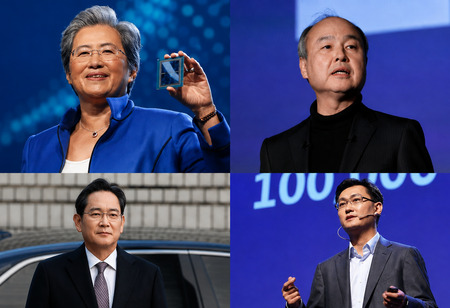
From bankruptcy and mounting losses to technological disruption and geopolitical pressure, some of Asia’s most influential companies have faced moments when survival was far from certain. This article explores how CEOs of top global companies navigated major challenges, made difficult decisions, and transformed their companies. Their stories reveal different approaches to turnaround leadership—from long-term investment and strategic reinvention to cultural transformation and resilience—and offer valuable lessons for leaders facing uncertainty today.
Whether we see it in the news or experience it firsthand, we've all come across businesses that were once thriving but slowly began losing customers. Markets shift, competitors catch up, and strategies that once worked lose their edge. Every successful business eventually reaches a point where what worked yesterday no longer works today. What happens next often comes down to one question: Can its leader find a new path before it's too late?
The world's biggest companies face the same dilemma, only at a larger scale. Across Asia, major businesses have battled bankruptcy, mounting losses, fierce competition, regulatory pressure, and technological disruption. Their survival depended on leaders willing to look beyond the immediate crisis and make bold, sometimes difficult, choices.
From Lisa Su's transformation of AMD to Ren Zhengfei's resilience at Huawei, these stories reveal different paths to recovery. Some doubled down, others changed course, but all prove that a crisis can close one chapter without ending the story. Let's take a closer look at the decisions, strategies, and leadership lessons behind some of Asia's most remarkable corporate turnarounds.
1. Lisa Su, AMD: Betting on Long-term Transformation
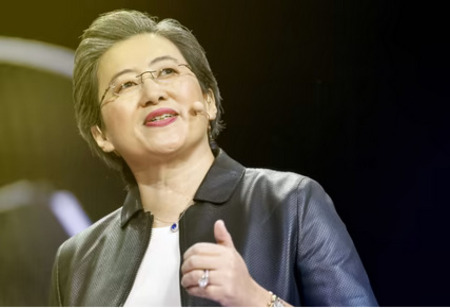 Few CEOs can claim to have transformed a company that once seemed to be running out of road. And Lisa Su is one of the most notable names on that list. When she took the helm of AMD as President and CEO in October 2014, the semiconductor maker was valued at roughly $3 billion, weighed down by significant debt, and losing ground to industry giants Intel in processors and Nvidia in graphics. What followed was a remarkable reversal.
Under Lisa’s leadership, AMD embarked on a long-term transformation built on technological bets, sharper strategic focus, and relentless execution. The scale of that turnaround is perhaps best illustrated by the numbers: a $10,000 investment in AMD when Lisa took charge would have grown to approximately $460,000 by the end of 2024.
The Challenge: AMD Needed a Fundamental Reset
Lisa Su’s journey at AMD is more than a story of financial recovery; it is a case study in how strategic patience can revive a company under pressure. Joining AMD in 2012 and taking over as CEO in 2014, Lisa inherited a business struggling with financial challenges and fierce competition from industry giants such as Intel and NVIDIA. AMD needed more than incremental improvements—it needed a fundamental reset.
Lisa’s answer was to play to AMD’s strengths. Rather than attempting to compete everywhere, she sharpened the company’s focus on high-performance computing and graphics, while investing heavily in products capable of challenging established players across desktops, servers, and graphics. The turnaround did not happen overnight. AMD initially continued to struggle with stagnant growth and profitability, testing the patience of investors and the market.
Then came 2017. The launch of AMD’s Ryzen processors marked a pivotal moment in the company’s comeback, followed by the EPYC processor family, which strengthened its position in the lucrative data-center market. These products demonstrated the value of Su’s long-term strategy: make ambitious bets on technology, give them time to mature, and execute relentlessly.
Also Read: How Honda is Reinventing Leadership in the EV Era: A Case Study
Leadership Lesson to Learn from Lisa Su: Bet on the Future, Not the Quick Fix
But Lisa’s vision extends beyond AMD’s balance sheet. She has consistently emphasized the importance of semiconductor innovation to technological and societal progress, advocating sustained investment in research and development to prepare the industry for the challenges ahead.
Under her leadership, AMD evolved from an embattled chipmaker into one of the most formidable players in high-performance computing. Lisa’s story offers a powerful lesson in turnaround leadership: when short-term fixes are not enough, leaders may need the courage to make difficult long-term bets, stay focused on their strengths, and keep executing until the results catch up with the vision.
2. Masayoshi Son, SoftBank: Taking Bold Bets on the Next Growth Wave
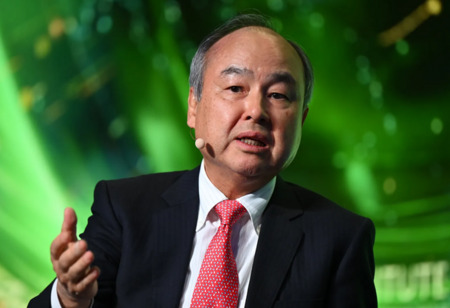 When COVID-19 sent global markets into turmoil, SoftBank found itself facing one of the darkest periods in its history. The Japanese conglomerate reported a staggering $9 billion annual loss, its worst result ever, following major investment setbacks including the WeWork fiasco and a $17 billion deficit at its $100 billion Vision Fund. For founder and CEO Masayoshi Son, the crisis put his aggressive investment strategy under intense scrutiny.
The SoftBank Challenge: When Bold Bets Backfired
Masayoshi moved quickly to change course. Within months, SoftBank staged a remarkable reversal, recording a $11.8 billion net profit in the April-to-July quarter, while its stock gained 34 percent during the financial year. Strategic repositioning, asset sales, tighter capital management, and a renewed focus on valuable holdings helped drive the recovery. More than a financial turnaround, SoftBank’s comeback demonstrated Son’s willingness to reassess, adapt, and make difficult decisions when circumstances demanded it.
The first major lever was asset sales. Masayoshi began unlocking value from some of SoftBank’s most prized holdings, selling stakes in Alibaba, the company’s Japanese mobile telecom business, and T-Mobile in the US, among others. The strategy generated much-needed liquidity while giving SoftBank greater room to navigate the crisis. At the time, there was also persistent speculation that Son was considering selling Arm Holdings, the British chip designer he had repeatedly called one of SoftBank’s most valuable and strategically important assets.
The second factor was the resilience of several investments amid the chaos. While pandemic lockdowns and travel restrictions battered previously promising bets such as Uber, other SoftBank-backed companies successfully went public, delivering strong returns to the conglomerate. At the same time, shares of companies positioned to benefit from the pandemic continued to climb, further strengthening SoftBank’s portfolio. Together, these developments gave Masayoshi valuable breathing room—and helped turn a moment of crisis into an opportunity to reshape the conglomerate’s investment strategy.
Leadership Lesson to Learn from Masayoshi Son: Know When to Change Course
Forced onto the back foot by a cascade of setbacks, Masayoshi Son fought his way back by fundamentally changing course. While he initially announced plans for a second, even larger Vision Fund, Masayoshi soon shifted away from aggressive acquisitions and partnerships. Instead, SoftBank focused on selling assets, building a substantial cash cushion, and investing with greater caution. It was a striking departure from the bold, high-risk strategy that had defined the conglomerate for years.
The gamble paid off. SoftBank’s share price rebounded to nearly twice its level during the dark days of March, turning what had looked like a potential collapse into a remarkable recovery.
In the language of the pandemic-era markets, SoftBank’s resurgence was unmistakably V-shaped—and a testament to Masayoshi’s willingness to abandon old playbooks when the circumstances demanded it.
3. Lee Jae-yong, Samsung: Preparing for the Next Technology Cycle
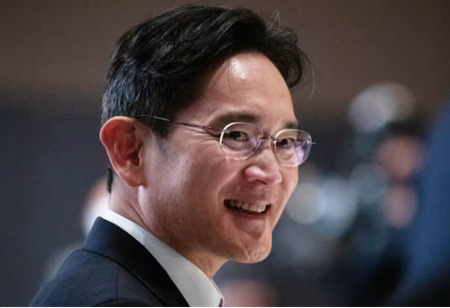 Samsung Electronics once relied on its Future Strategy Office to drive synergy across major affiliates, identify new business opportunities, and shape the group’s long-term direction. But the organization came under intense scrutiny after Samsung Chairman Lee Jae-yong became embroiled in legal proceedings over allegations linked to political intervention and the controversial merger of Samsung C&T and Cheil Industries.
In its aftermath, Samsung adopted a more streamlined alternative: the Business Support Task Force, often described as a “mini–Future Strategy Office.” The new structure sought to preserve some of the coordination and strategic oversight of its predecessor while operating under greater scrutiny and a more cautious governance framework.
The Samsung Challenge: Leading Samsung through Uncertainty
Since Samsung Chairman Lee Jae-yong became embroiled in the political intervention scandal in 2016 and faced years of investigations and court proceedings, the group’s leadership has operated under prolonged uncertainty. The following year, Samsung dismantled its Future Strategy Office—the central control tower responsible for coordinating strategy across the group. Its removal left Samsung Electronics and the wider Samsung Group navigating a period of strategic uncertainty, with no clear command structure to fill the void.
Also Read: Lessons from the Rewarding Investment Journey of Warren Buffett
Lee Jae-yong’s leadership at Samsung has been less about rescuing a company in free fall and more about giving a global technology giant a new sense of direction while the industry beneath it was rapidly changing. With Samsung navigating leadership uncertainty and a turbulent technology landscape, Lee pushed the group to think beyond its traditional strengths and prepare for the next wave of growth.
Leadership Lesson to Learn from Lee Jae-yong: Prepare for What Comes Next
At the heart of that strategy was a willingness to make big, long-term bets. Samsung stepped up investments in advanced semiconductor manufacturing, AI, biopharmaceuticals and other next-generation technologies, while Lee also pushed for more ambitious M&A and strategic partnerships. That forward-looking approach became increasingly important as the semiconductor industry endured a sharp downturn before being transformed by the AI boom.
Today, Samsung is racing to strengthen its position in high-bandwidth memory, advanced packaging and AI chips—areas that could determine who leads the next chapter of the global semiconductor industry.
4. Pony Ma, Tencent: Building Tencent through Persistence and Reinvention
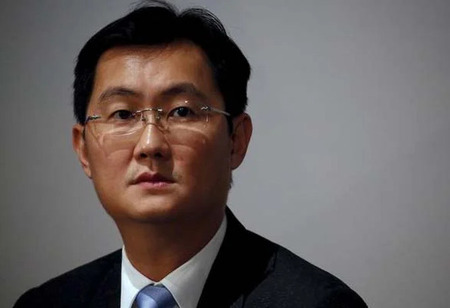 Pony Ma, co-founder and CEO of Tencent, built one of China’s most influential technology companies from remarkably uncertain beginnings. In 1998, Ma and a group of former classmates launched Tencent with OICQ, an instant-messaging service inspired by ICQ. The early years were far from easy, with legal disputes over the OICQ name and financial struggles pushing the young company close to collapse. Ma and his team even populated chat rooms themselves to attract users. Their persistence paid off as OICQ, later renamed QQ, quickly gained popularity among China’s young internet users.
The Tencent Challenge: From Startup Struggle to Survival
Yet popularity alone could not keep Tencent afloat. The company struggled to find sustainable revenue, until a partnership with telecom operators allowed QQ to reach mobile users and opened new income streams. That turning point gave Tencent the breathing room to expand, eventually laying the foundation for its transformation into a much broader technology powerhouse.
Also Read: Tadashi Yanai: Making Uniqlo the World's Go-to Casual Wear Brand
Leadership Lesson to Learn from Pony Ma: Reinvent Before You Have to
Ma’s ability to evolve became even more important as Tencent faced growing regulatory and geopolitical pressure. The company expanded beyond messaging into gaming, payments, cloud computing and the vast WeChat ecosystem, while diversifying its investments across the global technology and gaming industries. When China intensified its scrutiny of technology companies and gaming, Tencent was forced to adapt once again, with Ma placing greater emphasis on enterprise services, emerging technologies and AI.
Tencent’s journey under Ma demonstrates that resilience is not simply about surviving difficult periods—it is about knowing when to change direction. From a struggling messaging startup to a global technology giant, Ma repeatedly turned challenges into opportunities to reinvent Tencent. His leadership offers a powerful lesson for businesses navigating uncertainty: the companies that endure are often those willing to evolve before circumstances leave them with no choice.
Corporate turnarounds rarely follow a predictable script. Some leaders stay committed to a long-term vision, while others recognize when it is time to change course. Some rebuild from within, while others reinvent the business for an entirely new market. What connects these stories is the willingness to confront difficult realities rather than hide from them. The journeys of these leaders show that a crisis does not have to define a company's future. With clarity, courage, and the ability to adapt, leaders can turn moments of uncertainty into opportunities to build something stronger.