


 Agricultural leadership today demands more than commercial growth; it requires innovation, sustainability, and a deep understanding of farmer realities.
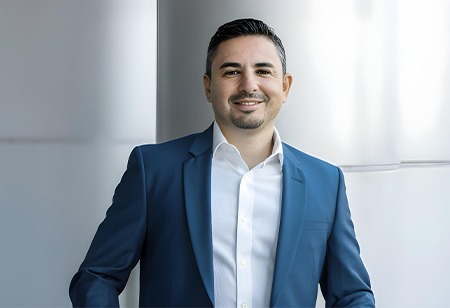
With over 25 years of global experience in agriculture, Alexander Berkovskiy, President, AMEA (Asia, Middle East, Africa), Syngenta, has led growth-focused strategies across diverse international markets, helping drive farmer-centric innovation and sustainable agricultural transformation. His leadership approach emphasizes collaboration, technology adoption, and long-term food security solutions.
In an exclusive interaction with CEO Insights Asia, Alexander shares his perspectives on leading across diverse regions, balancing commercial success with farmer needs, and driving ag-technology adoption. Drawing from his experience across the AMEA region, he makes a strong case for creating meaningful agricultural impact through partnerships, innovation, and courageous leadership.
Read the following interview for deeper insights.
Q: As President across Asia, the Middle East, and Africa, how do you lead teams through vastly different agricultural and economic environments successfully?
A: The Syngenta AMEA region has 50% of the world’s agricultural land and 67% of the global population – everything from large-scale farming to 350 million smallholder farmers. It’s also the region with 85% of the world’s acutely food-insecure people.
We start by recognizing that the region’s diversity is its strength. Our 7,000+ employees operating across 60 countries work side-by-side with farmers, building close connections and understanding their realities first-hand. These deep local insights across crops, climates, and farmer needs ensure we can create tailored solutions rather than a one-size-fits-all approach. These solutions are the result of our teams collaborating in an environment where they can grow, thrive, and help shape the future of food security.
Q: Managing diverse regional markets requires constant adaptation; what leadership strategies have helped you create alignment across cultures, teams, and business priorities?
A: First and foremost, our clear shared purpose creates the foundation for alignment – by equipping AMEA farmers for success, we are helping to feed the world. My team is anchored in putting farmers' needs first.
Courage, one of Syngenta’s leadership behaviors, is non-negotiable. Leading across 60 countries means making decisions in a very complex environment, addressing challenges directly, and staying committed to long-term growth. Accountability is what makes our courage sustainable. Because Syngenta AMEA is so diverse, our people on the ground often see what I cannot. When they feel empowered to make decisions and take ownership of outcomes, rather than just tasks, we can adapt with the agility required in today’s world.
Q. With extensive experience in agriculture, how do you balance regional commercial growth ambitions while staying closely connected to evolving farmer expectations?
A. I have been in the agri-tech industry for more than 25 years. Most people do not understand how the food they eat is grown. We want to start changing that and building appreciation for farmers again. They are central to local food systems and rural economies and are the backbone of global food production. The world needs more food, but there is no more land. So, we need innovation to produce more in a sustainable way.
When I travel to the countries in AMEA and interact with farmers, I see firsthand the increasing environmental and economic challenges they are facing. Our goal is to help farmers grow better-quality and higher yields. Of course, that represents a significant growth opportunity for our business, but that growth is rooted in solving these real-world challenges. When farmers succeed, our business follows.
Q. Across AMEA markets, what leadership qualities are most critical when introducing ag-technology solutions in regions with different levels of adoption and readiness?
A. Climate pressures, global market volatility, and the urgent need to promote sustainable farming practices mean that technology adoption can no longer be optional. By leveraging these innovations, farmers can increase yields, lower costs, and build resilience. But we don’t stop there – we provide education and training, agronomic information, and support infrastructure. And what we cannot do ourselves, we seek out partners to fill the gaps.
Smallholder agriculture is inefficient, but as I said, it is the backbone of global food production. Imagine a teenager in Kenya using an artificial intelligence app to predict soil health, or a small farm in Indonesia accessing drone data to boost yields. AI can be the great equalizer in agriculture – but only if it’s accessible, affordable, and trusted. Digital innovation can benefit every farmer, not just those with the biggest fields or budgets. Technology can unlock this future and help fix the fragmentation, and this is something we work on every single day.
Q. What has been the most valuable leadership lesson from building growth-focused agricultural businesses across regions facing completely different food security challenges?
A. For me, growth is strongest when it is built around shared outcomes. I often refer to a quote from John F Kennedy, “There are risks and costs to a program of action, but they are far less than the long-range risks and costs of comfortable inaction". No one can feed the world alone. We need partnerships to make us stronger, to find better solutions.
To move beyond comfortable inaction, collaborative efforts are needed – whether it is with industry players, partners and associations, global NGOs, financial institutions, or Public Private Partnerships. Food security depends on the strength of the whole ecosystem around the farmer. And the most effective leaders understand that impact happens beyond the field.
Alexander Berkovskiy’s 5 Leadership Lessons from Building the Future of Agriculture
1. Local Insight Drives Global Impact
Leadership across diverse agricultural markets begins with understanding local realities. Empowering regional teams and developing farmer-centric solutions creates stronger outcomes than applying a uniform strategy.
2. Purpose Creates Alignment
A shared mission of helping farmers thrive enables teams across cultures and markets to stay aligned, make confident decisions, and remain focused on long-term value creation.
3. Farmer Success Fuels Business Growth
The strongest growth strategies are rooted in solving farmers' real challenges. Innovation that improves productivity, resilience, and sustainability ultimately strengthens both farming communities and the business.
4. Technology Needs Trust to Scale
Successful ag-tech adoption goes beyond innovation. Education, training, support systems, and strategic partnerships are essential to making digital tools accessible and impactful for farmers of every scale.
5. Collaboration Is the Foundation of Food Security
No single organization can solve agriculture's biggest challenges alone. Lasting impact comes from building strong partnerships across industry, governments, financial institutions, NGOs, and farming communities.
LAST WORD: What advice would you give to future regional leaders about driving innovation, managing diverse teams, and creating meaningful agricultural impact across global markets?
I would tell future regional leaders to stay grounded in the purpose of agriculture. At the end of the day, our work is about helping farmers feed the world’s growing population sustainably. Innovation has transformed agriculture over the last 70 years, helping to feed an additional five billion people.
But the lesson is not just that technology matters; it is that progress takes time, trust, and consistent execution. Lastly, my advice would be to lead with courage and humility. Agriculture is too important for short-term thinking. The best leaders are those who build trust, stay close to the field, bring solutions that go beyond products, and make decisions that strengthen the system over time.
Alexander strongly believes that the future of agriculture will be shaped by leaders who combine local understanding, innovation, collaboration, and a relentless focus on farmer success to build resilient food systems for a growing world.