


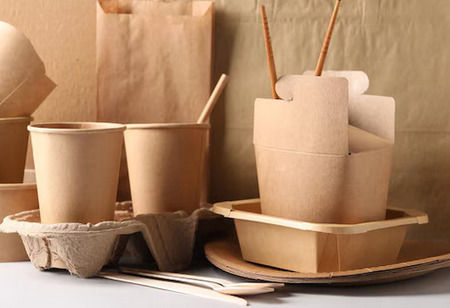
The Ministry of Industry is advocating for the adoption of alternative packaging materials to plastics as a strategic measure to enhance the efficiency and bolster the competitiveness of the food and beverage (F&B) sector in the face of evolving challenges.
Minister of Industry Agus Gumiwang Kartasasmita announced that his department has initiated efforts to advocate for the adoption of alternative packaging materials, with an emphasis on those made from paper or paperboard, instead of plastic.
Also Read: Vietnam and RoK Launch Cross-Border QR Payment Service
He indicated that this style of packaging is deemed highly competitive and constitutes a considerable share, approximately 28 percent, of the total packaging used in the food and beverage sector.
The adoption of paper-based aseptic packaging as an alternative to traditional materials and a replacement for plastics is among the strategic initiatives endorsed by the ministry. Paper packaging is commonly utilized for items like milk and drinks.
He stated that their goal is to encourage the advancement of alternative packaging materials through a business matching initiative connecting manufacturers and consumers. In the interim, Putu Juli Ardika, who is serving as the Acting Director General of the Agro Industry at the ministry, articulated that the implementation of aseptic packaging made from paper aligns with governmental policies aimed at promoting industrial practices that are more environmentally sustainable.
This pledge and endorsement were exemplified through a workshop and site visit at PT Lami Packaging Indonesia, which involved members of the Indonesian Food and Beverage Entrepreneurs Association (GAPMMI) some time ago. Adhi S. Lukman, who serves as the Chairman of GAPMMI, emphasized the significance of the workshop in exploring alternative strategies that could facilitate continuous growth within the food and beverage sector.
To effectively prepare for diverse challenges within the industry, we must emphasize two crucial components: procurement and the manufacturing department.
Also Read: DeepSeek Unveils New Flagship AI Model a Year After Breakthrough
It is essential for the manufacturing department to enhance its efficiency to maintain a competitive edge, whereas the procurement sector must broaden its sourcing strategies.
This visit constitutes a segment of our initiative to identify alternative sources for packaging solutions," Lukman observed. Furthermore, Merrijantij Punguan Pintaria, who serves as the Director of the Beverage, Tobacco Products, and Refreshment Materials Industry at the ministry, expressed that the cost of aseptic paper packaging cannot be directly equated with that of plastic packaging.
Also Read: Indonesia in 'Survival Mode' Amid Global Uncertainty
Nevertheless, when evaluated in a comprehensive manner, the outcomes might appear comparable because aseptic packaging made of paper does not necessitate a cold chain or refrigeration for storage, and its paper-based raw materials maintain relative stability. The nationwide demand for aseptic packaging is projected to be approximately 8.3 billion units annually, with nearly 4.8 billion originating from the milk and dairy product sector, while the balance is derived from tea and coffee-based drinks. Additionally, certain products are derived from plant-based origins, including coconut milk, oat milk, and mung bean milk.