


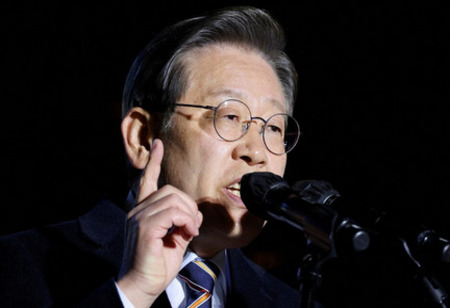
 President Lee Jae Myung urged the government to promptly implement a 100 trillion won ($68 billion) initiative aimed at bolstering the stability of the nation's financial markets, highlighting escalating tensions in the Middle East as a potential risk to market sentiment.
In his introductory statements at the Cabinet meeting, Lee expressed concerns about the escalating crisis in the Middle East negatively impacting the international economic and security landscape.
He mentioned the increasing uncertainties being encountered by financial markets and highlighted the potential for broader economic challenges stemming from instability in energy supply and trade conditions.
Also Read: PM Urges Breakthrough in Digital Economy, Anchored in Data, AI
The president emphasized the need for strategic planning in order to diversify energy imports, which can help in maintaining stability amidst fluctuations in supply and prices. Additionally, he directed government agencies to take strict actions against those trying to exploit the market by hoarding, stockpiling, or profiteering excessively, asserting that such behavior will not be tolerated.
Lee emphasized that the government intends to engage in discussions regarding potential strategies to address the unexpected surge in fuel costs. The president underscored the importance of immediate and comprehensive financial assistance policies for industries anticipated to face direct impacts from the crisis, especially businesses heavily reliant on exports to the Middle East and the maritime sector.
Additionally, Lee directed the relevant ministries to ascertain the whereabouts of Korean citizens in the area and develop emergency evacuation strategies for potential use in the event of a deteriorating situation.
Moreover, President Lee Jae Myung arrived back in his home country on Wednesday following a four-day journey to Singapore and the Philippines. During his visit, he focused on enhancing economic partnerships with these Southeast Asian countries in response to the evolving global environment.
Also Read: Finance Ministry, Bank of Thailand Signal Recovery in Economy
Lee concluded his official visits to the two Southeast Asian nations amidst escalating tensions in the Middle East due to coordinated strikes by the US and Israel on Iran. These actions have caused significant disruptions in global financial markets, oil prices, and supply chains.
During the discussions between Lee and Singaporean Prime Minister Lawrence Wong, an agreement was reached to initiate negotiations for enhancing the existing bilateral free trade agreement and strengthening collaboration in the fields of artificial intelligence (AI) and nuclear energy.
In Manila, Lee and Philippine President Ferdinand Marcos Jr. engaged in discussions on Tuesday and reached an agreement to enhance cooperation in the fields of nuclear energy, critical minerals, the defense industry, and artificial intelligence.
Also Read: Indonesia, Arm Partnership Accelerate Mastery of Chip Technology
Lee has a slated appointment to lead an exceptional Cabinet gathering to evaluate the most recent developments in the Middle East alongside pertinent government departments and deliberate on appropriate actions to take.
The purpose of the meeting is to examine strategies for mitigating the negative effects of the conflict on the South Korean economy and security, as well as to safeguard the well-being of South Korean citizens residing in the Middle East. Discussions are anticipated to include the state of financial markets, particularly in light of the recent two-day decline in the South Korean stock market and the swift depreciation of the Korean won against the U.S. dollar.