


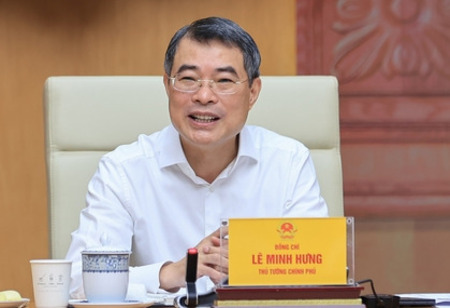
Prime Minister Le Minh Hung led the Government's regular monthly meeting on May 4, where they assessed the socio-economic outcomes for April and the first four months of 2026 and identified essential tasks and solutions for the upcoming months.
As the session began, the Prime Minister remarked that this marks the inaugural regular Government meeting of the 16th term.
Also Read: Vietnam Chairs Roundtable on Peaceful Use of Nuclear Energy
He emphasized the importance of conducting a precise and thorough evaluation of the socio-economic developments at the start of 2026, with particular attention to April, while simultaneously developing timely policy measures for May and subsequent months.
According to reports provided to the participants, the discussions will center around socio-economic performance, the allocation of public investment, the execution of national target programs, and other significant matters. The government will also evaluate suggested changes to its work regulations to ensure operations are more organized, disciplined, and efficient.
This will be done in accordance with the Constitution, laws, and Party guidelines while strengthening its function as a supportive and service-focused administration.
Concerning socio-economic performance, Prime Minister Hung emphasized the need for a comprehensive analysis of new challenges, particularly those related to inflationary pressures, such as imported inflation and the effects of global fuel and commodity price changes.
He encouraged a detailed assessment of fiscal and monetary policy management, along with price control strategies, to suggest timely and adaptable solutions.
Also Read: BNCERA Launches Incheon Plant, Spurs Beauty Medicine Market
He emphasized the importance of actively reacting to external disturbances, bolstering economic resilience, ensuring macroeconomic stability, and keeping inflation in check.
Regarding trade, the Prime Minister asked for a comprehensive analysis of the growth and structure of imports and exports, the trade balance, and the stability of foreign exchange, as well as strategies to diversify markets and encourage sustainable exports. He also mandated thorough evaluations in critical areas like agriculture, services, and the environment, aiming to increase production, improve value addition, and enhance export capabilities.
Additionally, he emphasized the importance of social sectors such as education, healthcare, and culture as vital components of comprehensive socio-economic growth. Regarding defense, security, and foreign affairs, the Prime Minister highlighted the growing complexity of global and regional situations, calling on relevant ministries and agencies to formulate suitable response strategies and to report immediately to the appropriate authorities.
Also Read: PM Emphasises Need for Governance Shift to Drive Growth
Regarding public investment and national target programs, he highlighted the importance of speeding up the allocation and disbursement of capital while enhancing its effectiveness. This is especially crucial for urgent priorities like providing access to clean water in remote and ethnic minority communities. The head of the Government also emphasized the ongoing effort for administrative reform, which involves reducing business regulations and streamlining processes to enhance the investment environment.