


Asia is rapidly becoming the world's innovation powerhouse, with cities investing heavily in artificial intelligence, advanced manufacturing, semiconductors, smart infrastructure, and entrepreneurship. From established technology leaders like Singapore, Shenzhen, and Seoul to fast-growing ecosystems in Ho Chi Minh City, Kuala Lumpur, Bangkok, and Taipei, these urban centers are attracting global businesses, investors, and skilled talent. This article explores eight Asian cities that are shaping the future of technology, digital transformation, and innovation across the region.
Asia is quickly becoming the focal point of worldwide innovation, driven by energetic startup ecosystems, government-supported digital transformation efforts, and ongoing funding in research and technology. Although traditional leaders maintain dominance in sectors like artificial intelligence, semiconductors, advanced manufacturing, and fintech, a fresh wave of cities is reshaping innovation through smart infrastructure, entrepreneurship, and international cooperation.
From globally recognized tech hubs to rapidly emerging digital markets, these cities are drawing in international enterprises, investors, and talented professionals, reinforcing Asia's role as a key influence in the future of innovation.
Here’s a look at eight Asian cities that are influencing the technological and entrepreneurial landscape of the region and beyond.
Shenzhen - China's Silicon Valley
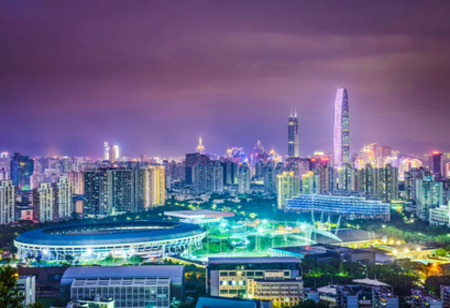 Shenzhen has transformed from a small fishing village into one of the world's leading innovation and technology hubs in just over four decades. Designated as China's first Special Economic Zone in 1980, the city has become a global center for advanced manufacturing, artificial intelligence, telecommunications, robotics, and hardware innovation.
Often called China's "Silicon Valley," Shenzhen is home to global technology leaders such as Huawei, Tencent, DJI, BYD, and ZTE. Its unique combination of research, manufacturing, design, and rapid prototyping enables companies to develop and commercialize new technologies at remarkable speed, attracting startups, investors, and multinational corporations alike.
Also Read: Undana, ATSEA Partner to Study Dugongs to Support Blue Economy
Innovation remains central to the city's growth. In 2024, Shenzhen filed more than 16,000 international patent applications, retaining its position as China's leading city for international patents for the 21st consecutive year. The city also continues to strengthen its innovation ecosystem through investments in higher education and research institutions, with universities and research centers working closely with industry to commercialize research and support technology startups.
Shenzhen's innovation extends beyond its city limits through its close integration with Hong Kong and Guangzhou as part of the Guangdong–Hong Kong–Macao Greater Bay Area. This regional collaboration promotes the flow of talent, capital, and technology while strengthening Shenzhen's position as a global innovation powerhouse. Backed by sustained investment in research, entrepreneurship, and advanced manufacturing, Shenzhen continues to rank among Asia's most influential technology and innovation hubs.
Singapore – A Hub of Innovation & Tech
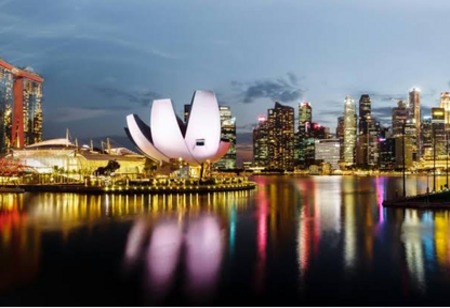 Singapore has established itself as one of Asia's leading innovation hubs through decades of strategic investment, business-friendly policies, and a strong focus on digital transformation. Recognized among the world's most AI-ready economies, the city-state combines advanced digital infrastructure, transparent regulations, and a highly skilled workforce, making it a preferred destination for global technology companies and startups.
The launch of the National AI Strategy 2.0 in 2023 further accelerated the country's innovation ambitions. Singapore is home to more than 4,500 technology startups and over 50 AI Centres of Excellence, while the S$150 million Enterprise Compute Initiative (ECI) supports businesses with AI computing resources and advisory services. National programs such as AI Singapore are also developing local talent, with the country aiming to build a workforce of 15,000 AI specialists by 2029.
Global technology companies continue to expand their presence in Singapore. In 2025, Tata Consultancy Services (TCS) established its AI-Powered Research & Innovation Centre, while Microsoft strengthened its regional research capabilities through Microsoft Research Asia – Singapore. The city-state also attracted regional headquarters from companies such as Tomoro and Enclustra, underscoring its appeal as a regional technology hub.
Supported by forward-looking policies, world-class infrastructure, sustained investment in research and talent, and a vibrant startup ecosystem, Singapore has become a global center for AI, deep technology, and digital innovation, serving as a gateway for companies expanding across Asia.
Bengaluru - Silicon Valley of India
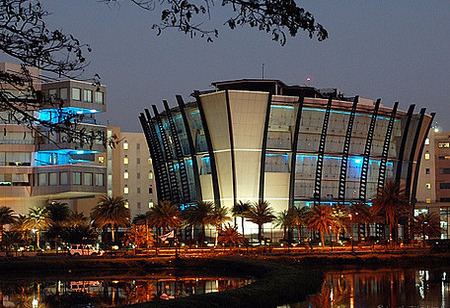 Bengaluru has established itself as India's leading innovation and technology hub through decades of growth in information technology, entrepreneurship, research, and global investment. Widely known as the "Silicon Valley of India," the city combines a thriving startup ecosystem, world-class talent, and a strong presence of multinational corporations, making it one of Asia's most dynamic centers for innovation.
The city's transformation began in the 1980s with the establishment of Electronics City, laying the foundation for its technology ecosystem. Today, Bengaluru is home to more than 67,000 registered IT companies, including industry leaders such as Infosys, Wipro, and TCS, alongside global technology giants like Google, Microsoft, Amazon, and IBM. This blend of domestic and international firms has fostered a collaborative environment that continues to drive digital innovation.
As India's startup capital, Bengaluru hosts more than 10,000 startups across sectors including artificial intelligence, fintech, blockchain, healthtech, and software-as-a-service (SaaS). A strong network of incubators, accelerators, venture capital firms, and coworking spaces provides entrepreneurs with the resources needed to scale innovative businesses.
The city's greatest advantage lies in its highly skilled talent pool. Institutions such as the Indian Institute of Science (IISc) and the Indian Institute of Management Bangalore (IIM Bangalore), together with numerous engineering colleges, supply industry with skilled professionals while attracting multinational corporations to establish research and development centers and Global Capability Centres (GCCs).
Backed by a collaborative innovation ecosystem, sustained investment in research, and a vibrant entrepreneurial culture, Bengaluru continues to lead India's digital economy and remains one of Asia's most influential global innovation hubs.
Seoul – South Korea’s Innovation, Talent & Cultural Hub
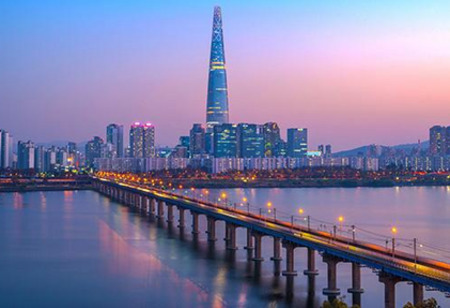 Seoul has established itself as one of Asia's leading innovation hubs, driven by its world-class technology ecosystem, advanced digital infrastructure, and sustained investment in research and development. The South Korean capital is home to a dynamic mix of multinational corporations, startups, research institutions, and investors, making it a global leader in emerging technologies.
The city is anchored by innovation districts such as Gangnam, Digital Media City (DMC), and the nearby Pangyo Techno Valley, which together form one of Asia's most vibrant technology clusters. Global companies including Samsung, LG, Hyundai Motor Group, and SK Group continue to invest heavily in artificial intelligence, semiconductors, robotics, biotechnology, and next-generation mobility, reinforcing Seoul's leadership in technological innovation.
Seoul also benefits from strong public support for innovation through investments in AI, quantum computing, biotechnology, and smart city initiatives that encourage collaboration between government, academia, and industry. Ranked among the world's leading startup ecosystems in the Global Startup Ecosystem Report 2025, the city attracts entrepreneurs and investors in AI, fintech, healthtech, robotics, and creative technologies, supported by abundant venture capital and highly skilled talent.
Beyond technology, Seoul has leveraged the global success of Hallyu (Korean Wave) to demonstrate how innovation in entertainment, digital media, and cultural exports can drive economic growth and strengthen international competitiveness.
By combining technological excellence, a thriving startup ecosystem, forward-looking public policies, and cultural innovation, Seoul continues to rank among Asia's most influential global innovation hubs.
Kuala Lumpur – South East Asia’s Emerging Tech Hub
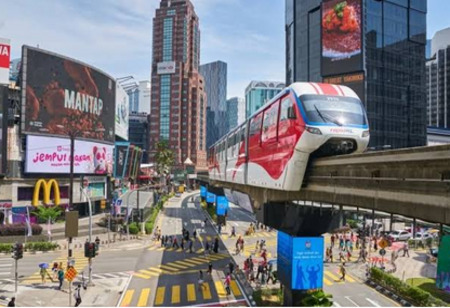 In more than five decades, Kuala Lumpur (KL) has transformed into a vibrant, digital, and varied regional center in Asia. In recent years, multinational corporations (MNCs) have made strategic choices to consolidate their Asia-Pacific operations in cost-effective regions to enhance their supply chain management.
Government policies and frameworks like the National Fiberisation and Connectivity Plan (NFCP), National eCommerce Strategic Roadmap, and Malaysia Smart City Framework have fostered the growth of e-commerce and the digital economy in the nation. KL is progressing towards a smart city by utilizing IoT-driven solutions, incorporating artificial intelligence (AI) and big data analytics to create real-time traffic monitoring through video and image recognition technologies. The execution of Malaysia's NFCP offers improved speed and quality connectivity to boost KL's digital economy.
KL's favorable technology environment consistently draws international MNCs to set up their regional center of excellence (CoE) and essential support functions. Prominent MNCs, spanning insurance services to cutting-edge technology pioneers, have shifted their Asia-Pacific “high-value, high-impact” central operating models to KL, utilizing Industry 4.0 innovations and a skilled information and communications technology (ICT) workforce.
Also Read: Gaon Cable Lands First Global EV Supply Chain Deal
Ho Chi Minh City - Accelerating Digital Infrastructure & High-Tech Investment
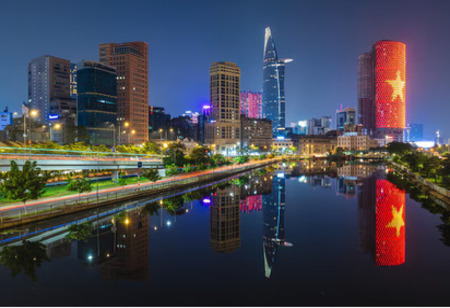 Ho Chi Minh City has rapidly emerged as one of Southeast Asia's fastest-growing innovation hubs, driven by strong government support, rising foreign investment, and an expanding technology ecosystem. As Vietnam's commercial capital, it has become a focal point for science, technology, and digital transformation, attracting both global corporations and homegrown startups.
The city is supported by a growing network of universities, research institutions, technology companies, and innovation organizations that foster entrepreneurship and technological advancement. In 2025, the science and technology sector attracted nearly US$1.8 billion in foreign direct investment, accounting for around 22 percent of total FDI inflows. Investments from organizations such as G42, Viettel Data Centre, CMC, and SAP Labs, alongside the presence of global technology leaders including NVIDIA, AMD, and Intel, highlight the city's growing appeal as a destination for advanced technology and research.
Two flagship innovation clusters have been central to this growth. The Saigon Hi-Tech Park has developed into one of Vietnam's leading technology manufacturing and research hubs, hosting companies such as Samsung, Intel, Schneider Electric, and Sanofi. Meanwhile, Quang Trung Software City (QTSC) has become the country's premier information technology park, supporting a vibrant community of digital technology companies and software enterprises.
With continued investment in research and development and a focus on artificial intelligence, semiconductors, biotechnology, digital healthcare, and smart manufacturing, Ho Chi Minh City is well positioned to become one of Southeast Asia's leading centers for technology and innovation.
Bangkok – Emerging Asian Entrepreneurship Hub
 Bangkok is steadily emerging as one of Southeast Asia's leading innovation hubs, driven by its expanding digital economy, smart city initiatives, and growing startup ecosystem. While long recognized as Thailand's commercial and tourism center, the city is increasingly investing in technology, sustainable urban development, and digital transformation to strengthen its position as a regional innovation destination.
Government initiatives have helped foster a growing network of startups, innovation centers, incubators, and research institutions focused on fintech, healthtech, e-commerce, artificial intelligence, and smart mobility. This collaborative ecosystem has attracted both domestic entrepreneurs and international investors seeking opportunities in Southeast Asia's rapidly expanding digital economy.
A defining feature of Bangkok's innovation strategy is its commitment to building a smarter and more sustainable city. Developments such as One Bangkok integrate green infrastructure, intelligent building technologies, and mixed-use spaces that meet international sustainability standards, while smart mobility initiatives continue to improve public transport and urban connectivity.
The Bangkok Metropolitan Administration (BMA) is also advancing environmental innovation through waste-to-energy projects, electric municipal vehicles, and expanded urban green spaces. Landmark developments such as Chulalongkorn University Centenary Park showcase how nature-based solutions can address flooding, urban heat, and climate resilience.
Also Read: MoF Proposes Extending Tax Relief to Curb Inflation Risks
By combining digital transformation, sustainable infrastructure, and a growing innovation ecosystem, Bangkok is evolving into one of Southeast Asia's emerging centers for technology and innovation.
Taipei - AI, Semiconductor Manufacturing & IoT Innovation Powerhouse
 Taipei has established itself as one of Asia's leading innovation hubs by combining world-class technology manufacturing, a vibrant startup ecosystem, and strong government support for entrepreneurship. As the heart of Taiwan's technology sector, the city benefits from a highly skilled workforce, advanced digital infrastructure, and close collaboration between startups, research institutions, and global technology companies.
The city's innovation ecosystem is supported by leading universities, research centers, and startup incubators, including the Innovation & Incubation Center at the National Taipei University of Technology. Innovation hubs such as the AWS Joint Innovation Center, InnoSquare, and Taiwan Startup Terrace provide entrepreneurs with mentorship, funding opportunities, and access to international markets.
Taipei is home to globally recognized technology companies such as Asus and Acer, while benefiting from Taiwan's world-leading semiconductor industry led by TSMC. This strong industrial base has driven advances in artificial intelligence, advanced electronics, cloud computing, and semiconductor technologies, attracting growing private investment and international collaboration.
Government initiatives have further accelerated innovation through startup-friendly policies, including the Taiwan Employment Gold Card, Taiwan Entrepreneur Visa, and the Taiwan Tech Arena (TTA), which connects startups with investors, mentors, and global innovation networks. Industry events such as Meet Taipei also foster collaboration between entrepreneurs, investors, and technology leaders.
Supported by a strong semiconductor ecosystem, forward-looking public policies, and a thriving startup community, Taipei continues to strengthen its position as one of Asia's premier centers for technology, entrepreneurship, and innovation.
Asia’s Growing Innovation Might
With Asia advancing its digital transformation, these cities illustrate how strategic investments in technology, research, entrepreneurship, and intelligent infrastructure can foster sustained economic growth. Through advancements in artificial intelligence, cutting-edge manufacturing, semiconductor technology, or entrepreneurial ventures, every city plays a distinctive role in shaping the innovation ecosystem of the region. Collectively, they emphasize Asia's expanding role in molding the future of worldwide technology, commerce, and innovation.