


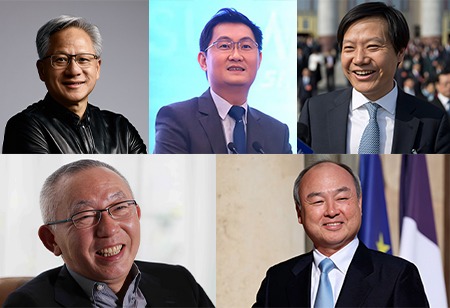
 AI is rapidly moving from an emerging technology to a strategic business imperative, and Asian CEOs are taking different approaches to prepare for what comes next. From Masayoshi Son, Pony Ma to Tadashi Yanai, leaders across Asia are embedding AI into the foundations of their businesses. Their strategies reveal why AI readiness—built on talent, infrastructure, innovation, and adaptability—could become a defining advantage in the next phase of business.
When Lei Jun announced that Xiaomi would invest over RMB 60 billion in artificial intelligence over the next three years, the message was bigger than a commitment to a new technology. The Xiaomi founder was effectively signaling that AI would become part of the company’s DNA—from the large language models powering AI agents to the chips, smartphones, electric vehicles, and connected devices through which those capabilities reach consumers.
Xiaomi is not alone. Across Asia, CEOs are moving beyond simply adopting AI tools and beginning to reshape their businesses around the technology. To name a few, Masayoshi Son is betting on the infrastructure behind the AI revolution, Pony Ma is embedding AI agents into Tencent’s digital ecosystem and so on. Together, their strategies reveal a broader shift: the race is no longer just to adopt AI, but to become ready for a future built around it.
Let’s explore the strategies adopted by top Asian CEOs such as Masayoshi Son, Pony Ma, Lei Jun, Jensen Huang, and Tadashi Yanai which offers a closer look at how businesses across sectors are building AI readiness.
Masayoshi Son, SoftBank: Betting Big on the AI Revolution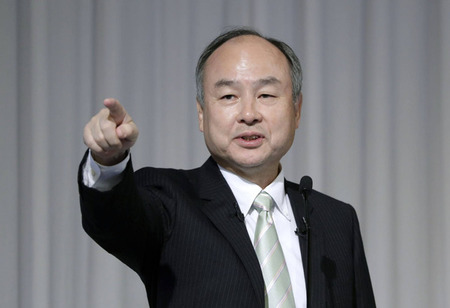
Few Asian business leaders have embraced the AI revolution as boldly as Masayoshi Son. The SoftBank founder has openly championed the transformative potential of artificial intelligence, telling shareholders the previous year that he was “destined to achieve” artificial superintelligence (ASI). In pursuit of that vision, Son has been reshaping SoftBank’s strategy and directing its vast resources toward building the infrastructure, technologies, and companies that could power the next era of AI.
SoftBank’s AI readiness ambitions span a broad portfolio, from its majority stake in chip designer Arm to investments in AI and autonomous-driving companies such as UK-based Wayve. The group has also agreed to acquire U.S. chip designer Ampere for $6.5 billion and committed to providing up to $40 billion in financing for OpenAI, taking its overall investment in the company to $32 billion.
Son’s ambitions extend well beyond individual investments. As chairman of the $500 billion Stargate initiative, launched with Oracle, OpenAI, and Abu Dhabi’s MGX, he is helping drive an enormous expansion of U.S. data-center and AI infrastructure. By aligning SoftBank with the U.S. push to strengthen domestic chip production and technological leadership, Son has repositioned the company as a major player in the global AI infrastructure race.
Also Read: Hyundai Glovis Pushes AI Adoption and Executive Training
His strategy reflects the confidence that has defined his career. The $20 million investment he made in Alibaba eventually approached $200 billion at its peak, becoming one of the most spectacular investment successes in corporate history. Inspired in part by Arm’s successful 2023 IPO, Son is once again pursuing large-scale bets—this time on AI and ASI. Yet the scale of these commitments also carries considerable risk, particularly given SoftBank’s history of high-profile investment missteps. Whether Son’s latest bets will deliver another Alibaba-sized success or expose the dangers of betting too heavily on an uncertain technological future remains one of the defining questions surrounding SoftBank’s AI strategy.
Pony Ma, Tencent: Turning Tencent into an AI Ecosystem
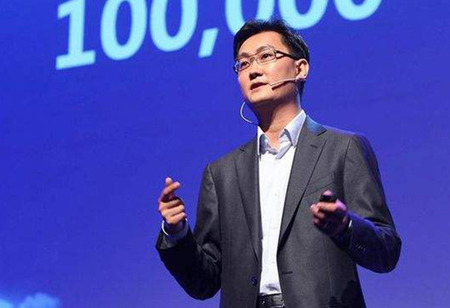 For Pony Ma, AI is not simply the next technology Tencent needs to adopt—it is becoming the foundation for the company’s next phase of growth. Following Tencent’s 2025 earnings, the company signaled that funding for its Hunyuan large language model and new AI products will at least double in 2026, underscoring the scale of its commitment to the technology.
Ma has also begun publicly outlining Tencent’s vision for an AI-agent-driven future through what he calls the “Raising Shrimp” strategy. Drawing inspiration from WeChat’s decentralized Mini Program ecosystem, the approach seeks to combine centralized AI capabilities with a broad network of decentralized applications and AI agents. The ambition is to make Tencent’s existing ecosystem a critical platform for the next generation of internet services, with Hunyuan serving as its technological engine.
Behind that AI readiness vision, Tencent has been strengthening its AI foundations. Over the past year, the company has reorganized its Hunyuan development teams, revamped its R&D structure, and intensified efforts to recruit experienced AI professionals while bringing younger talent into its research teams. The company is also increasing the computing infrastructure needed to support its ambitions. In the fourth quarter of 2025, Tencent’s capital expenditure reached RMB 16.9 billion ($2.45 billion), up 41 percent from the previous quarter, with much of the spending directed toward servers and other infrastructure. GPU shortages constrained some of its expansion, prompting Tencent to supplement its computing capacity through leasing.
Tencent is simultaneously pushing AI into products that already command enormous user bases. Yuanbao, its AI assistant, and AI-agent capabilities within WeChat are positioned as gateways through which AI can interact with the company’s vast Mini Program ecosystem. Rather than building an entirely new digital ecosystem from scratch, Ma appears intent on infusing AI into one Tencent has spent years building.
The strategy comes with substantial near-term costs and execution challenges, but Ma is clearly playing a long game. By combining proprietary models, computing infrastructure, AI talent and Tencent’s existing platform, he is betting that the company’s greatest advantage in the AI era may not be AI alone, but the ecosystem it already controls around it.
Also Read: Transforming The Digital Fintech Landscape With AI
Lei Jun, Xiaomi, China: Connecting Xiaomi’s World Through AI
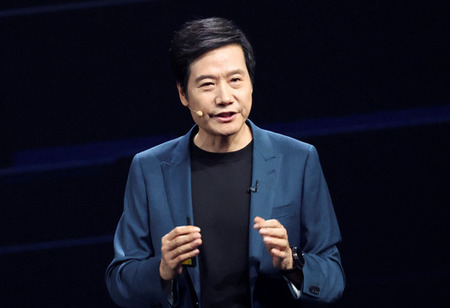 For Lei Jun, the AI race is not about adding intelligent features to Xiaomi’s products—it is about building the intelligence layer that connects the company’s entire ecosystem. In March 2026, the Xiaomi founder announced that the company would invest at least RMB 60 billion ($8.7 billion) in AI over the next three years, after its AI research and development spending had already surpassed its earlier RMB 16 billion target.
A key part of this strategy is Xiaomi’s development of its own MiMo family of large language models, reducing the company’s reliance on external AI providers. Its newer models are designed to power AI agents capable of executing tasks rather than simply responding to questions. The shift reflects a broader ambition: moving AI from something users interact with to something that can act on their behalf.
Lei’s AI vision extends beyond smartphones and software. He has integrated AI deeply into Xiaomi’s rapidly expanding electric vehicle business, where the technology supports intelligent interaction, assisted driving and autonomous-driving capabilities. Rather than treating cars as a standalone business, Lei is positioning them as another intelligent node within Xiaomi’s broader technology ecosystem, connecting vehicles with smartphones, smart-home devices and other products.
That ambition is reinforced by Xiaomi’s push for greater vertical integration. The company has invested more than RMB 20 billion in its Xring chip initiative, while its semiconductor design team has grown to more than 3,000 employees. Its chip roadmap spans smartphone processors, AI computing and autonomous driving, giving Xiaomi greater control over the hardware required to power its AI ambitions.
Taken together, these investments reveal a strategy that goes well beyond AI adoption.
Lei Jun is building the models, chips, devices and vehicles that allow AI to operate across Xiaomi’s ecosystem—turning the company from a consumer-electronics manufacturer into a technology platform increasingly designed around intelligent computing.
Jensen Huang, NVIDIA: Powering AI Beyond the Screen
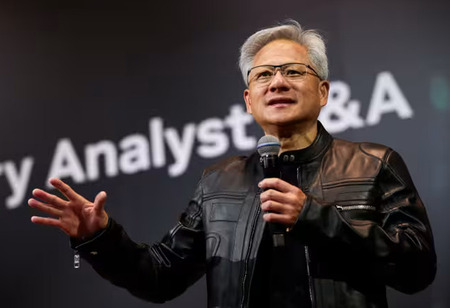 In a world where tech advancements are transforming all facets of contemporary existence, few figures inspire as much fascination as Jensen Huang. As the innovative CEO of NVIDIA, Huang has guided the company from its beginnings as a graphics processing unit (GPU) leader to a worldwide force leading the next era of artificial intelligence.
A key milestone in NVIDIA’s development was the creation of CUDA (Compute Unified Device Architecture). CUDA opened up access to high-performance computing, enabling various industries to utilize the capabilities of GPUs. This acceleration is essential in fields like image recognition, natural language processing, and real-time data analytics. Huang’s vision in investing in CUDA technology has strengthened NVIDIA’s market stance and triggered a wider transformation in AI research.
A central theme in Huang’s discussion is the shift from simply promoting AI science to achieving its practical uses. Over the last ten years, there has been significant advancement in creating AI algorithms, but the upcoming years will concentrate on incorporating these developments into systems that function in real-world scenarios
Harnessing the vast computational capabilities of GPUs and the creative potential of AI, NVIDIA leads this initiative. The company's investments in cutting-edge chip technology and AI-based software solutions are setting the groundwork for a future in which self-driving vehicles and smart robots are widespread.
In the future, Jensen Huang imagines a world where artificial intelligence is a widespread positive influence. His method is marked by a combination of scientific precision and real-world use—an ideology that has influenced NVIDIA’s path for more than 30 years. A particularly promising field emphasized by Huang is the use of AI in digital biology. Through the examination of intricate biological data, AI could transform drug development, genetic studies, and individualized healthcare.
In the same way, Huang is hopeful regarding AI's contribution to fighting climate change. Sophisticated algorithms can assess environmental data, forecast weather trends, and enhance resource management, thus aiding in more efficient climate strategies. NVIDIA's advancements in technology are poised to be crucial in these efforts, showcasing the significant societal effects of AI.
Also Read: Disruptions to Opportunity: Impact of AI in GCC Nations
Tadashi Yanai: Making Retail Smarter With AI
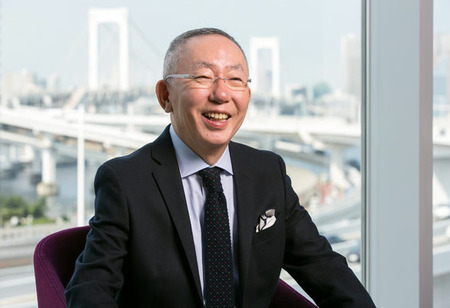 Tadashi Yanai has been advocating for AI mainly as a means of business transformation and customer insights, instead of developing a unique AI ecosystem like Xiaomi. Yanai initiated Fast Retailing's Ariake Project to convert the company into an information-led retailer. The company employs AI to assess large amounts of customer feedback and preferences, aiding teams in understanding customer desires, enhancing products, and creating more precise demand predictions. This is especially pertinent to UNIQLO's LifeWear approach: rather than merely predicting what may sell, the goal is to leverage customer insights to decide what ought to be designed, manufactured, and supplied.
Fast Retailing reports that its Customer Centers gather over 39 million pieces of customer feedback each year. AI is utilized to enhance the rapidity and precision of analyzing and delivering that feedback to product teams, stores, and staff. Yanai is utilizing AI to bridge the gap between the consumer and the product-development process.
Yanai has always aimed for Fast Retailing's distribution system to surpass traditional automation. He characterized the objective as establishing distribution centers and information systems that can provide the appropriate products at minimal cost, specifically highlighting robotics and AI as technologies that could facilitate this
During a 2022 analyst meeting, he stated that Fast Retailing aimed to evaluate the speed at which it could create and execute decisions by utilizing IT, AI, and robotics in distribution centers to foster a more sophisticated management approach. Recently, Yanai has characterized AI-powered information technology as forming a singular global market, altering the way companies must consider markets and management. In 2025, Yanai mentioned that customer feedback can currently be shared globally in real-time and that AI and social media can enhance favorable reputations. His reply is not just to automate marketing; he contends that the company must comprehend what customers appreciate and leverage that insight to generate new value.
Asian CEOs Turning AI into Strategic Organizational Pillar
Throughout Asia, CEOs are moving beyond experimenting with AI to making it a strategic pillar of their organizations. Whether through infrastructure, proprietary models, intelligent ecosystems, or customer-driven innovation, their approaches show that AI readiness is becoming a defining component of long-term competitiveness. As AI continues to evolve, the winners may not be those who adopt it fastest, but those who build the people, systems, infrastructure, and agility to evolve alongside it.