


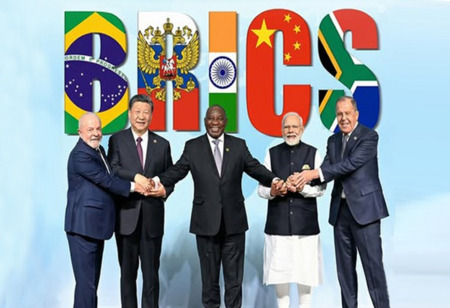
BRICS is deepening cooperation across critical minerals, clean-tech manufacturing, energy, technology, and supply chains, with India, Kazakhstan, Indonesia, China, and the UAE highlighting new opportunities for investment, industrial growth, and regional connectivity.
Marking two decades of collaboration, the 18th BRICS Summit in New Delhi highlighted both the group’s growing influence and its key challenge: BRICS has expanded its membership and agenda faster than it has built consensus. India’s 2026 presidency sought to bridge that gap by focusing on practical, development-oriented cooperation while steering BRICS away from becoming an anti-Western bloc. With China taking the lead in 2027, the focus will be on deepening economic and technological cooperation without losing the flexibility that has brought together countries with diverse priorities.
India’s presidency saw more than 400 meetings and engagements across 30 cities, bringing together ministers, officials, and business leaders. The summit’s outcomes could have practical implications for businesses exploring trade, investment, and market opportunities across BRICS economies. Prime Minister Narendra Modi described BRICS as having reached a point of “coming of age” and called on the Global South to become “rule-shapers” rather than simply follow rules created elsewhere.
Kazakhstan Looks to BRICS for Energy, Minerals & Connectivity
Having joined BRICS as a partner country in 2025, Kazakhstan sees opportunities to deepen cooperation in energy, critical minerals, and transport. Speaking at the BRICS Energy Partnerships for Progress and Prosperity discussion in New Delhi, Kazakh Ambassador to India Azamat Eskarayev highlighted conventional and renewable energy, emerging technologies, infrastructure, and resilient supply chains as key areas of interest.
Also Read: Korea, Mongolia Discuss Critical Minerals, Korean Peninsula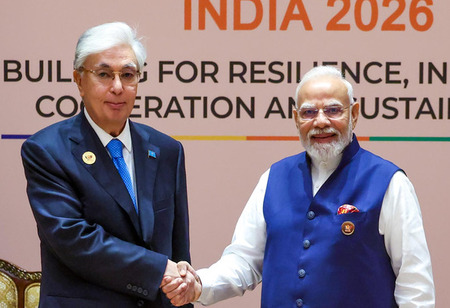
The agenda aligns with Kazakhstan’s broader efforts to strengthen its role in Eurasian energy and transport networks. The country is looking to use BRICS cooperation to expand its capabilities in energy and critical minerals, with a greater focus on processing, technology, and infrastructure rather than simply supplying raw materials.
Kazakhstan Pushes for Water Cooperation
Water security is another area Kazakhstan is seeking to place higher on the international agenda. President Kassym-Jomart Tokayev has proposed creating an International Water Organization with UN support. Aidar Kurmashev of the Kazakhstan Institute for Strategic Studies suggested that the initiative could gain practical momentum through projects involving satellite water monitoring, digital irrigation, wastewater recycling, and specialist training, particularly in arid regions.
Expanding Eurasian Transport Links
Transport connectivity offers another potential avenue. Kazakhstan is part of the Trans-Caspian International Transport Route, which links Central Asia with Europe through the Caspian Sea and the South Caucasus. It also has connections to the International North-South Transport Corridor and potential routes to India through Iran and Turkmenistan.
Kurmashev noted that stronger India-Central Asia connectivity would require more than political agreements. Reliable cargo volumes, efficient logistics, investment, and coordination with countries along these routes would be essential to make new trade corridors commercially viable.
Also Read: Indonesia, Chile Bolster Ties in Critical Minerals, Healthcare
Indonesia Pushes for Stronger Global South Cooperation
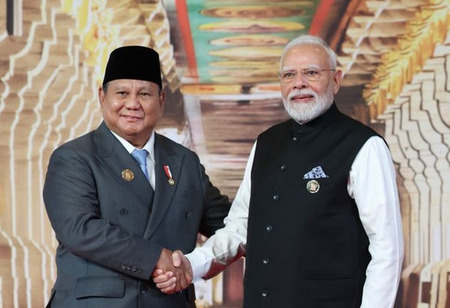 Indonesia’s entry into BRICS marks a significant step in its foreign policy, giving President Prabowo Subianto another platform to position the country as a stronger voice in a changing global economy. At the summit, Prabowo highlighted industrialisation, economic resilience, and reforms to global governance, while calling for greater influence for developing nations in international decision-making.
During the leaders’ meeting, he outlined three priorities: stronger national resilience, greater unity among Global South countries, and deeper cooperation within BRICS. He linked resilience to food, energy, and education security, while urging BRICS to turn its combined economic and demographic strength into opportunities for markets, investment, technology, and knowledge sharing.
Indonesia’s Push for Industrial Growth
Prabowo also called for closer cooperation on industrialization and global supply chains. With its large nickel and critical-mineral reserves, renewable-energy potential, forests, and sizable domestic market, Indonesia sees an opportunity to attract capital and technology while creating more value locally.
The New Delhi Declaration broadly reflected this approach, calling for greater participation by developing economies in advanced manufacturing, stronger technology transfers and supply chains, and wider use of national currencies in trade.
India-UAE Ties Gain Investment Momentum
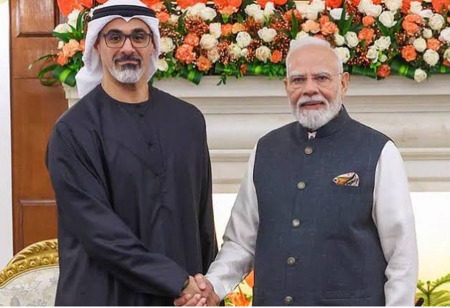 India and the UAE explored ways to deepen investment ties, including through L’Imad, the UAE’s newest sovereign investment fund, as Prime Minister Narendra Modi met Abu Dhabi Crown Prince Sheikh Khaled bin Mohamed bin Zayed Al Nahyan on the sidelines of the BRICS Summit. The leaders discussed cooperation across defence, AI, space, critical minerals, energy, food security, and connectivity.
UAE Bets Big on India’s Aluminium Sector
A key development was the UAE’s International Holding Company’s proposed $11.5 billion investment in an integrated greenfield aluminium project in Odisha. The project, described as India’s largest integrated aluminium investment, is expected to strengthen Odisha’s position as a global aluminium manufacturing hub.
The leaders also discussed opportunities in nuclear energy, technology, and innovation, while highlighting L’Imad’s potential role in expanding investment between the two countries. India and the UAE further agreed to continue working together through BRICS to advance shared priorities and strengthen cooperation within the grouping.
Philippines Brings ASEAN Priorities to BRICS
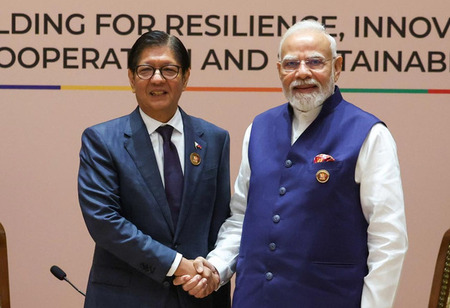 Philippine President Ferdinand R. Marcos Jr. outlined ASEAN’s priorities on peace, economic growth, and people empowerment at the 18th BRICS Summit in New Delhi. As chair of ASEAN in 2026, Marcos was invited by Prime Minister Narendra Modi to participate as an “Outreach Country” in the summit’s BRICS Plus discussions.
Presenting the Philippines’ ASEAN theme, “Navigating Our Future, Together,” Marcos highlighted three priorities: Anchors of Peace and Security, Corridors of Prosperity, and Empowering the People. He stressed the importance of ASEAN centrality, dialogue, and a rules-based order, while pointing to greater regional cooperation on maritime issues, disaster preparedness, and climate resilience.
On the economic front, Marcos highlighted efforts to strengthen supply chains, energy and food security, and advance ASEAN’s Digital Economy Framework Agreement. He also called for responsible AI adoption, particularly among micro, small and medium enterprises and women-led businesses.
ASEAN is additionally working to expand green investment and develop a regional approach to climate-resilient, food-secure agriculture, with people-centred development remaining central to the region’s agenda.
Also Read: US-Japan Deal Aim Supply Chains, Backs Deep-Sea Minerals Push
China Sets Out Five Priorities for BRICS Cooperation
President Xi Jinping called on Global South nations to strengthen multilateralism, uphold international law, and give developing economies a greater voice in global institutions. He also highlighted stronger cooperation on climate change, security, sustainable development, and AI governance.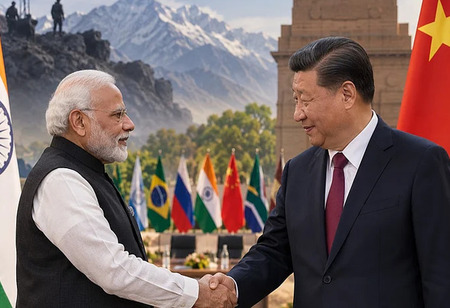
For BRICS, Xi stressed deeper ties with emerging markets, resilient supply chains, integrated markets, and innovation. He outlined five initiatives:
Open-Source AI Cooperation: Create a BRICS AI community to support collaboration on large language models, AI training, and an open AI ecosystem.
Trade & Investment Facilitation: Explore a BRICS special economic zone and improve policy coordination to create new opportunities for trade and investment.
Digital Industry Cooperation: Develop a shared BRICS digital ecosystem, expand digital-skills training, and encourage technology exchange and industry collaboration.
Smart Manufacturing: Support BRICS countries in developing smart factories, establishing common standards, and accelerating manufacturing upgrades.
Science & Technology Talent Development: Establish an engineering talent alliance, promote skills recognition, and launch youth exchanges focused on science and technological innovation.
Xi positioned these initiatives alongside China’s 15th Five-Year Plan, presenting them as avenues for deeper cooperation with the Global South.