


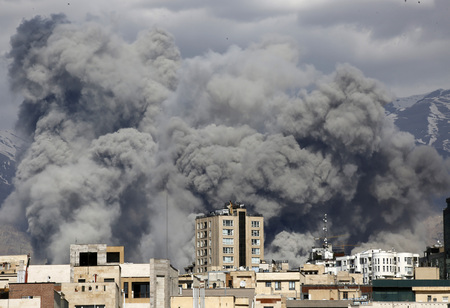
The increasing tensions in the Middle East have evoked various reactions from Asian countries, reflecting their strategic, economic, and humanitarian concerns in the region. Nations such as India, Japan, South Korea, Vietnam, and China are closely monitoring the situation, seeking to maintain peace while also prioritizing the safety of their people and regional stability.
Amid soaring oil prices exceeding $100 per barrel and potential threats to crucial shipping lanes like the Strait of Hormuz, Asian nations are implementing proactive and, at times, desperate measures to shield their economies. With the conflict reshaping the geopolitical landscape and undermining confidence in existing security arrangements, Asia must navigate a delicate diplomatic balancing act, weighing enduring alliances against the immediate need to safeguard domestic stability.
China Disagrees with Iran’s Military Action in Gulf
China expressed its disagreement with the attacks on Gulf nations and strongly condemned any indiscriminate strikes on civilians and non-military objectives, providing a rare critique of its ally Iran during a period of heightened tensions in the region.
Chinese foreign ministry spokesperson Guo Jiakun delivered the comments during a media briefing in the capital city of Beijing. There was an announcement made amidst growing tensions in the region, where Iran initiated a missile attack described by the state broadcaster as the most severe and substantial against Israel since the war began. This led to Israeli air defense systems intercepting the incoming projectiles. The dispute has extended to the vital maritime passages of the Gulf region.
An unidentified object struck a commercial vessel in the crucial oil transit point of the Strait of Hormuz, resulting in a fire and necessitating the evacuation of the crew, as reported by a maritime security organization. Another occurrence involved a container ship being targeted off the shores of the United Arab Emirates, although the safety of all crew members was confirmed.
Japan Takes Measures to Rescue Citizens Amid Middle East Crisis
Due to recent military actions by the United States and Israel against Iran, the Japanese government is initiating one of its most extensive evacuations in history, potentially involving close to 1,000 individuals.
In light of the cancellation of commercial flights, chartered airplanes are being utilized to assist numerous travelers who have found themselves stranded in the Middle East alongside local Japanese citizens. The first chartered flight, which landed at Narita Airport on March 8 from Oman, transported 107 Japanese nationals and other individuals desiring to depart from the United Arab Emirates and Oman.
Also Read: 5 Unique Strategies Used by Modern-day Operational Leaders
Japanese Prime Minister Sanae Takaichi has announced Japan's intentions to promptly release oil from its reserves in light of increasing energy risks stemming from heightened tensions in the Middle East. This action will be undertaken as a unilateral measure rather than as a coordinated effort with other nations. Japan's plan involves releasing an amount of oil that is equal to 15 days' worth of reserves held by the private sector, in addition to approximately one month's worth of national reserves.
India’s Stance Amid Middle East Turmoil
India is closely monitoring the ongoing Gulf War with heightened strategic interest. The conflict has reached its immediate vicinity, illustrated by the recent incident involving an Iranian naval vessel on March 4, highlighting the vulnerability of the Indian Ocean region to the repercussions of major global conflicts.
For Indian defense strategists, the war represents not only a security challenge but also an opportunity for real-time assessment of advanced weaponry in combat scenarios. The current deployment of a variety of weapon systems in active combat provides valuable operational insights and reveals vulnerabilities that may have gone unnoticed during peacetime assessments.
Given India's extensive and diverse military arsenal, which includes equipment sourced from multiple countries including Russia, the United States, France, Israel, and domestic manufacturers, the ongoing conflict offers valuable lessons applicable to Indian military planning and procurement strategies.
While India may contemplate supporting a United Nations resolution for an immediate ceasefire, it is unlikely to actively pursue such a measure due to its alignment with most Western nations supporting the US. Instead, India could potentially take a leading role in forming a regional coalition to pressure the US and Israel, as many Asian economies rely on energy supplies from the Middle East. However, concerns about collaborating with China and the risk of backlash from the US are likely to deter India from undertaking such efforts.
Also Read: India-Israel Strengthen Ties: A Strategic Partnership Since 2017
South Korea Plans Supplementary Budget
South Korean President Lee Jae Myung has directed his administration to promptly prepare an additional budget in order to stabilize public welfare and support economic recovery in light of the escalating situation in the Middle East. During a meeting with senior aides, he emphasized the potential negative impact of increasing regional instability on consumer and investor confidence, as reported by Caliber.Az citing Yonhap News Agency.
Lee urged for an expedited process of budget preparation, usually taking one to two months, and called for leveraging the crisis as an opportunity to implement national economic reforms. He emphasized the crucial need to inject funds swiftly to ensure that the momentum of people's livelihoods and economic recovery is sustained, especially during times of crisis. He emphasized the necessity of a supplementary budget and requested for it to be drafted as quickly as possible.
Additionally, the President emphasized the importance of lessening the impact on vulnerable groups by suggesting measures such as freezing utility charges for the first half of the year, expanding discounts on agricultural products, and providing fuel subsidies for farmers. He also mentioned the expected approval by the National Assembly of a special bill enabling South Korea's $350 billion investment in the United States, which involves creating a strategic investment fund to fulfill various memorandums of understanding.
Lee called for the collaboration of both ruling and opposition parties to effectively implement these measures and transform the crisis into a stimulus for the modernization of the country's economy and industry. South Korea heavily depends on imports of energy resources from the Middle East, including crude oil, petroleum gas, and petrochemical products, which constitute more than 80percent of its oil supply and 50percent of its gas supply.
Vietnam Raises Concerns Amid Escalating Middle East Conflict
Vietnam expresses significant apprehension regarding the intricate and intensifying conflict in the Middle East, which presents a serious danger to the well-being and security of innocent civilians, as well as to peace and stability on both regional and global scales.
Vietnam urges all pertinent parties to show utmost restraint, promptly halt any actions that may escalate tensions, safeguard civilians and critical infrastructure, and peacefully address disagreements in accordance with international law, the United Nations Charter, and pertinent UN resolutions. The spokesperson emphasized the importance of upholding the sovereignty and territorial integrity of nations and establishing conducive conditions for peace negotiations to safeguard security, tranquility, and stability at both regional and global levels.
Also Read: These Five Asian Women Assumed New Leadership Roles in Feb 2026
In response to the evolving situation in the Middle East, the Ministry of Foreign Affairs and relevant domestic entities have instructed Vietnam's diplomatic missions in Iran and Israel to collaborate closely with local authorities, Vietnamese embassies in neighboring nations, and diplomatic bodies of the host countries to closely monitor developments and be ready to execute any essential actions to guarantee the safety of Vietnamese nationals and diplomatic premises.
Based on recent updates from the Vietnamese diplomatic offices in Israel and Iran, it has been confirmed that all Vietnamese nationals residing in these regions are presently out of harm's way. The Ministry of Foreign Affairs recommended that Vietnamese nationals avoid traveling to Iran or Israel, as well as adjacent regions impacted by the conflict, unless it is deemed absolutely essential.