


 In an era where boardroom strategy is increasingly shaped by brand positioning, digital acceleration, and stakeholder trust, marketing has transcended its traditional boundaries. It now sits at the intersection of growth, innovation, and corporate reputation.
Across major business capitals, senior leaders are redefining how organizations create relevance in crowded markets while balancing creativity with commercial accountability.
The modern marketing chief is expected to be equal parts strategist, storyteller, technologist, and mentor.
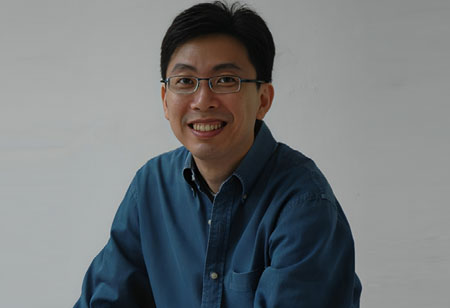
Within this evolving global narrative emerges Adrian Heng, Founder of Merlot Consulting, and fractional Chief Marketing Officer for their clients, a leader whose career reflects both the transformation of the discipline and the enduring power of thoughtful leadership.
With nearly three decades of international experience spanning consulting, corporate leadership, and advisory roles, Heng has built a reputation grounded in depth and versatility.
He has led global marketing teams across diverse markets, imparted knowledge as an educator at the National University of Singapore, and continues to mentor young professionals while advising business and non-profit organizations. His career trajectory is not defined merely by titles, but by consistent impact across industries and communities.
What makes his journey particularly compelling is its unexpected beginning. Marketing was not a calculated ambition but an unplanned opportunity. Spotting a job advertisement for Ogilvy & Mather one morning, he applied, interviewed the same day, and received an offer that same evening.
Over time, he found himself leading a global marketing team at a young age, an experience that reinforced both his confidence and commitment. For Heng, marketing has remained a field of possibility, where creativity meets strategy and where meaningful influence is built over time. Let’s read on.
How would you describe the most significant shifts currently transforming the global marketing landscape, and in what ways are data, artificial intelligence, and advanced analytics reshaping strategic decision making at the leadership level?
Data analytics and social media have fundamentally reshaped the marketing landscape by providing real time visibility into consumer behavior, preferences, and engagement patterns. Marketing is no longer a one directional broadcast but a dynamic, interactive dialogue that evolves instantly.
Artificial intelligence is further accelerating this shift, influencing everything from content creation and personalization to predictive modeling and performance optimization. Yet an overreliance on data and automation presents its own challenges.
Marketing remains inherently human, rooted in creativity, intuition, and emotional intelligence. The most effective leaders will be those who skillfully integrate analytical precision with imaginative, and courageous thinking.
I strongly believe that teams perform at their best when they genuinely enjoy their work
How do you foster a culture that nurtures creativity while ensuring strategic discipline, measurable outcomes, and clear accountability?
Strategic discipline begins with absolute clarity around business objectives. Marketing initiatives must remain closely aligned with organizational priorities while being sensitive to cultural nuances and market realities.
Creativity, however, flourishes when teams are empowered to experiment, enjoy the process, and challenge boundaries responsibly. Accountability starts at the top.
Effective leaders model ownership, taking responsibility when outcomes fall short. A culture rooted in transparent communication, mutual trust, and active listening creates the foundation where imaginative thinking and measurable performance can confidently coexist.
In a business environment defined by continuous disruption, how do you ensure that marketing strategies remain resilient, adaptable, and prepared for the future?
Completely future-proofing marketing is challenging given the pace at which trends evolve. Rather than relying on rigid long-term plans, the priority should be continuous listening.
Genuine engagement, reflected in conversations, reactions, and meaningful interactions, carries far greater value than surface metrics such as likes or shares. Success today depends on agility and the ability to respond thoughtfully to shifting customer expectations.
How would you define your leadership philosophy, and what core principles consistently shape your approach to leading teams and organizations?
I strongly believe that teams perform at their best when they genuinely enjoy their work. Engagement thrives in environments where people feel energized and inspired. Recognizing and fairly rewarding high performing teams is equally important, as it reinforces their contribution to overall business success.
Open dialogue is fundamental; effective leaders must listen actively and remain open to self-improvement. Above all, I value a clear long-term vision. While strategies may adapt over time, steady direction and consistency keep teams aligned, focused, and motivated toward shared goals.
What does the next chapter of your journey look like, and how are you shaping your roadmap for the future?
Professionally, I feel fulfilled by the work I continue to do, yet I am increasingly drawn toward contributing beyond commercial objectives. Serving on the board of a charitable organization has been deeply meaningful, and my eight years of teaching at the National University of Singapore, along with mentoring young professionals, I have reinforced that sense of purpose.
Looking ahead, I hope to broaden my mentoring initiatives and dedicate more time to supporting non-profit organizations in strengthening their engagement strategies and amplifying their societal impact.
How do you envision the evolving role of the Chief Marketing Officer, and which skills and leadership qualities will define success in the years ahead?
Modern CMOs must possess an integrated understanding of branding, communications, social media, product marketing, and even investor messaging. Seamless alignment across channels is no longer optional but essential.
Looking ahead, successful CMOs will combine strategic vision with strong capabilities in data analytics, artificial intelligence, emerging platforms, and audience insights. Above all, the role demands adaptability, cross functional leadership, and deep alignment with overall business objectives.
Adrian Heng, Founder, Merlot Consulting
A seasoned marketing leader with nearly three decades of global experience, Adrian Heng serves as senior counsel at Merlot Consulting, and as a fractional CMO to some of the company’s clients. His career spans consulting, corporate leadership, academia, and advisory roles, complemented by active mentorship and board service within business and non-profit communities.