


.png)
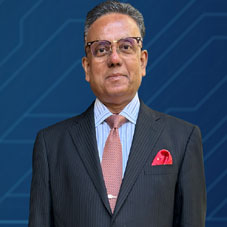
Achintya Acharya
President
The semiconductor industry in Japan has long been recognized for its technological innovation, precision manufacturing, and global influence. Leaders in this sector have driven advancements across semiconductors, flat panel displays, additive manufacturing, and cutting-edge space related technologies. Their vision, combined with technical expertise, has positioned Japan as a key hub for research, development, and commercialization of advanced electronic solutions, contributing significantly to global tech ecosystems. Today, Achintya Acharya, the President of HTL Co. Japan Ltd. is a distinguished leader who has played a pivotal role in shaping the growth of the company and its associated industries. Acharya’s academic foundation is rooted in Electrical Engineering, having completed his B.Tech from IIT BHU (1972–1977) and an M.Tech in Control Systems and Instrumentation from IIT Delhi (1977–1979). His career began at Tata Electric Company (1979–1980), followed by strategic roles at Mitsubishi Electric Company (1980–1982) and Perkin Elmer (1982–1994), where he honed his expertise in semiconductor technologies and industrial applications.
Since 1994, Acharya has led HTL Co. Japan Ltd. as President, dedicating his efforts to advancing semiconductors, flat panel displays, additive manufacturing, and space-related equipment. Under his leadership, the company has also explored software development, including artificial intelligence applications, ensuring its alignment with emerging technological trends.
Achintya Acharya is recognized not only for his technical acumen but also for his commitment to industry growth and organizational excellence. He has consistently focused on fostering the development of personnel alongside the company, nurturing talent while driving innovation. His vision and dedication have contributed to the sustained success of HTL Co. Japan Ltd., reinforcing Japan’s leadership in semiconductors and related high-tech sectors.
Through his decades-long career, Acharya exemplifies the qualities of a forward-thinking industrial leader, blending technical mastery, strategic insight, and a deep commitment to the people and industries he serves. Let’s read.
How are you spearheading efforts to revolutionize the semiconductor domain today?
At HTL, we focus on the highest-end semiconductor technology, working with design rules ranging from 55 nanometers down to 2 nanometers and below. Our team develops and supplies precision equipment and specialized software for semiconductor manufacturing. We also support the global semiconductor supply chain, including partnerships with projects like Tata’s Dholera fab in India.
The semiconductor industry is evolving rapidly, and our role is to stay at the forefront of innovation. We continuously adopt new technologies, expand operations globally, and train our personnel to handle highly complex systems. By combining advanced equipment expertise with in-house software development, we provide solutions that meet the most demanding requirements in semiconductor fabrication.
Our Goal Is To Establish Cover Story “Green Factories” That Maximize Energy Efficiency While Maintaining Productivity
What major challenges have you encountered, and how have you navigated them strategically
The semiconductor sector has always posed unique challenges. Initially, the industry required highly skilled engineers, including university graduates, masters, and PhDs, to operate advanced equipment. Training and continuous learning have always been critical; even I dedicate 12–15 hours a day to work or knowledge enhancement.
Trade tensions, such as the Japan–US trade war, caused a significant brain drain, with talent moving to Taiwan, Korea, and China. Political shifts, the COVID-19 pandemic, tariffs, natural disasters like earthquakes, and nuclear incidents have also disrupted operations. To navigate these, HTL has focused on agility, expanding into multiple countries, adopting new technologies, and fostering highly skilled, adaptable teams.
Our approach is proactive: we anticipate changes in the business environment and pivot quickly. We have created a business model that combines indepth knowledge of semiconductor equipment with proprietary software solutions, enabling us to stay competitive globally.
The semiconductor industry faces increasing scrutiny over energy consumption and environmental impact. How is HTL addressing this?
Energy consumption is a critical concern, especially with GPUs, data servers, and advanced fabs consuming substantial power. At HTL, we are implementing green technology initiatives, such as renewable energy integration, solar power usage, and reducing carbon emissions in manufacturing processes.
Our goal is to establish “green factories” that maximize energy efficiency while maintaining productivity. While this is a challenge, it is essential for sustainable growth in the industry. We also focus on developing equipment and processes that are more power-efficient, aligning with global environmental standards.
With semiconductors increasingly integral to AI, what ethical considerations does the industry need to address?
AI applications in semiconductor equipment, such as our inspection systems for photomasks, enhance accuracy and reduce false defects. However, AI also brings ethical responsibilities, including cybersecurity, data integrity, and media manipulation concerns.
For instance, AI can be misused for cyberattacks, drone operations, or image falsification. At HTL, we prioritize developing semiconductor chips with integrated software capable of addressing these security concerns. Ensuring safe, responsible, and efficient use of AI is a top priority for us.
How do you foster a culture of innovation within HTL?
Innovation thrives on collaboration and practical knowledge. At HTL, we emphasize direct, people-topeople interaction and encourage consultation across teams. Learning from practical experience is critical, and we promote knowledge-sharing through projects like AI-based preventive maintenance software using machine learning and neural algorithms.
This approach not only solves complex technical problems but also creates a sense of achievement and team bonding. We reward creativity and maintain a culture of respectful, constructive debate. Encouraging open communication and hands-on problem-solving helps us stay innovative and ahead of industry trends.
How does collaboration with industry leaders enhance innovation?
Collaboration is vital. We maintain close relationships with industry leaders and acknowledge their contributions. For example, Tetsuro Iida, President of Toyo Systems, Japan, has been a key partner in our software development business. Takefumi Momose, President of YAC, Japan, has provided valuable strategic guidance. For the semiconductor-related business Shigeto Sugimoto, President of V-Technology has been instrumental to providing strong support & collaboration.
We also participate in global seminars, trade shows, and lectures to exchange knowledge and explore how HTL can contribute. These interactions allow us to stay updated on emerging technologies and implement best practices across our operations worldwide.
Looking ahead, which emerging technologies do you believe will be most disruptive in the next decade?
Several technologies have the potential to disrupt markets. Space technology, AI applications for societal benefit, autonomous driving systems, cloud-based data services, and specialized materials development, including medical devices, are poised for significant growth. At HTL, we are particularly excited about our upcoming space division, which will leverage additive manufacturing for satellite parts and contribute to lunar and Martian exploration.
What skills should the next generation of semiconductor leaders cultivate?
Future leaders must possess specialized technical knowledge and the ability to apply it creatively. They should understand semiconductor operations indepth and be trained to innovate across emerging technologies such as space exploration, additive manufacturing, cloud computing, and advanced materials.
At HTL, we provide hands-on training and internships in our clean rooms in India and Japan, nurturing talent while emphasizing their societal contributions and the value of their work.
What has been your key strategy for achieving corporate vision and maintaining competitive advantage?
Staying at the top of technology is crucial. Our approach is to work closely with personnel, customers, and partners while learning continuously from industry leaders. We focus on local manufacturing, “Make in India”, “Make in Japan”, and “Make in every country where we operate”, to ensure quality, efficiency, and sustainability.
We also adopt cutting-edge technologies and constantly enhance our knowledge base to anticipate market needs. Maintaining strong human connections and nurturing talent is central to our long-term success.
Achintya Acharya, President, HTL Co. Japan Ltd
Born in Varanasi, India, Achintya Acharya is President of HTL Co. Japan Ltd. An IIT BHU and IIT Delhi alumnus, he has over four decades of experience in semiconductors, flat panel displays, additive manufacturing, space equipment, and AI. He is committed to innovation, global collaboration, and nurturing talent across industries.
• Hobbies: Golf, Table Tennis, Travelling
• Favorite Cuisine: Indian, Japanese, Italian
• Favorite Book: Gone with the wind
• Favorite Travel Destination: New York, USA
• Awards & Recognition: AWARD to HTL Co. Japan Ltd. by JAXA, Japan, the Japanese space agency for contribution to H3 Rocket