


.png)
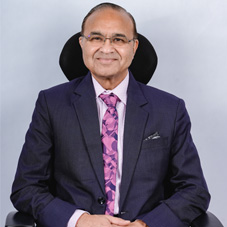
Manoj Srivastava
Founder & CEO
In today's increasingly complex business landscape, organizations are expected to deliver projects faster, more efficiently, and with greater accountability than ever before. This is where project management consultants play a pivotal role. Beyond overseeing timelines and budgets, they help organizations transform strategic objectives into measurable outcomes by strengthening governance, managing risks, optimizing resources, and improving decision-making.
Among the professionals who have built an enduring legacy in this field is Manoj Srivastava, Founder & CEO of Indo-Pacific Management Consulting (IPMC). A B.E. (Hons.) in Chemical Engineering from BITS Pilani (1977), Manoj brings nearly five decades of international experience spanning the chemical, petrochemical, refining, oil & gas, and utilities sectors.
He began his career with DCM Shriram Limited before joining Engineers India Limited (EIL), where he established a strong engineering foundation and developed a global outlook. His professional journey took him across India, Iraq, Iran, Singapore, Indonesia, China, and the United States, contributing to some of the world's largest industrial projects.
Throughout his distinguished career of nearly five decades, Manoj held leadership roles with globally respected organizations including Foster Wheeler, Aker Kvaerner, Santos, and ExxonMobil. Manoj spent over 14 years with Exxon Mobil, managing complex projects valued from multi-million to multi-billion dollars across both upstream and downstream energy sectors.
Following his retirement from ExxonMobil, he founded Indo-Pacific Management Consulting (IPMC) with a vision to make world-class project management practices accessible to small and medium-sized enterprises.
Through IPMC, Manoj helps organizations strengthen project governance, improve visibility, benchmark performance, enhance productivity, and ultimately increase profitability by delivering practical, value-driven project management solutions grounded in decades of global experience. Let’s dive in to know more.
I strongly believe that leadership is about sharing knowledge rather than keeping it to yourself
Looking back on your career, which experiences have been the biggest turning points in shaping you as a leader and entrepreneur?
Several milestones have shaped both my professional journey and leadership philosophy. Joining Engineers India Limited gave me a strong technical foundation and prepared me for global assignments.
A defining moment came during the Gulf War, when I negotiated the safe evacuation of nearly 150 Indian professionals from Iraq under extremely challenging circumstances. It taught me resilience, negotiation, and calm decision-making under pressure.
Later, my years at ExxonMobil exposed me to global joint ventures with organizations like Sinopec and Saudi Aramco, where I learned that true leadership is about influencing people through trust, relationships, and credibility rather than relying on formal authority.
What inspired you to build a career in project management, and how has your leadership philosophy evolved over the years?
Project management attracted me because it combines technical knowledge with planning, execution, and leadership. Over the years, I realized that projects are ultimately about people, not just schedules or budgets. The greatest asset in any organization is its people, and earning their trust is the foundation of successful leadership.
I believe leaders should inspire rather than instruct. Equally important is stakeholder management— bringing together clients, regulators, contractors, and partners through collaboration and transparency. Strong planning, effective communication, risk management, and relationship-building have become the pillars of my leadership approach.
In today's fast-changing business environment, what do you believe determines the success orfailure of large-scale projects?
In my experience, successful projects are built on transparency, disciplined execution, and realistic planning. One of the biggest reasons projects fail is inaccurate forecasting or ignoring early warning signs because of internal pressure or optimism.
Leaders should encourage honest reporting and create an environment where people can express concerns without fear. Beyond forecasting, organizations must focus on proactive risk management, stakeholder engagement, effective interface management, accurate cost and schedule control, and clear communication.
When these fundamentals are consistently practiced, projects are far more likely to achieve their intended objectives.
What are the most valuable lessons you've learned about aligning people, processes, and business goals for sustainable success?
The biggest lesson I have learned is that sustainable success always begins with investing in people. Organizations should continuously train their teams, encourage curiosity, and create a culture where knowledge is openly shared.
At the same time, leaders must remain adaptable because technology continues to evolve rapidly. From working without computers to today's AI-driven world, I have witnessed tremendous change. Those who stop learning become irrelevant. Building credibility through consistent delivery and maintaining integrity in every decision are equally important. Long-term value is created through ethics, trust, and continuous improvement—not by chasing short-term growth.
What is your approach to developing future leaders and strengthening project management capabilities within organizations?
I strongly believe that leadership is about sharing knowledge rather than keeping it to yourself. Mentoring young professionals, encouraging continuous learning, and creating opportunities for growth are essential for building future leaders. Technical expertise is important, but leadership also requires communication, stakeholder management, ethical decision-making, and emotional intelligence.
Experienced professionals have a responsibility to transfer their knowledge to the next generation. Organizations that actively nurture learning and capability development build stronger teams, create leadership continuity, and position themselves for sustainable long-term success.
How has Singapore's business ecosystem influenced your leadership style and the growth of IPMC?
Singapore has provided me with an exceptional environment to grow professionally. Its culture of professionalism, strong governance, multicultural collaboration, and operational excellence has influenced my leadership style in many ways.
Working with global organizations from Singapore exposed me to international best practices and reinforced the importance of innovation, continuous improvement, and maintaining high standards.
It also taught me how diverse cultures can successfully collaborate toward common objectives. These experiences have significantly shaped both my personal leadership philosophy and the growth strategy of IPMC.
Manoj Srivastava, Founder & CEO, Indo-Pacific Management Consulting (IPMC)
Manoj Srivastava is the Founder & CEO of Indo-Pacific Management Consulting (IPMC) and a Chemical Engineering graduate from BITS Pilani. With nearly five decades of global experience across the oil & gas, petrochemical, and energy sectors, he has led complex international projects and now helps organizations enhance project performance, productivity, and sustainable business outcomes through strategic project management consulting.