



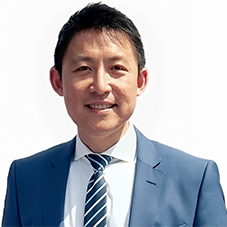
Sam Li
Founder & CEO
After more than two decades across mobile technology, digital entertainment, consumer platforms and entrepreneurship, Sam Li, Founder & CEO, Synfesys is turning his attention to the physical layer of the next technology cycle: AI infrastructure.
Through Synfesys AI, the AI infrastructure business of Singapore-headquartered Synfesys, he is focusing on the compute, power, data centres and connectivity required to support AI adoption across Southeast Asia, beginning with Indonesia.
Sam's career has placed him inside several major technology transitions. At Nokia, he experienced the period when mobile phones were becoming mass digital devices. At Rovio, he worked at the intersection of mobile platforms, applications, digital content and global consumer behaviour. His subsequent experience at HTC further deepened his exposure to the Virtual Reality ecosystem and the rapid evolution of consumer technology. Entrepreneurship then moved him from participating in technology cycles to building businesses around emerging opportunities.
For Sam, AI infrastructure is therefore less a departure than a continuation. Each technology wave eventually reaches a point where the application story also becomes an infrastructure story. As AI moves from experimentation into continuous real-world use, the question is no longer only what models can do, but what infrastructure is required to run them reliably and at scale. In Sam's view, AI may feel like software, but at scale it increasingly becomes a physical infrastructure challenge.
Sam Li combines technology expertise, entrepreneurial vision, and disciplined leadership to build Southeast Asia’s next digital infrastructure
How has your role as Founder & CEO evolved as the company has grown?
In the early stage, I was closely involved with the product and almost every decision. As the company has grown, my role has shifted from doing to choosing - where to focus, which opportunities to pursue, what team to build, and how to allocate capital. Today, I spend more time on strategy, partnerships, financing, organizational design and stakeholder alignment.
Infrastructure adds another level of complexity because decisions involve technology, power, land, regulation, customers and finance. Leadership is not about having certainty; it is about creating enough clarity for the organization to move forward while staying flexible when circumstances change.
What led to Synfesys' focus on AI infrastructure?
Synfesys was built around a simple belief: technology creates the most value when innovation is combined with real demand and scalable execution. Our earlier work gave us experience across digital products, interactive experiences and Southeast Asian markets. As AI adoption accelerated, I became increasingly interested in the infrastructure underneath the application layer.
We are therefore developing Synfesys AI as our dedicated AI infrastructure business, focused on scalable computing and data-centre infrastructure. Indonesia is our initial strategic market because of its scale, digital growth and infrastructure potential, while our longer-term ambition is regional. The opportunity is not simply to follow AI applications, but to help build the foundational capacity that allows those applications to scale.
That means thinking beyond servers alone: reliable power, connectivity, resilient data-centre capacity, appropriate partnerships and disciplined capital deployment all have to work together as one infrastructure system.
How do you balance ambition with disciplined execution?
The biggest risk in a fast-moving technology market is confusing excitement with execution. Technical ambition needs to be connected to customer demand, capital discipline and a realistic deployment path. In infrastructure, sequencing is particularly important. We validate demand, secure the right resources and partners, understand regulatory and financing requirements, and then build in stages.
I try to be clear about the long-term direction, move quickly on reversible decisions, and be deliberate with irreversible ones. Strong partnerships are essential because no company builds an AI ecosystem alone.
Which AI developments do you see creating significant opportunities?
The important shift is from AI experimentation to continuous, real-world usage. As generative AI, agents, multimodal systems and automation become embedded in products and enterprise workflows, inference demand will increase. That will create greater demand for high-performance, distributed and efficient infrastructure. Latency, power economics, reliability and regional data requirements will become increasingly important.
Technology leaders should therefore treat AI as an operating capability rather than a one-off project. They need strategies around compute, data, security, talent and cost. From our perspective, sustained adoption is what makes AI infrastructure a long-term opportunity in Southeast Asia.
What is your long-term vision for Synfesys AI?
My vision is for Synfesys AI to become a trusted builder and partner in Southeast Asia's AI infrastructure ecosystem, supported by Synfesys as the broader technology and corporate platform. We are starting with Indonesia, but our ambition is regional.
I do not believe every technology company needs to build the application users see. There is enormous value in creating the infrastructure that enables thousands of other companies to innovate. The next generation of AI will need both intelligence and infrastructure. For me, Synfesys AI represents our opportunity to help make intelligence scalable.
Sam Li, Founder & CEO, Synfesys
Sam Li, Founder & CEO of Synfesys, is a technology entrepreneur with more than two decades of experience spanning mobile technology, digital entertainment, consumer platforms and emerging technologies. Having worked with Nokia, Rovio and HTC before moving into entrepreneurship, he now leads Synfesys and the development of its AI infrastructure business, Synfesys AI, with an initial focus on Indonesia and Southeast Asia.