


The Ministry of Communication and Digital Affairs in Indonesia is enhancing its regulatory oversight on digital platforms that continue to be accessible to minors, even though these platforms have set specific minimum age limits.
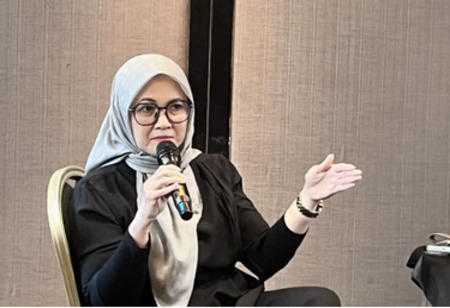
During a forum held in Jakarta, Mediodecci Lustarini, who serves as the Secretary of the Directorate General for Digital Space Oversight, emphasized a concerning trend.
Also Read: PM Chairs Cabinet Meeting to Review Socio-Economic Performance
She pointed out that digital platforms, which have age restrictions set at 18 years or older, continue to be accessed by individuals under the legal age.
The government is taking action by identifying applications that impose age restrictions yet do not have sufficient verification systems in place.
In response to the escalating digital threats to minors, the government has initiated the implementation of Government Regulation No. 17 of 2025 concerning Electronic System Governance for Child Protection (PP Tunas), which was officially enacted on March 28, 2026.
During the preliminary stage, eight prominent platforms—specifically, X, Bigo Live, Threads, Facebook, Instagram, TikTok, YouTube, and Roblox—are mandated to modify their services, which includes implementing access restrictions for users younger than 16 years of age.
Lustarini observed that these platforms were chosen as initial targets because of their substantial user populations in Indonesia. The regulation, however, encompasses a wide range of Electronic System Providers (PSE), extending its reach to include entities from both the public and private sectors.
Also Read: Singapore Airlines to Roll Out Starlink-Powered Wi-Fi from 2027
For private sector providers, the directive includes six categories of services. These encompass search engines, e-commerce platforms, digital financial services, and banking, as well as platforms that handle extensive personal data.
According to the newly implemented regulations, any platform specifically created for children, as well as those that could be accessed by them, is required to perform a self-risk evaluation.
This assessment ensures that their products, features, and services adhere to the safety standards set forth by the regulation.
Moreover, the Deputy Minister for Higher Education, Science, and Technology, Stella Christie, emphasized the importance of young people cultivating strong critical thinking skills. She highlighted this as essential for effectively navigating the challenges posed by disruptions from artificial intelligence and staying competitive on a global scale.
She observed that, in the context of ongoing technological progress, the ability to assess, analyze, and make decisions continues to be a distinctively human capability that machines are unable to duplicate.
Also Read: Samsung Electronics Names New TV Chief Amid Mounting Competition
Christie emphasized that with a robust online presence of 210 million users and an internet penetration rate reaching 83 percent, Indonesia possesses the potential to significantly influence the worldwide trajectory of AI advancement by employing a "human-in-the-loop" strategy. In this context, the cultivation of digital talent within the nation should not be limited solely to the enhancement of technical skills.
According to her perspective, this is crucial for students not only to adapt to technological progressions, but also to excel in the global academic arena. In an effort to enhance educational capabilities and boost competitiveness, the Indonesian government has launched several programs.