


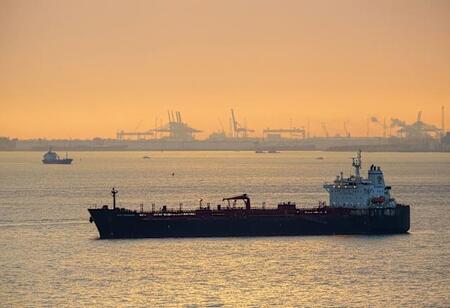
Abu Dhabi National Oil Co. informed its clients to restart loading its crude oil from ports in the Persian Gulf, according to reports.
The state-owned oil producer of the United Arab Emirates announced that oil from its ports at Das and Zirku islands, situated in the Persian Gulf, has been ready for loading since April 27. Not collecting the crude would represent a violation of the buyers' lifting responsibilities, it stated.
Considering the recent US-Iran agreement and "the anticipated continuous movement of ships through the Strait of Hormuz, we foresee that all shipments will be handled as per the announced loading schedules," it stated in its communication to the firm's long-term customers.
If purchasers are unable to arrange their own tankers, Adnoc could provide help with its own or partner vessels. The firm also referenced its standard terms and conditions for crude oil sales, which specify that a buyer must provide compensation to the seller if there is a failure to accept delivery.
Also Read: Vietnam Boosts Financial Investment to Drive Innovation
The firm was one of the most successful producers in the Persian Gulf in exporting supply via the Strait of Hormuz, providing crude oil to buyers through various tenders. It has sold no fewer than 30 million barrels to date, with additional transactions expected this week. Other suppliers such as Kuwait have also been extracting oil from the gulf.
The United Arab Emirates has recently exited the Organization of the Petroleum Exporting Countries, permitting it to increase production since it is no longer restricted by cartel-wide quotas.
Also Read: Indonesia Eyes China Cooperation on Traditional Medicine Center
The country is among the limited regional producers possessing significant spare production capacity and has historically bristled at OPEC's restrictions.
Also Read: Hyundai Rotem Secures $487.3 Million Railway Maintenance Project
The UAE is developing strategies to reduce its reliance on the Strait of Hormuz bottleneck. By next year, it will increase its crude export capacity twofold by speeding up the pipeline construction that leads to the Fujairah port on the Gulf of Oman, avoiding Hormuz.