


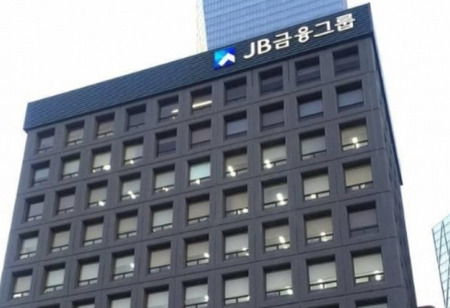
The activist fund Align Partners Capital Management's plan to merge BNK Financial Group with JB Financial Group has faced strong resistance from local business organizations and labor unions, who claim the merger would focus on immediate shareholder profits while undermining the public function and regional identity of community banks, industry representatives state.
Align possesses a 14.83 percent interest in JB Financial, ranking it as the group's second-largest stakeholder, and holds over a one percent interest in BNK Financial.
Also Read: Vietnam Promotes Ties With Canada and New Zealand at AMM-59
JB Financial serves as the parent company for Jeonbuk Bank and Kwangju Bank, whereas BNK Financial oversees Busan Bank and Kyongnam Bank.
The activist fund has encouraged the two regional financial entities to evaluate the strategic advantages of a merger, claiming that unification would enhance their long-term competitiveness. Earlier this month, Align CEO Lee Chang-hwan requested that the companies inform by Aug. 7 if they would initiate a formal review and reveal any implementation strategy when they release their third-quarter earnings.
Since then, the proposal has encountered increasing resistance from local business organizations and labor unions, which have called on Align to retract the proposal.
"Undermining a financial group that has grown with deep roots in the region in pursuit of short-term investment gains would jeopardize the province's bid to become the country's third-largest financial hub," the North Jeolla-based Jeonbuk Chamber of Commerce and Industry says.
The Gwangju Chamber of Commerce and Industry cautioned that combining two banking groups that cater to distinct regional economies would diminish assistance for local enterprises.
Labor unions at the banking subsidiaries of the two financial groups have likewise expressed opposition to the proposal.
The labor union of Busan Bank claimed that the suggested share exchange ratio would unjustly harm BNK shareholders in a possible merger, considering BNK's greater input to the merged entity. The labor union at Jeonbuk Bank stated that a possible merger would ultimately diminish the group's functionality.
Also Read: President Lee, Business leaders to Meet Nvidia and OpenAI Chiefs
"Although the proposal is being presented as a strategy to achieve economies of scale and support AI (artificial intelligence) investment, at its core, it is aimed at driving up the share price and allowing short-term investors to cash out," the union says. "This will ultimately result in organizational downsizing, widespread job losses and branch closures."
The labor union of Busan Bank contended that the suggested share exchange ratio would unjustly harm BNK shareholders in a possible merger, considering BNK's greater input to the merged entity.
The labor union at Jeonbuk Bank stated that a possible merger would ultimately diminish the group's operations. The union called on JB Financial's board to dismiss the proposal.
Also Read: GM Korea Tops Customer Service Survey for Eighth Straight Year
The labor union of Kwangju Bank voiced similar worries, cautioning that a hasty evaluation of the merger would diminish the public function of regional finance and eventually lessen assistance for local firms and small enterprises.
Experts within the industry have also questioned the practicality of the merger. They claimed the proposal contradicts the initial aim of regional banks, which were created to bolster local economies, since BNK Financial and JB Financial function in distinct markets with minimal regional overlap.