


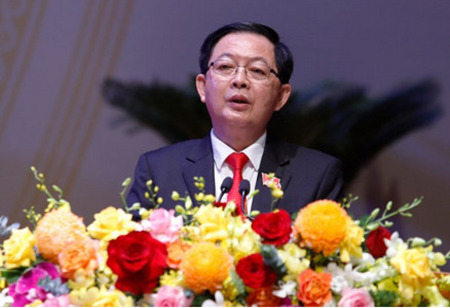
Deputy Prime Minister Ho Quoc Dung highlighted that the Government has pinpointed 20 key technology sectors and delegated specific responsibilities to 10 ministries and organizations.
The directive is to advance assertively past the preparatory stage and provide distinct products, technologies, and ventures that produce clear, measurable, and significant outcomes.
Also Read: LS Electric Wins $64 Million Microgrid Switchgear Contract
A decree outlining the implementation of the Law on High Technology needs to be completed this month, emphasizing matters connected to strategic technologies. He similarly urged for studies and suggestions on systems to recognize, certify, and label strategic technology products.
To implement the PM's decision, Dung tasked the Ministry of Science and Technology (MoST) with assessing and offering guidance on activities suggested by other ministries and agencies. They were directed to actively assign staff and resources, establish clear objectives, anticipated results and schedules, and aim to produce tangible outcomes this year. Any bottlenecks that surpass their authority should be quickly reported to the Government for evaluation.
The MoST was instructed to expedite a plan to establish essential national research centers, testing facilities, and laboratories that support strategic technology research and development.
Other ministries and agencies were instructed to assess the necessity for technical standards and regulations related to strategic technology products within their specific areas.
Also Read: OpenAI Commits S$300 Million to Grow Singapore's AI Capabilities
Regarding workforce training, the MoST will persist in leading a support program for exceptional graduates until 2030. The Ministry of Education and Training was instructed to evaluate and suggest top-quality workforce training programs for key technology sectors. The Deputy PM urged ministries and agencies to quickly transform their designated tasks into specific action plans with well-defined responsibilities, and to effectively initiate projects that develop strategic technology products that can enhance national competitiveness.
A representative from MoST stated that the ministry quickly collaborated with key stakeholders to offer guidance and oversee the implementation following the Prime Minister's decision. Simultaneously, it assessed and strengthened the essential conditions, encompassing legal frameworks, policies, mechanisms, technical standards and regulations, research and testing infrastructure, human resources, and monitoring tools.
Designated ministries and agencies have since designated focal points, evaluated tasks, developed proposals, outlined expected outputs, analyzed resource needs, and established conditions for implementation.
Also Read: Vietnam and Croatia Seek to Enhance Defense Cooperation
The MoST observed that ministries and agencies have quickly established task forces, evaluated ongoing projects, and engaged businesses, research institutions, universities, and specialists to develop assignments despite the limited time for implementation. Numerous tasks have already outlined anticipated results, involved companies, required resources, and plans extending to 2030.
A total of 48 strategic tasks for technology development have been proposed by ministries and agencies. They further suggested the prompt finalization of supportive systems and policies to advance the strategic technology agenda.