


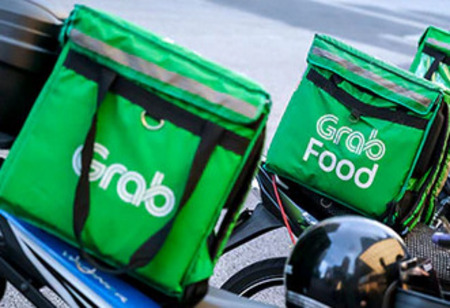
Singapore's Grab increased its yearly revenue and profit predictions, motivated by robust demand for its ride-hailing and delivery services, spurred by promotional offers, driver incentives, and AI initiatives.
The optimistic forecasts and a new $750 million stock repurchase plan drove shares of the Nasdaq-listed firm up four percent in after-hours trading.
Grab, the largest ride-hailing and delivery company in Southeast Asia, has relied on features such as order bundling and an affordable tier named "Saver" to appeal to budget-minded customers facing increased fuel costs due to the Iran conflict.
CFO Peter Oey stated that the company's affordability approach, along with AI investments, has enhanced driver earnings and drawn in new customers. The firm allocated $706 million towards incentives for customers and partners in the second quarter, which included over $7 million to bolster driver earnings amid the fuel crisis, contributing to the rise in active drivers and customer rides on the platform.
Also Read: KGM Secures $75 Million Funding Boost from Chery
Oey stated that the incentives increased driver earnings for the quarter, while Grab's "Saver" feature, subscription service, and loyalty program contributed to attracting new customers and enhancing user engagement. Grab's initiatives in AI have also contributed to improving the company's profit margins. Gross merchandise value (GMV), or the overall monetary value of transactions, in Grab's mobility and delivery sectors increased by 21 percent to reach $6.5 billion this quarter.
Grab now anticipates revenue to range from $4.10 billion to $4.15 billion for 2026, up from its earlier forecast of $4.04 billion to $4.10 billion, slightly exceeding market expectations.
Second-quarter revenue increased by 22 percent to $997 million, surpassing analysts' forecast of $990.8 million, as per data compiled by LSEG.
Also Read: Coffee Industry Expands Business Opportunities for MSMEs
Deliveries revenue increased by 21 percent compared to last year, reaching $531 million in the second quarter, while GMV rose 24 percent on a constant currency basis to $4.25 billion. The number of average monthly active delivery merchant-partners increased by 8 percent year-on-year, and their average income rose by 14 percent year-on-year. The total number of active advertisers on the self-serve platform increased by 21 percent compared to the previous year, while the average expenditure per advertiser rose by 24 percent year-on-year.
Mobility revenue increased by 12 percent year-over-year to $331 million in the second quarter, while GMV rose 18 percent to $2.21 billion. Mobility transactions increased by 28 percent compared to the previous year as Grab broadened its budget service options. Average monthly active driver-partners hit a record high, increasing 19 percent compared to the previous year. Grab allocated over $7 million in the quarter to assist driver-partner earnings in light of rising fuel costs throughout the area.
Also Read: Maldives Launches Favara-UPI Payment Service With India
Revenue from Financial Services increased 59 percent compared to the previous year, reaching $134 million in the second quarter, while total loans provided surged 72 percent year-on-year to a record high of $1.2 billion. The total loan portfolio grew by 197 percent compared to last year, reaching $2.3 billion, primarily due to the merger with Superbank.
Grab has increased its full-year 2026 forecast to a revenue range of $4.10 billion to $4.15 billion, indicating a year-on-year growth of 22 to 23 percent.
It modified its adjusted EBITDA forecast from $720 million to $740 million, indicating a year-on-year growth of 44 to 48 percent, due to the merger with Superbank and the acquisition of Stash.