


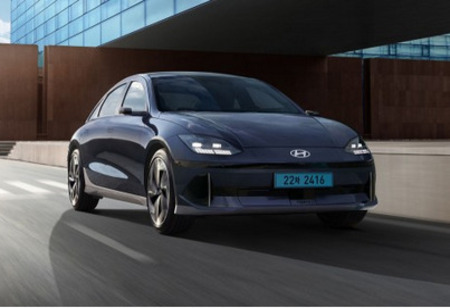
Hyundai Motor and its affiliate Kia announced that they have created what they call the world's first ultraviolet (UV) sanitization system able to disinfect vehicle interiors with passengers present.
The technology, named Plasma Care UVC, utilizes Far-UVC light — a shortwave UV wavelength within the 200–230 nanometer spectrum — produced by a plasma lamp instead of the LED sources found in traditional UV sanitizers.
Also Read: Agri-biotech Exhibition Series Underway in Ho Chi Minh City
Current UV sterilization systems depend on wavelengths that may damage human skin and eyes, restricting their application to sealed, unoccupied areas. In contrast, Far-UVC light cannot go deeper than the outermost layer of human skin, yet it can access the cellular DNA of bacteria and viruses, eliminating them.
The system additionally minimizes odors by removing odor-producing microbes during the sanitization procedure. To modify the technology for automotive applications, Hyundai and Kia stated they downsized the lamp and control system for vehicle integration, enhanced it for vibration and temperature resistance, and incorporated an optical filter that restricts all wavelengths outside the Far-UVC spectrum.
Performance evaluations were carried out with certified organizations. Testing conducted at the Korea Testing Laboratory in a chamber that mimicked a vehicle interior indicated that airborne virus levels dropped by 96.8 percent after 30 minutes of operation.
Also Read: Samsung Looks to Build a New Advanced Chip Packaging Plant
A different research conducted with Seoul National University discovered that pneumococcal bacteria were entirely eradicated after 60 seconds of exposure. Testing in actual vehicles utilizing the Kia PV5 at the Korea Automobile Testing and Research Institute verified a 99.9 percent eradication of E. coli in just 40 minutes.
This technology extends beyond cleaning enclosed areas and can be safely utilized in open cabin settings with passengers around.
The companies announced their intention to assess the technology for incorporation into production after additional validation.
Furthermore, Hyundai Motor Group is anticipated to broaden its artificial intelligence (AI) and robotics collaboration with Nvidia, as leaders from both technology companies are expected to convene in Seoul later this week—a step that will enhance the growth trajectory for the automaker’s autonomous driving and humanoid robotics initiatives.
The prominent gathering would center on enhancing cooperation in the two crucial technology sectors. Nvidia's CEO Jensen Huang is set to travel to Seoul in the upcoming days. Boston Dynamics, the creator of the Atlas humanoid robot, is at the forefront of the expected partnership. The firm is a key robotics subsidiary of Hyundai Motor Group.
Also Read: South Korea and China Urged to Deepen Technology Cooperation
The automobile manufacturer has been developing Atlas as an industrial-grade humanoid platform, aimed at becoming one of the world’s most competitive manufacturers in the burgeoning physical AI sector, which merges AI with robots intended for real-world applications.
At last year’s Asia-Pacific Economic Cooperation summit, the two firms solidified their collaboration by unveiling a partnership aimed at creating AI factory-based mobility solutions that combine Nvidia’s AI framework with Hyundai’s manufacturing and mobility network.