


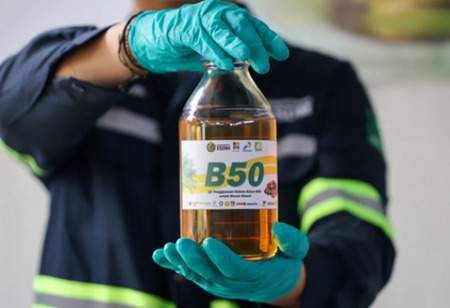
Indonesia will increase its required biodiesel mixture to 50 percent (B50) starting July 1, 2026, to enhance energy security, decrease reliance on imported fossil fuels, and boost the worth of the nation's palm oil sector.
The policy also seeks to boost energy independence by reducing reliance on imported fossil fuels, stated Eddy Abdurrachman, President Director of the Plantation Fund Management Agency (BPDP), in a statement released in Jakarta.
Also Read: Japan Unveils $2.3 Trillion Investment Plan for Next 14 Years
"The biodiesel program has become a strategic instrument for strengthening national energy security while creating a strong domestic market for Indonesian palm oil products," he says.
Eddy stated that the B50 mandate is based on the achievements of Indonesia's biodiesel initiative in recent years.
He stated that the policy has decreased diesel imports, reduced carbon dioxide emissions, and bolstered the palm oil sector by increasing domestic demand and enhancing smallholder income.
The Energy and Mineral Resources Ministry reported that the biodiesel initiative saved Rp722.9 trillion (approximately US$44.5 billion) in foreign currency from 2015 to 2025.
Also Read: Jaishankar and South Korean FM Discuss Strategic Ties in Seoul
It also produced Rp114.7 trillion (approximately US$7.1 billion) in additional value from processing crude palm oil, supported 10.9 million jobs in the palm oil industry, and reduced greenhouse gas emissions by 228.41 million metric tons of carbon dioxide equivalent.
"These achievements show the biodiesel program has become not only an energy security instrument but also a driver of economic growth, downstream palm oil industries and job creation," Eddy saiys.
He remarked that the B50 mandate illustrates how Indonesia's energy policy aligns with the sustainable development of the palm oil industry and increases the utilization of locally produced renewable energy.
Eddy mentioned that the effective launch of B50 has been aided by ongoing upstream efforts, such as smallholder palm replanting, workforce development, research, and enhanced plantation infrastructure.
These initiatives aim to ensure feedstock availability while revolutionizing the palm oil industry through enhanced productivity, innovation, sustainability, and improved assistance for smallholder farmers.
Also Read: Qualcomm to Provide Custom Chip-Design Services to ByteDance
BPDP, responsible for managing finances for Indonesia's palm oil biofuel initiative, will persist in backing the execution with responsible and sustainable management of funds.
Eddy stated that in the future, BPDP will assist governmental initiatives to enhance palm oil-derived renewable energy and will also work on boosting the productivity, sustainability, and global competitiveness of Indonesia's palm oil sector.