


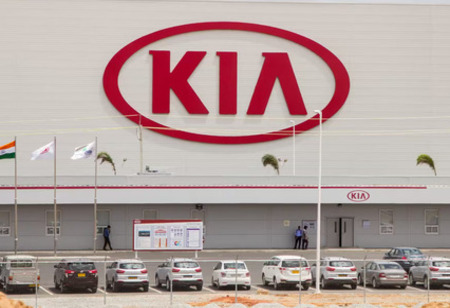
Kia plans to invest approximately three trillion won in Gwangju by 2029 to create a production system for future vehicles. The objective is to transform the current internal combustion locomotive-focused Gwangju facility into a manufacturing hub that employs cutting-edge technologies like electricity and artificial intelligence (AI).
On the 6th, Gwangju Integration Special City in South Jeolla Province reported that Kia has signed a "business agreement to foster an ecosystem for PBV-based future mobility industries" with Gwangju City, Chonnam National University, and Gwangju Institute of Science and Technology (GIST), revealing their investment intentions.
The investment aimed at transitioning Kia Autoland Gwangju's production system to future vehicles.
It aims to implement cutting-edge manufacturing technologies like electricity and AI while enhancing its future vehicle production capacity by leveraging the current car production infrastructure.
Along with investment, Kia will also participate in future automobile technology advancement and demonstration initiatives with nearby universities and local authorities. The essence of the pact involves creating innovative transportation and logistics services utilizing PBVs (purpose-built vehicles). PBV is a type of vehicle that can be created and employed based on its intended purpose, like transporting passengers or handling logistics.
Also Read: WWF-Singapore, Great Eastern Partner on Nature Project Insurance
Initially, we will create a demand-response transportation (DRT) vehicle that functions based on passenger requests and movement needs, and facilitate a shuttle service demonstration using autonomous driving technology.
It will additionally evaluate remote driving technology to enhance the mobility of at-risk individuals. The firm intends to utilize Kia's PBV model PV5's wheelchair accessible vehicle (WAV) to test a technology enabling drivers to operate it remotely without directly accessing the vehicle. Additionally, "Easy Swap" technology, capable of transforming vehicles for logistics and passenger transport, was featured in the demonstration.
Also Read: Saudia Unveils 43-Inch Premium Economy Seats Ahead of 2027 Launch
The city of Gwangju, Jeollanam-do, thinks that this investment will impact local auto parts producers as well. Aligned with modifications in the production system at Kia's Gwangju facility, it intends to enhance collaboration with local businesses and foster the training of relevant staff. Specifically, since Gwangju, Jeollanam-do, has been designated as a test city for autonomous driving and is advancing relevant initiatives, it is anticipated that car manufacturing and the showcasing of new technologies can be connected in the area.
"This agreement will serve as an opportunity to promote PBV-based future mobility technology development and commercialization," Kia President Song Ho-sung says. "We will contribute to the development of the regional future mobility industry by establishing a future car production system and expanding PBV businesses."
Also Read: China Steps Up Middle East Diplomacy with Iran and Oman Talks
"We will actively support Kia Autoland Gwangju to grow into a key production base for future cars in the global market," says Min Hyung-bae, mayor of Gwangju Integration Special City in South Jeolla Province.