


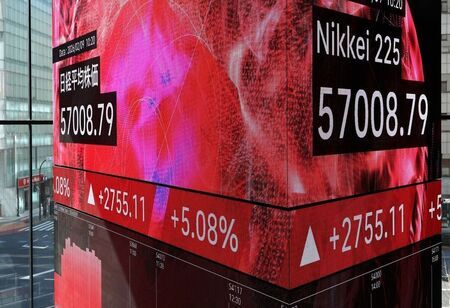
The Asia-Pacific stock markets plummeted sharply today; the average decline was over five percent with Japanese and South Korean markets each down over four percent due to fears of escalating violence in the Middle East and discussions of increased US military action.
As tensions rise between the US and Iran, President Trump has threatened to "destroy" Iran's energy industry within two days if they do not re-open the Strait of Hormuz for international shipping immediately.
Iran has responded, threatening that if the U.S. were to conduct an attack on its power plants, there would be "immediate and serious retaliatory actions directed at the energy sector" throughout the Gulf.
On Saturday, during an Iran broadcast, Mohammad Bagher Ghalibaf, speaker of the Iranian Parliament, said that if Iran was to find itself under attack from the U.S., then any event involving Iranian infrastructure and energy, including oil, would be a "legitimate target" and would be subject to "severe destruction."
Ghalibaf warned on Sunday that any banks or financial institutions that purchased U.S. Treasury Bills would also be legitimatized targets as well as military installations and military personnel.
Crude prices bounced around wildly during today’s volatile session but both followed the same positive trajectory, reversing their earlier decline with Read more.
Brent crude oil prices increased by 0.65 percent to $112.68 per barrel as of 10:57 PM EST while WTI crude oil prices rose by 0.8 percent to $99.00 per barrel.
Goldman Sachs has raised their outlooks for crude oil price to an average of $110 per barrel for March-April 2011 up from their previous forecast of $98; and an average forecast of $98 per barrel for WTI in March and $105 in April.
Goldman also said they expect “the flow of crude through the Strait of Hormuz will remain well below normal for at least another 6 weeks, before gradually recovering to around 1/4 of normal,” which represents an increase to current price levels and a return of investor confidence that a protracted disruption will not occur.
Brent and WTI crude oil price has a 14+ $ spread, which is a difference that is the largest spread we have seen between WTI and Brent prices of crude oil in many years. This growing gap could signal what Chris Verone called "the peak intensity of this oil crisis" when asked about the current price of crude oil being driven by elevated Brent prices, he stated that these elevated prices are likely to drive traders to price in a prolonged conflict.
Japan’s Nikkei 225 index dropped nearly 5 percent from the previous session's decline, while the broader Topix index fell 4.4 percent.
Also Read: China's President Xi Urges China to Deploy New National System to Boost AI Development
In Korea, the Kospi index fell more than 6 percent from its previous close, and Kosdaq's small-cap index dropped nearly 5 percent. The Kospi exchange temporarily suspended trading after the Kospi 200 expired by over 5 percent at the opening of trading.
Also Read: Mixed Thoughts Unfurl Among Leaders Globally Over Trump's Tariff Pause
The S&P/ASX 200 in Australia had a decline of 2.4 percent, while the Hang Seng in Hong Kong and the CSI 300 in mainland China began trading down almost 2 percent.
Also Read: Cantor Teams Up With Tether, Softbank for $3.6 Billion Crypto Venture
The U.S. stock futures were fundamentally steady overnight. Dow and S&P were both unchanged from yesterday, whilst NASDAQ was down by 0.2 percent.