


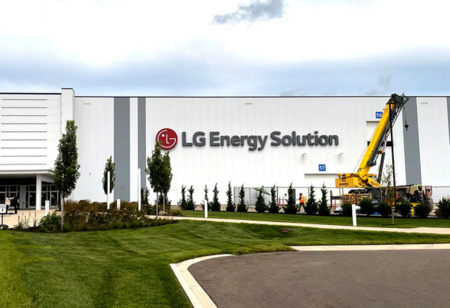
LG Energy Solution has finalized the creation of its energy storage system (ESS) manufacturing network in North America, speeding up its efforts to meet the increasing demand in the fast-growing ESS sector.
After the inauguration of LG Energy Solution Michigan-Lansing on Aug. 18, the facility is currently increasing its operations.
The Lansing facility operates as a dual manufacturing center for lithium iron phosphate (LFP) batteries intended for ESS uses and nickel cobalt manganese batteries for electric vehicles (EVs), boasting an annual production capacity of over 35 gigawatt-hours for battery cells.
Also Read: Cybersecurity Enters Quantum Age as GQX Launches at GISEC
This year, the plant started manufacturing pouch-type LFP batteries for ESS applications and intends to commence mass production of prismatic LFP batteries next year, representing LG Energy Solution's inaugural prismatic battery production in North America. The company has additionally obtained contracts to provide EV batteries to Toyota.
LG Energy Solution Michigan has two manufacturing facilities in the state, located in Holland and Lansing. LG Energy Solution Michigan President Choi Dae-sik stated that managing two facilities in separate sites can be challenging, but “there is considerable synergy since we can swiftly apply the expertise gained at the current plant to the new facility.”
He stated that the firm is relocating its production and quality management expertise and operational insights from Holland to Lansing to expedite the stabilization of the new facility and reduce trial and error. The company intends to unite the workforce, organizations, and production experiences of both plants to function as one cohesive production system.
Also Read: Huawei Sets 2027 Launch for New AI Chips as it Targets Nvidia
As the Lansing plant begins operations, LG Energy Solution now operates five ESS manufacturing facilities in North America: two located in Michigan, NextStar Energy’s facility in Ontario, Canada, and two joint venture sites — L-H Battery Company’s plant in Ohio and Ultium Cells’ plant in Tennessee.
By the close of this year, LG Energy Solution aims to increase its ESS production capability in North America to 50 gigawatt-hours, representing 80 percent of its total global ESS production capacity. Due to the enhanced capacity, the company stated it will satisfy the swiftly increasing demand in the area.
As of the end of last year, LG Energy Solution’s ESS order backlog hit 140 gigawatt-hours, and in the first half of this year, it obtained over 3 trillion won ($2.17 billion) in new ESS orders.
LG Energy Solution has established multiple supply agreements with clients such as Tesla, Terra-Gen, Excelsior Energy Capital, EG4 Electronics, and Hanwha Qcells.
Also Read: Oman-UAE Rail Link Set for Trials in Late 2027
In May, LG Energy Solution finalized a 6 gigawatt-hour ESS battery supply agreement with DTE Energy, which participates in Oracle’s AI data center initiative. In July, it consented to provide as much as 2.9 gigawatt-hours of ESS batteries for a Google initiative in collaboration with renewable energy independent power producer Cypress Creek Energy.
“The operation at Lansing plant is an important milestone that will accelerate LG Energy Solution’s growth in North America,” LG Energy Solution CEO Kim Dong-myung says.
“We will strengthen the US battery ecosystem and expand our local production capabilities by building an advanced battery manufacturing network that supports the future of the US mobility industry and energy infrastructure.”