


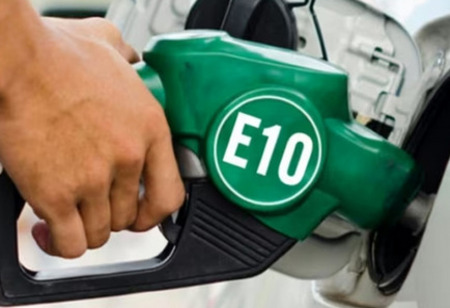
Vietnam officially started the nationwide distribution of E10 biofuel gasoline on June 1, following a plan established by the Ministry of Industry and Trade (MoIT), replacing RON95 fossil fuel gasoline throughout the official retail network.
According to existing regulations, unleaded gasoline for spark-ignition engines must be mixed into E10 fuel, whereas E5 RON92 will be accessible until the conclusion of 2030.
Fuel markets across the country have stayed steady throughout the transition, with no indications of supply shortages or frantic purchasing.
Also Read: Indonesia, Georgia Seek to Boost Human Rights, Bilateral Ties
In Ho Chi Minh City, the primary fuel consumption center in the south, sales at outlets run by Petrolimex, PVOIL, Saigon Petro, and other suppliers have continued as usual. According to station operators, consumers have gained familiarity with E10 through prior pilot programs and generally show confidence in the fuel.
The southern city was one of the initial areas to finish infrastructure enhancements for E10 distribution, featuring storage, blending, and dispensing systems. By late May, the majority of urban fuel stations had transitioned to E10, while only a few suburban outlets were still selling their leftover RON95 stock before the national launch.
A comparable change has been observed in Hanoi, where numerous central-area stations have transitioned from traditional RON95 to E10 in the past weeks. Consistent supply conditions have been noted in provinces such as Quang Ninh, Dong Nai, and Lam Dong. Operators of trucks, taxis, and tourism transport reported that vehicles have functioned effectively on the new fuel.
Also Read: Incheon Airport to Expand Smart Pass Corridors for Faster Boarding
Industry analysts attribute the smooth transition to thorough preparations made by leading distributors. After pilot programs started in August 2025, Petrolimex commenced E10 sales nationwide on May 25, and PVOIL rolled out the fuel at nearly 1,000 service stations throughout the country. Storage units, mixing machinery, and transportation networks have been enhanced to meet demand.
Assoc. Prof. Dr. Do Van Dung, Chairman of the Ho Chi Minh City Automobile and Power Equipment Association, recommended that drivers facing starting challenges or engine performance problems after a long period of inactivity should examine parts like spark plugs, fuel filters, and injectors instead of depending only on fuel additives. He additionally advised keeping fuel levels at a minimum of three-quarters of a tank in infrequently used vehicles to reduce moisture buildup, stressing the importance of routine fuel system checks and prompt fuel filter replacements.
As per MoIT, Vietnam aligns with over 60 nations that have embraced biofuels for transportation on roads.
The ministry stated that E10 is suitable for most gasoline-powered vehicles in the country, a perspective also supported by the Vietnam Automobile Manufacturers’ Association, the Viet Nam Association of Motorcycle Manufacturers, and major vehicle manufacturers.
Bui Ngoc Bao, Chairman of the Vietnam Petroleum Association, stated that research and global experience show that E5 and E10 fuels do not negatively impact engine performance. Any reported problems are typically associated with aging fuel systems, built-up deposits, or insufficient vehicle maintenance.
The organization indicated that E10 is created using automated blending systems that guarantee ethanol is evenly mixed with gasoline according to technical specifications.
Also Read: Indonesia's Prabowo Arrives in France for State Visit
To facilitate the transition, MoIT has instructed fuel wholesalers, manufacturers, and distributors to ensure supply availability and expedite blending and distribution efforts to avoid interruptions. Nguyen Sinh Nhat Tan, Deputy Minister of Industry and Trade, stated that the national use of biofuel gasoline is in line with Vietnam’s objectives of improving energy security, lowering emissions, and meeting its commitments to sustainable and green development.