


Vietnam views APEC 2027 as a chance to advance regional collaboration on sustainable agriculture, innovation, and food security. By implementing practical initiatives, it seeks to create a sustainable and resilient food system while enhancing the value and competitiveness of its agricultural products.
Nguyen Do Anh Tuan, Director of the International Cooperation Department at the Ministry of Agriculture and Environment, says that Vietnam has been transitioning for several years from a production-centric approach to an ecological, low-emission, and climate-resilient agricultural economy.
Also Read: Nama Electricity Distribution Eyes Investment in Oman
This is not only an environmental necessity but also essential for enhancing the value and competitiveness of agricultural products in Vietnam.
A leading initiative involves creating 1 million ha of premium, low-emission rice in the Mekong Delta by 2030, focused on transforming agricultural methods, enhancing resource efficiency, and increasing farmers' earnings. In forestry, the industry is promoting sustainable forest management and ecosystem services, whereas fisheries are focusing more on responsible harvesting, sustainable aquaculture, and the protection of marine ecosystems.
As the host of APEC 2027, Vietnam intends to collaborate with the APEC Secretariat on a policy discussion focused on innovation in the rice sector, along with a workshop on public-private partnerships for regenerative agriculture during the first APEC Senior Officials Meeting (SOM1). The events will provide economies with a stage to exchange insights and practical knowledge in sustainable, low-emission agriculture.
Also Read: Sonowal to Pitch India's Maritime Opportunity to Korean Industry
To assist companies, cooperatives, and farmers in adhering to stricter environmental regulations, Tuan stated that the ministry will persist in refining policies and technical directives; enhance technology, digital transformation, and traceability; and develop skills in emissions measurement, reporting, and verification. It will concentrate on training, value-chain connections, market data, and access to technology and financing, especially for small-scale producers.
Concerning the steps the ministry will undertake to transform these initiatives into beneficial cooperation for member economies, he stated that food security now encompasses not only adequate production but also accessibility to safe, nutritious, and affordable food, as well as resilience against climate shocks, natural disasters, market fluctuations, and supply chain interruptions.
Leveraging its agricultural development experience, Vietnam aims to provide practical solutions tailored to the diverse conditions of APEC economies.
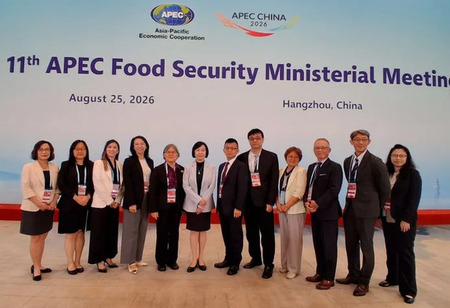
During APEC 2027, Vietnam is anticipated to promote collaboration in innovation and digital transformation throughout agri-food systems; production that is resilient to climate change, efficient resource use, and reduced emissions; minimizing food waste and waste; risk management, early-warning systems, and supply-chain robustness; along with public-private partnerships and strengthening small-producer capabilities. The priorities are based on the APEC Food Security Roadmap Toward 2030 and are in harmony with the Joint Statement from the 11th APEC Food Security Ministerial Meeting, which took place in Hangzhou, China, in August 2026.
Also Read: ADNOC Unveils $16 Billion in Local Manufacturing Opportunities
Vietnam is also promoting an APEC Roadmap on Innovative and Resilient Agri-Food Systems for Shared Prosperity, aimed at transforming initiatives into tangible actions with measurable, scalable results. The proposal expands upon the APEC Food Security Roadmap Towards 2030, emphasizing science and technology, digital transformation, climate change resilience, supply chain disruptions, efficient resource utilization, and sustainable development.
A crucial focus is assisting companies and cooperatives in developing quality management and traceability while complying with food safety, sanitary and phytosanitary, environmental, and technical standards in export markets. The ministry will persist in collaborating with qualified agencies and partners to disseminate information and eliminate technical obstacles, grounded in science, transparency, and alignment with international obligations.