


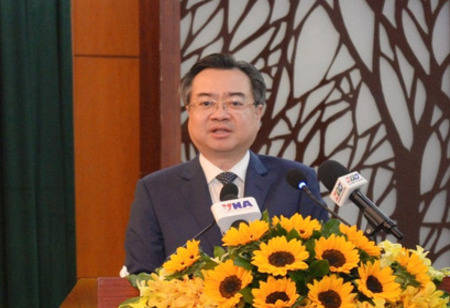
Politburo member, Secretary of the Party Central Committee (PCC), and Head of the PCC’s Commission for Policy and Strategy, Nguyen Thanh Nghi, convened a meeting with representatives from both international and local business associations and companies in Ha Noi as part of the Vietnam Connect Forum 2026.
Nguyen Thanh Nghi emphasized that to achieve the socio-economic development objectives outlined in the Resolution of the 14th National Party Congress, Vietnam must, with a spirit of self-dependence and resilience, harness, unleash, and fully utilize all resources available for development.
Also Read: Vietnam and Sri Lanka Upgrade Ties to Comprehensive Partnership
Expressing strong approval for the Vietnam Connect Forum 2026's agenda, he remarked that the forum served not only as a venue for policy discussions among businesses but also as a chance for central agencies to hear directly from the business community, associations, and experts about significant issues tied to Viet Nam's new growth model.
Special focus was placed on identifying opportunities and potential for successfully drawing new-generation foreign direct investment (FDI) in sectors prioritized by Vietnam. Suggestions and proposals for practical and effective strategies were documented to attract and enhance the value of foreign investment into Vietnamese businesses, while also promoting stronger connections between FDI enterprises and local companies.
During the talks, representatives from about 10 delegations, associations, and companies exchanged views on how to enhance the efficiency of gathering social resources, local business resources, and foreign investment capital, both direct and indirect. Placing significant value on Vietnam’s endeavors to create and execute mechanisms and policies, the delegates suggested that the heads of central commissions, ministries, and agencies offer more insight into several important issues that are currently drawing the interest of foreign companies.
Also Read: Lee Vows Zero Compromise on Workplace Safety on Labor Day
These covered directions for reforming administrative procedures, Vietnam's tax refund strategies, land tax benefits, timelines for project land allocations, and the advancement of next-generation foreign direct investment (FDI).
Some delegates also urged representatives from central commissions, ministries, and agencies to offer further details on localizing plans for foreign investors; enhancing the “three-party linkage” model that includes the State, educational institutions, and enterprises; reducing the divide between research and the marketplace; providing incentives for companies that invest in new technologies and innovation; and ensuring the timely development of energy infrastructure that aligns with production needs, focusing more on clean and renewable energy sources.
Nguyen Thanh Nghi highlighted that these were meaningful and committed contributions.
They would provide an essential foundation for Vietnam to enhance the investment and business climate, draw in foreign direct investment more efficiently, and empower Vietnamese companies to effectively carry out their roles and responsibilities in the upcoming development stage.
Also Read: Japan’s Arms Export to Intensify Naval Shipbuilding With Korea
Over the past 40 years of revitalization, the foreign direct investment (FDI) sector has greatly contributed to economic growth, exports, state budget revenues, the restructuring and transformation of the economy, job creation, and improving Vietnam’s international reputation.
In addition to the successes in resource collaboration, Nghi observed that Vietnamese companies still have a limited presence in global supply chains. Thus, the aim of the new development phase is to create a tightly interconnected and meaningful ecosystem between local businesses and foreign-invested companies, ensuring that internal capabilities remain crucial while external resources provide significant support.