


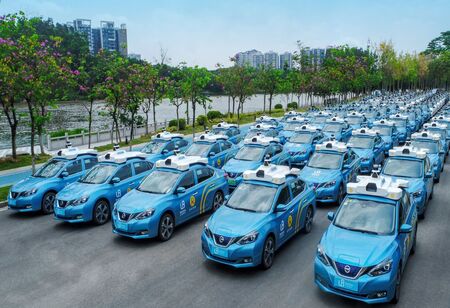
Chinese autonomous driving technology company WeRide has entered Denmark through a partnership with Danish electric mobility provider GreenMobility, expanding its European footprint to a sixth country as Chinese self-driving firms accelerate global expansion efforts.
Europe has emerged as a key growth market for China’s autonomous vehicle companies, following their earlier expansion into regions such as the Gulf.
These firms are seeking to commercialize their technologies internationally while facing rising competition and regulatory challenges in their home market.
According to a company announcement, WeRide and GreenMobility plan to launch a public robotaxi service in Denmark during the first half of 2027, subject to receiving necessary regulatory approvals.
Also Read: Coffee Industry Expands Business Opportunities for MSMEs
The partnership aims to introduce autonomous mobility solutions and strengthen the adoption of self-driving technology in the European market.
Also Read: Maldives Launches Favara-UPI Payment Service With India
The move follows WeRide’s recent expansion into Spain and Slovakia, adding to its existing autonomous driving initiatives in France, Belgium, and Switzerland. While its European operations are currently focused mainly on testing and pilot programs, the company already operates commercial autonomous driving services in China and the United Arab Emirates.
Chinese autonomous driving companies have increasingly turned their attention toward Europe as they seek international recognition and opportunities to establish a global presence. The region’s evolving regulatory environment has encouraged more companies to explore autonomous vehicle deployments.
Rival Pony.ai announced in March a collaboration with Uber Technologies and Croatian autonomous mobility startup Verne to develop what the companies described as Europe’s first commercial robotaxi service.
Also Read: RI, China Reiterate Partnership in Energy and Climate Action
Meanwhile, Baidu’s Apollo Go division and Lyft’s taxi platform Freenow began road testing autonomous vehicles in London in late July. Another Chinese player, Momenta, has secured approvals to conduct autonomous driving trials on public roads across several German cities.
The growing activity reflects intensifying competition among Chinese autonomous vehicle companies to secure early positions in Europe, where regulators are gradually opening the market for self-driving vehicle testing and commercial deployment.