


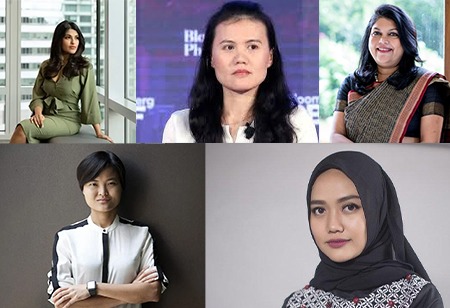
The startup ecosystem in Asia has seen impressive development in the last ten years, making it one of the most vibrant innovation centers in the globe. Startups in the region are changing the industries and remaking the lives and work of millions of people, whether through fintech and e-commerce, mobility, and digital platforms. This change is centered on a new breed of female entrepreneurs who are defying odds, pushing boundaries and creating businesses that do not only respond to market opportunities, but also fulfill the actual needs of the society.
Women founders in Asia are showing that there are no conventional limits to technology and entrepreneurship leadership. They are developing platforms that give consumers more power, small businesses more support, industries are becoming digital, and millions of users are being connected without borders. They have to cope with funding issues, cultural demands, and competitive business, but their success remains a role model to the new generation of entrepreneurs.
This Women’s Day, we make note of top 5 women leaders who are changing the startup landscape in Asia. These founders are the ones who show how innovation, determination, and strategic thinking can help change ideas into successful businesses, starting with India and China and going up to Southeast Asia.
Hooi Ling Tan, Co-founder & COO, Grab
Among the most visible female actors in the startup world of Southeast Asia is Hooi Ling Tan who is the co-founder of Grab. What began as a ride-hailing company in Malaysia and Singapore has since become one of the most powerful digital platforms in the Southeast Asian region. Nowadays, Grab is providing ride-hailing and food delivery services as well as digital payments and financial services.
Hooi is the co-founder of Grab with Anthony Tan based on the idea to deal with the transportation problems in Southeast Asia. Traffic jams, security reasons, and absence of good transport services were common phenomena in most of the cities in the area. To solve these issues, Grab developed a technology platform that would link drivers and passengers effectively with focusing on safety and accessibility.
During the time under Hooi, Grab has grown and expanded at a very fast rate to various countries in Southeast Asia making it into a super-app that is used by millions of people on a daily basis. The rise of women leaders in technology startups and the ability to capture the increasing presence of women leaders in technology startups is a sign of the company's success and how technology can change the urban experiences of people in their daily lives.
Ankiti Bose, Co-founder, Zilingo
Another figure who has made an impact on the startup scene in Asia is Ankiti Bose, the co-founder of Zilingo. Bose co-founded Zilingo to bring about modernization and digitization of the fashion supply chain, especially in Southeast Asia.
The fashion industry comprises thousands of small merchants, manufacturers and independent retailers who in many cases do not have access to technology, funding and international markets. Zilingo aimed to fill this empty space by offering an online platform that linked suppliers, manufacturers, and retailers with data-driven tools and services.
The entrepreneurial experience of Bose received a lot of attention as she was one of the youngest female founders in Asia who would be leading a startup worth close to a billion dollars. Her work is an indication of the potential of using technology to support the small business and enhance efficiency in the traditional industries. Introducing the fashion supply chain to digital solutions, Bose enabled emphasizing the innovative nature of startups in the modernization of the legacy industry.
Also Read: PropertyGuru Announces CEO Change and New Board of Directors
Lucy Peng, Co-founder, Alibaba Group
Lucy Peng is one of the most powerful women in the Asian technology industry who has an origin in China. Being one of the pioneer members of the Alibaba Group, Peng contributed to the creation of one of the biggest digital trading systems in the world.
Alibaba started as a modest company that specializes in linking Chinese producers to the international consumers. Gradually it became one of the technology giants worldwide including e-commerce, cloud computing, digital payment and logistics. Lucy Peng was the one who helped develop the organizational culture and leadership of the company in its early years of existence.
She also aided in the development of initiatives that benefit the small business and entrepreneurs via digital platforms. The leadership experience of Peng shows that women have played a key role in developing some of the most powerful technology firms in Asia to lead the digital transformation of businesses and the market.
Also Read: Alibaba Cloud and Sionic AI Announced Partnership
Falguni Nayar, Founder & CEO, Nykaa
Falguni Nayar has emerged as one of the most motivating players in the startup community of India. Nykaa was started with the aim of establishing a reliable online beauty and personal care products store by her.
What is even more remarkable about the story of Nayar is that she has created Nykaa at the age of almost twenty years having worked in investment Banking almost twenty years. She decided to become an entrepreneur and create a consumer brand starting at the ground level at the age when most professionals tend to slow their careers down.
Nykaa has rapidly acquired popularity due to its handpicked product range, robust brand collaboration and customer orientation strategy. The company grew to include fashion and offline stores over time also. The successful public listing of Nykaa in India also proved that Nayar is one of the most successful self-made women entrepreneurs in the country. Her experience shows that experience, strategic thinking and perseverance can build a startup into a top consumer brand.
Also Read: Singapore Reigns as Southeast Asia's Premier Startup Investment Hub
Diajeng Lestari, Founder & CEO, HijUP Tatler Asia
In Indonesia, HijUp is a pioneer modest fashion startup that was created by Diajeng Lestari. This platform has been established to provide a platform to Muslim fashion designers and give them access to customers both locally and internationally in Indonesia.
The small fashion sector is expanding tremendously over the past years, especially in nations where the Muslim population is high. Upon identifying this opportunity, Diajeng created HijUp as an online marketplace that allowed designers to display their collection as well as customers to get access to a variety of modest fashion designs.
HijUp has also contributed to the empowerment of upcoming designers and propagation of creativity within the fashion industry in addition to being a commercial venture. The work by Lestari emphasizes an opportunity to implement both cultural relevance and innovation in order to come up with new opportunities in a niche market.