


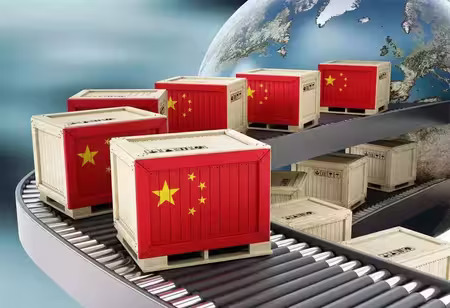
Global manufacturing is moving beyond the traditional China Plus One model toward more diversified, interconnected supply networks. The article explores how China Plus Many is reshaping Asian manufacturing, with companies distributing sourcing, production, assembly, warehousing, and logistics across multiple markets to strengthen resilience, flexibility, supply-chain visibility, and operational efficiency. It also highlights the growing importance of regional manufacturing hubs, logistics infrastructure, digital technologies, supplier diversification, and network resilience in the future of global supply chains.
Global manufacturing is moving beyond the traditional China Plus One model. For years, companies seeking to reduce dependence on China typically added one alternative manufacturing or sourcing location. Today, that approach is evolving into something more complex: China Plus Many.
The shift reflects a broader change in how companies think about supply chains. Instead of replacing China with a single alternative, businesses are increasingly distributing sourcing, production, assembly, warehousing, and logistics across several Asian markets.
According to J.P. Morgan and S&P Global Market Intelligence, the global manufacturing PMI rose from 50.4 to 50.9 in early 2026, marking a sixth consecutive month of improvement. Yet the recovery is unfolding against a more complicated operating environment, shaped by tariffs, geopolitical tensions, transportation disruptions, changing trade policies, and rising operating costs.
China remains deeply embedded in global manufacturing, supported by extensive supplier networks, infrastructure, skilled labour, production capacity, and established logistics systems. But companies are increasingly questioning whether concentrating too many critical activities in one market is sustainable.
China Plus One Evolves into China Plus Many
The China Plus One strategy emerged as companies looked for ways to reduce dependence on a single manufacturing base without abandoning their established operations in China.
The model allowed businesses to retain Chinese factories and suppliers while adding another production location, often in Southeast or South Asia.
However, supply chains have become more complex. A company may now need multiple suppliers for critical components, production facilities in different countries, regional warehouses, and logistics partners capable of moving goods across several borders.
This is creating a move toward China Plus Many.
The objective is not necessarily to reduce China's role to zero. In many cases, China remains an important production and sourcing base while other countries take on specific activities.
For example, a company could source components from China, manufacture selected products in Vietnam, conduct assembly in Thailand, and distribute finished goods through regional logistics hubs.
Such arrangements create more options but also require stronger coordination.
The change is partly driven by the difficulty of relocating an established manufacturing ecosystem. Companies that have operated in China for years may have thousands of supplier relationships, specialized machinery, quality-control systems, trained workers, and established transportation networks.
Moving everything elsewhere can therefore be costly and disruptive.
A multi-country strategy provides another route. Companies can gradually diversify individual products, suppliers, or production stages while maintaining existing operations.
This makes supply-chain diversification less of a one-time relocation decision and more of a continuing process.
Asia Becomes a Network of Manufacturing Hubs
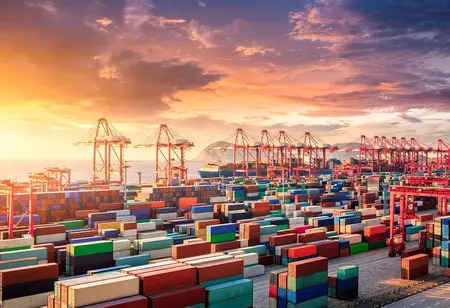 Asia's growing importance in this transition comes from the variety of capabilities available across its economies.
Vietnam has developed significant manufacturing capacity in electronics, textiles, footwear, and consumer products. Thailand has an established automotive and industrial manufacturing base, while Malaysia has strengths in electronics, semiconductors, electrical equipment, and medical devices.
Indonesia offers industrial capacity, natural resources, and a large domestic market. The Philippines has capabilities in electronics and business services, while Singapore plays a major role in trade, finance, technology, and logistics.
Beyond Southeast Asia, countries such as India, South Korea, Japan, and Taiwan also contribute specialized capabilities across electronics, semiconductors, machinery, advanced manufacturing, and technology.
These markets are not necessarily competing to replace China across every industry. Instead, their different strengths allow companies to assign specific functions to different locations.
This is one of the defining characteristics of China Plus Many.
A company no longer needs to find one country capable of replicating China's entire manufacturing ecosystem. It can build a network in which individual markets provide specific capabilities.
This can create a more distributed production structure. Components may come from one market, assembly may take place in another, and finished products may be stored and distributed through a third location.
The result is a supply chain designed around connectivity rather than geographical concentration.
Also Read: 7 Strategic Corporate Partnerships Transforming Business in Asia
Resilience Comes with Greater Complexity
Diversification can reduce dependence on a single location, but it does not automatically make supply chains simpler.
A multi-country network introduces additional suppliers, borders, regulations, transportation routes, inventories, and data systems. Companies must coordinate production schedules and inventory across different time zones and operating environments.
Supply-chain leaders therefore need greater visibility into where materials are located, when shipments will arrive, how much inventory is available, and whether suppliers can meet changing demand.
Digital technologies are becoming increasingly important in this environment.
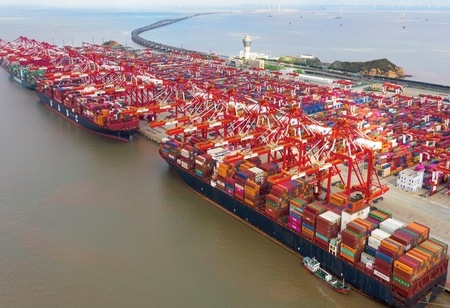 Supply-chain management platforms, warehouse systems, shipment tracking, demand forecasting, and data analytics can provide businesses with a more connected view of geographically distributed operations.
The role of technology is particularly important when companies operate several production locations. A disruption at one facility may require production to be shifted elsewhere, inventory to be repositioned, or transportation routes to be changed.
The ability to identify these changes quickly can influence how effectively a diversified network responds.
This also changes inventory strategies. Companies may hold additional stock at selected locations to protect against disruptions, while regional warehouses can help position products closer to customers.
The result is a balance between efficiency and flexibility.
For decades, supply chains were heavily influenced by the goal of minimizing costs and maximizing scale. China Plus Many introduces another consideration: maintaining enough flexibility to respond when conditions change.
Also Read: How Asian Super-Apps are Reshaping Asia's Digital Economy
Logistics Becomes Part of the Strategy
A distributed manufacturing network cannot function without the infrastructure connecting it.
Ports, highways, airports, industrial corridors, warehouses, freight networks, and customs systems all influence how effectively goods can move between countries.
This makes logistics increasingly important in manufacturing decisions.
A factory may offer competitive production costs, but its overall value to a company can be affected by its access to suppliers, ports, customers, and logistics providers.
For companies operating across Asia, regional connectivity can determine whether multiple manufacturing locations operate as one coordinated network or as disconnected facilities.
Warehousing is also changing.
Instead of serving simply as storage locations, modern warehouses can support inventory management, packaging, labelling, kitting, fulfilment, returns, and other activities.
Regional distribution centers can consolidate products from multiple manufacturing locations and distribute them across several markets.
Third-party logistics providers can further support this model by providing warehousing, transportation, fulfilment, inventory management, and technology services.
For companies entering new markets, outsourcing selected logistics functions can reduce the need to immediately build dedicated infrastructure.
This flexibility can be particularly useful when demand remains uncertain or when businesses are testing new production and distribution arrangements.
The New Supply Chain Is Multi-Layered
China Plus Many does not mean that companies will simply add as many manufacturing locations as possible.
The more countries involved, the more important supply-chain design becomes.
Businesses need to determine which products should remain in China, which components can be sourced elsewhere, where assembly should occur, and which locations are best suited for regional distribution.
The decision can vary by product.
High-volume products may remain concentrated in established manufacturing centers because scale continues to provide cost advantages. More strategically sensitive components may be sourced from multiple suppliers.
Products intended for Southeast Asian consumers may be manufactured closer to those markets, while other goods may continue to move through established export networks.
This creates supply chains that are increasingly customized by product, market, and risk profile.
It also changes the role of procurement teams. Supplier selection is no longer based solely on price, quality, and delivery times. Companies must also consider geographic concentration, financial stability, regulatory exposure, logistics connectivity, and the ability to scale.
The same applies to manufacturing locations.
Cost remains relevant, but it increasingly sits alongside resilience, infrastructure, skills, market access, and supply-chain visibility.
Also Read: BRICS' Push for Asia's Critical Minerals and Clean-Tech Growth
From Cost Efficiency to Network Resilience
The move from China Plus One to China Plus Many reflects a wider transformation in global manufacturing.
Companies are not necessarily abandoning the efficiencies created by China's manufacturing ecosystem. Instead, they are building additional layers around it.
This approach recognizes that no single market can necessarily provide the lowest cost, strongest supplier ecosystem, best logistics connections, largest consumer market, and lowest risk at the same time.
A multi-country network allows businesses to combine different strengths.
China may remain central to certain components and manufacturing activities, while Vietnam, Thailand, Malaysia, Indonesia, India, and other Asian markets take on different roles across production and distribution.
The resulting supply chain is more interconnected than before.
Its success, however, will depend on more than the number of countries involved. Companies will need reliable suppliers, efficient logistics, digital visibility, skilled workers, regulatory coordination, and the ability to shift operations when circumstances change.
China Plus Many is therefore not simply the next version of China Plus One. It represents a broader change in supply-chain thinking from finding an alternative manufacturing destination to designing a network of complementary locations.
As trade patterns, technology, consumer markets, and geopolitical conditions continue to evolve, Asian companies are increasingly building supply chains around multiple points of production and sourcing.
The future may not belong to a single manufacturing hub or even a single alternative to China. Instead, it could belong to interconnected regional networks where different markets perform different roles and where resilience comes from having more than one way to keep the supply chain moving.