


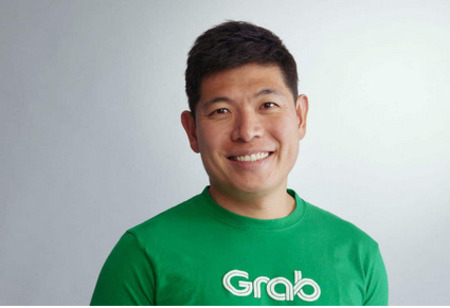
Grab’s journey from a high-growth, subsidy-driven platform to a profitability-focused tech giant marks a significant shift in Southeast Asia’s digital economy. Led by Anthony Tan, the company is redefining its business model by strengthening core services, unlocking new revenue streams, and pursuing strategic acquisitions to fuel expansion.
In the initial three months of the year 2025, Grab Holdings achieved unprecedented levels of profit and expansion in its user base. Revenue showed an increase of 18 percent compared to the previous year, reaching a total of $773 million, while the profit reached $10 million.
"We had a strong set of results to start the year, sustaining robust demand growth momentum to achieve yet another quarterly record number of users on our platform, even amid the seasonal demand impacts from the Lunar New Year and Ramadan fasting period. We also grew the number of active partners on our platform, and now have more active driver- and merchant-partners than ever before”, says Anthony Tan, group CEO and Co-founder, Grab.
Also Read: Australian PM Anthony Albanese to Visit Singapore
Grab Holdings is considered to be the foremost Superapp in Southeast Asia, offering a range of services that cater to daily needs such as Ride-Hailing, Food & Grocery Delivery, and Financial Services like Payments, Lending, and Digital Banking. The company is present in eight nations, which include Malaysia, Indonesia, Vietnam, Singapore, and Thailand.
Grab went public on the Nasdaq towards the end of 2021. The company experienced a 50 percent revenue Compound Annual Growth Rate (CAGR) from FY20 to the trailing twelve months (TTM) ending in Q3’25, resulting in a TTM revenue of $3.2 billion.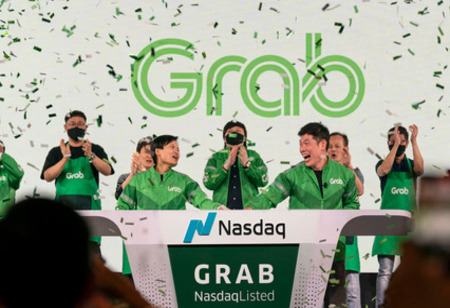
After years of investing, Grab has now reached a turning point towards profitability. During the same period, operating income for the company improved significantly from a loss of $1.3 billion to a profit of $26 million. Grab currently holds cash and short-term investments amounting to $7.1 billion, with a total debt of $2.1 billion. Its worth in the market stands at $21 billion, having ranged from $3.36 to $6.62 in the last year, but now sits at $5.08 in current trading.
A Shift in Focus: From Growth-at-All-Costs to Profit Discipline
Grab Holdings Ltd has shifted its focus in early 2026 towards prioritizing profit growth over rapid expansion. Previously, the company aimed at growth through offering subsidies and capturing market share; however, Grab's leadership has set a target to triple its profit by 2028. This new strategy follows Grab's achievement of its first-ever full-year net profit in 2025, a significant milestone reached fourteen years after the company's inception. Transitioning from a history of losses to profitability provides Grab with a solid foundation for future investment opportunities, as well as the ability to streamline its cost structure.
Also Read: Oil Minister H S Puri on Two Day Visit to Qatar
The company aims to vastly increase its EBITDA to $1.5 billion by 2028, which is three times the previous year's levels. To achieve this, Grab has outlined a strategy to increase its total revenue by over 20 percent annually for the next three years. The goal quantifies what was once a vague notion of growth by providing specific statistics. The 20 percent number is influenced by the competitive landscape in Grab's markets and the decreased consumer activity in certain Southeast Asian countries.
A Bold Move: The Generative AI Sprint
At Converge Live in Singapore, Anthony made his stance crystal clear: “Humans who don’t embrace AI in a company will be replaced by humans who embrace AI.” The same will apply to companies, he said. “I really believe that, if you were to embrace it, it not only makes you superhuman, it makes your company superhuman.”
In the current landscape of technological advancements, companies such as Grab are swiftly adjusting to the changes brought about by AI in order to remain relevant and competitive in various sectors.
Tan is already ahead of the game, utilizing AI to improve efficiency and boost his own output. Although he may not possess preferably much of the required coding skills, he ensures utilizing an AI assistant for research and additional tasks. Nonetheless, Tan is not solely focused on his own accomplishments; he also aims to benefit the entire organization.
“I can’t code myself, but I use it to build my own projects, for research, for Grab,” the Malaysian entrepreneur said. “It can totally change how you spend time and how productive you can be. That’s what has helped me.”
To speed up the use of AI, Tan decided to take a different route by pausing all normal operations and starting a company-wide "generative AI sprint" that lasted for nine weeks. One significant result of this project was the creation of a Merchant Menu Assistant powered by AI. This tool, intended for Grab's vendors, is able to extract information from a physical menu and easily transfer it to the app. Small business owners, like home cooks in Jakarta who depend on Grab for customer reach, find this innovation especially important.
Also Read: Indonesia Plans Financial Hub to Attract Investors: Prabowo
“So, think about a single mother making food in a home in Jakarta,” Tan said. “Now she has an assistant that helps her as a sous chef, as a packaging assistant, as a chief revenue officer, all in one. That helps business, but also helps drive that vision of empowering everyday entrepreneurs all at the same time.”
The GrabX 2026 Pivot: Redefining the Value Proposition
 Additionally, Grab is shifting its focus towards employing AI and hardware in order to address the decline in growth in its main operations and challenges such as increasing fuel expenses. A great example of this is the GrabX 2026 conference in Jakarta, where the company introduced a new direction by presenting itself as a "smart companion for daily activities" instead of just a service-oriented super-app.
Anthony described the change as a required transformation as he believes that Grab is undergoing enhancements. The company is expanding its services beyond simple transactions and incorporating innovative features to position itself as a helpful daily companion.
This new approach is supported by the "Grab Intelligence Layer," an artificial intelligence system developed using data from more than 20 billion rides and orders collected over the past 14 years. The decision is made at a crucial moment for the company that is listed on the Nasdaq stock exchange.
Also Read: Defense Minister Urges Military Overhaul Over Troop Shortage
Even though Grab reported its very first annual net profit in February, the revenue projection for fiscal year 2026 did not meet the expectations of Wall Street, indicating a slowdown in its main ride-hailing and delivery operations. The company's stock price has dropped by almost 30 percent since the beginning of the year.
Navigating Macro Pressures with AI-Led Efficiency
Anthony highlighted various external factors such as economic uncertainty and the impact of the Iran war on fuel prices as significant obstacles. In various public platforms he emphasized the importance of addressing the real challenges posed by rising fuel costs and how companies like Grab can better serve their customers.
Grab's solution involves utilizing its expansive size - valued at approximately $14.5 billion - to produce data that can improve efficiency and decrease costs through the use of AI technology.
Driving Demand Through Smarter Pricing
Tan stated, "By reducing prices, we're seeing an increase in orders, which is crucial for expanding our business." The company recently launched 13 innovative AI-driven functions aimed at improving customer satisfaction, catering to travelers, and fostering relationships with business associates, all intended to improve user interaction and boost profits.
Also Read: Strong Leadership, Systemic Reform Could Combat Corruption: Azam
Making Mobility More Accessible with AI
The main focus of the unveiling was leveraging AI to lower expenses for customers. One example is the introduction of the "Group Ride" function, which utilizes AI to calculate fare divisions among groups of passengers, possibly cutting costs by up to 40 percent compared to individual rides.
Bridging Online and Offline Through Innovation
Additionally, the "Virtual Store Manager" tool enables merchants to convert regular CCTV cameras into AI-driven instruments for monitoring store cleanliness, customer flow, and business operations in real time. One of the most significant changes is Grab's venture into creating physical hardware, which is different from its previous focus on software. The company introduced an autonomous robot named "Carrie," which is meant to assist delivery drivers and act as a "human extension."
Also Read: UAE Says Use of Hormuz Must be Guaranteed in Any US-Iran Deal
Solving Last-Mile Inefficiencies with Robotics
According to Anothony, drivers often waste about 10 percent of their time navigating through crowded malls or waiting for customers. He mentioned that they are expanding into hardware to address the challenging physical aspects of the job that cannot be solved by software alone. The purpose of the robot is to take care of pickup and drop-off tasks, allowing drivers to complete their tasks more efficiently.
New Frontiers Beyond Core Businesses
 Relying solely on AI will not lead to a threefold increase in Grab's earnings. The business is venturing into new services outside of transportation and food delivery in two specific sectors: Grab's expansion in the grocery delivery sector has been increasing steadily, which is a popular category that encourages regular orders.
Also Read: Malaysia's Palm Oil Sector in Advantageous Position
Betting Big on Grocery for Repeat Demand
Incorporating grocery services into the main app helps to increase the frequency of transactions made by users. In Southeast Asian countries like Malaysia, grocery delivery services are in competition with traditional brick-and-mortar stores. If Grab succeeds in making their ordering process more convenient and faster than physical shopping, they have the potential to generate consistent income.
Unlocking Value Through Data-Driven Finance
Grab is also expanding its focus to include financial services. In addition to providing lending, digital wallets, insurance, and bank accounts, the company is leveraging the data from millions of transactions on its platform to enhance its ability to assess loans and personalize financial offerings, potentially outperforming traditional banks in the process.
Also Read: KT Appoints Park Yoon-young New CEO, Eyes AI-driven Reshuffle
Grab Enters the US Market Through Stash
Grab's recent purchase of Stash Financial, Inc., a US digital investing platform, showcases their strategic expansion. This acquisition grants Grab entry into a new market with over a million active customers and assets totaling more than $5 billion.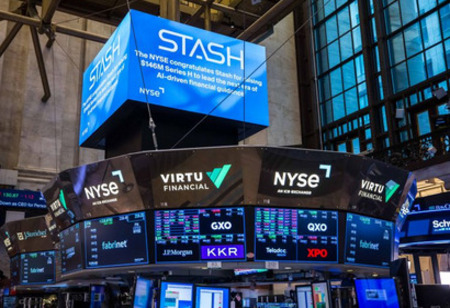
According to Grab, this move broadens their fintech presence and allows them to venture beyond Southeast Asia.
Grab Holdings Limited has revealed that it has finalized deals to purchase all the shares of Stash Financial, Inc., an American digital financial services company. The acquisition will involve paying US$425 million for a 50.1 percent stake in Stash at the time of the deal closure, with the rest to be paid based on fair market value in installments over the following three years.
Also Read: Microsoft to Invest $10 Billion in Japan for AI, Cyber Defense
After acquiring Stash, Grab aims to help Stash expand further in the American consumer market and is considering ways to bring Stash's investment services, like the AI Money Coach, to Southeast Asia down the line. With the progress in their business strategies, Stash is projected to achieve over $60 million in Adjusted EBITDA by 2028. Following the completion of the acquisition, Stash will continue to operate independently within Grab's business framework, maintaining its existing revenue structure, offerings, and identity.
Grab Enters Taiwan through Partnership With Delivery Hero SE
 Grab has engaged in a new partnership with Delivery Hero SE, in which they have agreed to purchase Delivery Hero's foodpanda delivery business in Taiwan for $600 million in cash. This acquisition will be completed on a cash-free andf debt-free basis, with any necessary adjustments made before the closing of the deal.
Anthony Tan, Group CEO and Co-Founder, Grab, said, “This acquisition will mark Grab’s expansion into Taiwan, our 9th market and first outside of Southeast Asia. This is a natural next step for Grab, as our experience in Southeast Asia is a direct fit for this market".
Also Read: Philippines and Malaysia to Boost Regional Energy Stability
"Our longstanding expertise in managing complex delivery logistics for dense and high-traffic cities is well-suited for Taiwan’s bustling cities. Taiwan’s population of approximately 23 million also has a high demand for mobile-first services, similar to the Southeast Asian consumers who Grab serves every day. We see a significant opportunity to grow the food and groceries delivery scene here.”
“Sharing a deep Asian heritage, we value the same traditions that define Taiwan’s rich food culture. This local understanding is why we’ve served our consumers and partners better than anyone else, in every market we’ve entered over the last eight years. For us, success starts with the community – we will be on the ground to listen first-hand to user needs. We are here to be a long-term partner to Taiwan, and look forward to providing our AI-enabled products to help local merchants and delivery-partners grow with the digital AI economy,” Tan added.
Also Read: Prabowo Meets Emperor Naruhito, Bolstering Indonesia-Japan Ties
Niklas Östberg, CEO and Co-Founder of Delivery Hero, said, “The foodpanda team in Taiwan has built a fantastic business and we thank them for their hard work. A transaction like this is a significant undertaking, but we are delighted to have agreed this cash deal, which reflects strength and attractiveness of the business in Taiwan. This divestment is a key first step in our ongoing strategic review.”
Building a Stronger Delivery Ecosystem in Taiwan
Post the acquisition, Grab will be established in 21 cities in Taiwan. This partnership merges Grab's technologically advanced products and strong operational skills with foodpanda's widespread reach in Taiwan. In 2025, the foodpanda operation brought in around US$1.8 billion in Gross Merchandise Value (GMV) and was profitable based on adjusted EBITDA (not including Delivery Hero's group expenses).
Grab's collaboration demonstrates their dedication to being a dependable, enduring ally in promoting Taiwan's economic development.
Driving Economic Value Through Platform Ecosystems
The ecosystem established by Grab has resulted in an annual economic value of $18.8 billion for the Southeast Asian economies, accounting for 0.5 percent of the region's overall GDP. Grab's objective is to have a similar positive impact on Taiwan's economy by offering flexible income opportunities to millions of individuals and small enterprises, while adhering to local laws and regulations.
Bringing AI and Global Reach to Taiwan
Grab plans to introduce its AI product suite in Taiwan, utilizing technology that is currently utilized by over 50 million monthly transacting users in more than 900 cities. In addition, Grab will promote Taiwan's tourism by showcasing the country's rich food culture to its international audience of over 50 million monthly transacting users. By using the Grab app, travelers from around the world will have an easy way to explore local cuisine and Taiwanese businesses will have the opportunity to reach a larger market.
Also Read: PM Stresses Need to Diversify Oil Supply at Nghi Son Refinery
The Road Ahead: Balancing Growth, Margins, and Innovation
In the past, Grab grew by offering discounts on rides, delivery fees, and bonuses for drivers to gain market share rapidly. This strategy led to a significant number of users but also resulted in financial losses. The company's shift towards profitability by 2025 and establishing profit goals for 2028 marks a new chapter in its development. Investors and competitors will closely monitor Grab's decisions on AI, financial services, and groceries.
If Grab can maintain strong revenue growth, increase margins, and enhance the utility of its platform, it has the potential to revolutionize the operations of multi-service apps in significant developing markets. However, if there is a decrease in revenue growth or if operational costs increase more rapidly than anticipated, there could be increased pressure to meet profit targets. According to Grab's own disclosures and public announcements, this shift in strategy signifies a transition from being a rapidly expanding startup to a company that prioritizes consistent and reliable earnings.