


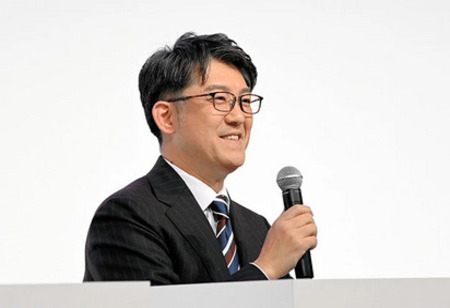
“Unless things change, we will not survive. I want everyone to acknowledge this sense of crisis," said Toyota Motor Corporation's outgoing CEO, Koji Sato. Despite being one of the biggest car manufacturers globally in terms of production, Toyota Motor Corporation's outgoing CEO has raised concerns about the company's future due to the fast-evolving global automotive industry. “Right now, we in the automotive industry are battling for our very survival," he added.
When a company as established as Toyota makes such a bold statement, it is unlikely to be dismissed by top industry executives. Toyota openly expressing concerns about falling behind indicate that something key is amiss and there is more to that story.
A Shift in the Quality Mindset
Toyota is easing up on its quality requirements. The Toyota that used to throw away 10,000 wire harnesses every month due to slight discoloration on the plastic connectors. That same Toyota, which made quality control a key advantage so significant that being "built like a Toyota" became a common saying, is now questioning if some of those standards were maybe a bit too strict. The irony is quite remarkable.
Also Read: OpenAI Appoints Sanghyun Lee APAC Global Affairs Head
Over the course of three decades, companies worldwide have worked tirelessly to learn and adopt the Toyota Production System. Institutions of higher learning have dedicated significant resources to studying it. The concept of "kaizen" became popular in management circles thanks to Toyota's influence. Yet, surprisingly, Toyota is now stepping back from their emphasis on quality, citing the need for survival as the reason.
Cracks in Toyota’s Australia Story
Toyota's sales figures in Australia are declining, a topic the company prefers not to address openly. Waitlists for their vehicles have become a running joke in the country. The high demand for the RAV4 Hybrid has forced some customers to explore other options, including Chinese dealerships offering instant availability and competitive prices.
Despite its iconic status, the LandCruiser is causing logistical headaches for both customers and Toyota. The company has admitted that equipment malfunctions and production delays due to quality issues are responsible for the delays in delivering vehicles.
The reputation of machine was established by a culture of meticulous attention to quality, but now this same culture is causing frequent halts in production. Instead of being viewed as a legendary precision instrument, the machine is now seen as a costly piece of equipment constantly pausing to ensure it meets its own standards.
Koji Sato’s Strategy for Survival
In January, Koji released a strategy for survival that includes securing rare earth materials and lithium, leading Toyota to clash with China as China gains ground in the automobile industry. Toyota is taking a diversified approach to powertrains, as they have no intention of exclusively focusing on electric vehicles and will remain diverse. They are also investing in a circular economy, seeking inspiration from Korea and China, following Tesla's lead in autonomous technology, reforming vehicle taxes in Japan, and reducing production costs through standardized components.
Koji emphasized during a supplier event that increasing competition, particularly from China's dynamic electric vehicle and technology sector, is compelling conventional automakers to reconsider their approaches. He stated that the increase in Chinese car brands was a major problem, and he suggested getting rid of strict quality checks on small parts inside cars that he feels are excessive.
Koji pointed out various areas where Toyota could enhance its operations, citing recalls and supply delays as challenges in production. “We continue to keep many customers waiting. Many of these stoppages stemmed from equipment or quality issues at both Toyota and our suppliers,” he says.
One potential area for improvement, according to Koji, is to streamline the process of developing new cars by easing the strict quality standards for parts from external suppliers as seen by Toyota.
The brand's strict management of parts procurement was initially intended to guarantee precise assembly and dependability, but is now seen as hindering progress. Despite this, Koji maintained that general quality must not slide, saying, “To enable us to make more cars, we must step things up a gear in areas such as building quality into every process”. If Toyota were to alter its quality control procedures, they would have to consider the changing standards of accuracy and reliability in Chinese brands.
China’s Dominance in the EV Race
A plethora of challenges have resulted in Toyota’s tuning fortunes. Chinese car manufacturers are rapidly increasing their market share and revolutionizing production costs. Technology is now an integral element of modern vehicles. Tariffs remain a significant concern. The automotive sector has experienced more changes in recent years than it has in quite a long time.
In March 2025, the Chinese electric vehicle manufacturer BYD, which stands for "Build Your Dreams", surpassed Tesla to become the top seller of electric vehicles worldwide. In 2024, BYD sold approximately 4.3 million vehicles globally, while Tesla sold only about 1.8 million vehicles globally. This recent development is part of a series of changes in supply and manufacturing that have allowed China to take over the global electric vehicle market in 2025, prompting American car companies to reassess their strategies.
Also Read: Korean, Indonesian Leaders Talk Deepening Bilateral Cooperation
In December 2025, top executives from leading American car companies such as Ford frequently travelled to China to personally test out their vehicles and even bring some back to Detroit for further examination. Ford CEO Jim Farley expressed his awe at the high quality and innovation of Chinese electric vehicles, calling it a truly humbling experience. After initially being skeptical about BYD's capabilities ten years ago, Elon Musk changed his tune in a 2024 interview, predicting that Chinese electric vehicle manufacturers like BYD will outperform most other competitors, especially if trade barriers are removed.
BYD is just one of the many companies challenging Tesla and American car manufacturers. It was estimated that by 2025, six Chinese companies would be among the top 10 electric vehicle manufacturers in the world, with China accounting for over 60 percent of global electric vehicle production. Cities like Shenzhen and Shanghai have already electrified their bus fleets, and nearly half of all cars sold in China in 2024 were electric.
In fact, two-thirds of all electric cars sold worldwide in 2024 were purchased in China, a significant increase from 2021. Since July 2024, monthly sales of electric cars have been higher than traditional cars, indicating a growing preference for electric vehicles.
China not only has a strong presence in its own market, but also dominates the global production of electric cars and batteries. In 2024, China was responsible for over 70 percent of the world's electric vehicle and electric vehicle battery manufacturing, as well as 40 percent of global exports. Despite facing tariffs of up to 35 percent for some companies by December 2025, Chinese electric vehicle brands managed to increase their market share in Europe significantly between April 2024 and April 2025.
Rethinking Quality, Reducing Waste
Toyota has consistently maintained stringent quality criteria. The company used to discard components for minor aesthetic imperfections that would likely go unnoticed by the average person. However, this practice may be subject to alteration in the near future.
Also Read: KT Appoints Park Yoon-young New CEO, Eyes AI-driven Reshuffle
Toyota has recently introduced a new initiative called 'Smart Standard Activity', where they have adjusted their engineering standards to prioritize the function of a component rather than its appearance. Previously, Toyota would reject components for cosmetic reasons or if they did not meet visual or design requirements, even if they functioned properly. Issues such as imperfections in non-visible parts, variations in color of electronic component housings, and imperfections in assemblies that are not visible would result in the rejection of thousands of components.
Toyota has implemented new regulations regarding the molds and tools that suppliers must maintain in order to make spare parts for older vehicles. Previously, the company demanded that suppliers keep tooling for a wide range of parts, including sunvisors with or without mirrors and slightly different colored door handles. Now, Toyota permits suppliers to streamline the molds they maintain by focusing on producing the most popular versions, like a smaller variety of door handles or just sunvisors with mirrors. Toyota introduced more than twelve strategies to its supply chain partners in order to uphold the brand's sales, size, and earnings, while cutting down on expenses related to development and manufacturing.
“Put as many of these ideas into practice as possible and create better cars,” Koji told suppliers. “We need to improve productivity across the board. Both as individual companies and as an industry, let’s transform how we fight to ensure our survival.”
Toyota’s Next Phase Under Kenta Kon
The incoming CEO Kenta Kon, who currently serves as Toyota's chief financial officer, supported Koji's suggestions and cautioned that the company's current profitability and production levels, despite still being the leading car manufacturer globally, do not accurately reflect the overall well-being of the company. “Going by the figures released in our financial results, some may feel that Toyota is in a secure and comfortable position. But that is certainly not the case,” he says.
Kenta reiterated the concerns by informing suppliers that merely looking at Toyota's results might suggest the company is in a stable and comfortable state. He disagreed with this notion, cautioning that the situation is more complex and urging Toyota to tackle what he referred to as its diminished competitive base.
The shift in leadership at Toyota indicates a focus on controlling expenses rather than just pursuing more daring products. Toyota is trying to maintain profit margins while also preserving its large scale. Koji is now the vice chairman and chief industry officer, while Kenta is taking over internal operations. Investors and suppliers are closely observing to see if Toyota can remain efficient without sacrificing the qualities that make it unique.
The Final Verdict: A Test of Loyalty and Strategy
Toyota will remain stable in the near future. The company has a strong financial position. Customers in Australia and worldwide continue to show strong loyalty to the brand. The LandCruiser will continue to be popular regardless of changes in leadership. The success of Toyota's plans, new leadership, and improved quality standards will be evident through consumer buying decisions in the coming years. It will not be decided at a supplier meeting. The market will ultimately determine if Toyota is headed in the right direction or if they are taking a graceful step back. It all depends on whether buyers choose a RAV4 or opt for a competitor's vehicle in the future.