


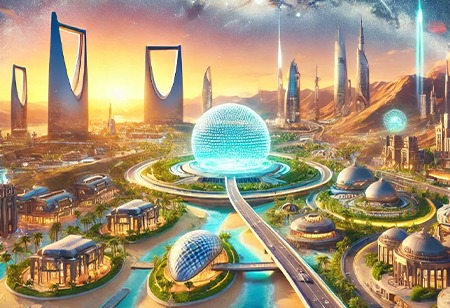
Saudi Arabia's Vision 2030 is transforming the Kingdom into one of the world's fastest-growing tourism destinations. This article highlights the key initiatives behind the Kingdom's tourism transformation and their role in shaping the future of the sector.
Saudi Arabia's tourism industry is undergoing one of the world's most ambitious transformations under Vision 2030. Saudi Arabia’s tourism market is valued between $53.87 billion and $135.48 billion and is projected to grow to between $100 billion and $240 billion in the coming years, driven by the Kingdom’s Vision 2030 diversification strategy. Long known as a global oil powerhouse and the spiritual heart of Islam, Saudi Arabia has welcomed millions of pilgrims to Makkah and Madinah for decades. However, strict visa policies, limited entertainment options, and an oil-dependent economy kept international leisure tourism largely untapped.
That is changing rapidly. Through Vision 2030, Saudi Arabia is investing billions to reduce its reliance on oil and establish tourism as a key driver of economic growth. The Kingdom is developing world-class destinations, easing visa regulations, expanding airport infrastructure, attracting private investment, and strengthening its hospitality, culture, and entertainment sectors. These efforts have already helped Saudi Arabia surpass its original target of 100 million annual visitors ahead of schedule, prompting it to raise its goal to 150 million visitors by 2030.
The momentum is already evident. In 2025, Saudi Arabia welcomed approximately 122 million domestic and international visitors, a five percent year-on-year increase. International arrivals reached 30.4 million, up 18.2 percent from the previous year, generating SAR 300 billion in tourism spending, a six percent increase. This follows the 29.7 million inbound visitors recorded in 2024, which represented an 8percent rise over 2023. Tourism's total contribution to Saudi Arabia’s GDP climbed to approximately SAR 318 billion, accounting for 7.1 percent of GDP in 2025, compared with 5.8 percent in 2024. Under Vision 2030, the Kingdom aims for tourism to contribute more than 10 percent of GDP while attracting 150 million annual visitors by 2030.
As global competition for tourism intensifies, Saudi Arabia is positioning itself as a year-round destination for luxury, adventure, culture, business events, and sports tourism.
Let’s look into key factors driving the Kingdom’s tourism boom and how Vision 2030 is reshaping the sector.
What is the Vision 2030 Strategy?
Launched in 2016 by Crown Prince Mohammed bin Salman, Vision 2030 represents Saudi Arabia's long-term roadmap for economic diversification. Recognizing that oil revenues alone cannot sustain future growth, the strategy aims to build a resilient economy driven by innovation, investment, technology, manufacturing, renewable energy, and tourism.
Tourism occupies a central role within this vision.
The government's objective extends beyond increasing visitor numbers. It seeks to create an integrated tourism ecosystem capable of generating employment, attracting foreign direct investment, supporting small businesses, and promoting Saudi Arabia's rich cultural and natural heritage.
To achieve these goals, the Kingdom has implemented wide-ranging reforms across multiple sectors. Tourism visas have been introduced for citizens of numerous countries, replacing what was once a highly restrictive entry system. Digital visa platforms, simplified immigration procedures, and expanded international flight connectivity have significantly improved accessibility for leisure travelers.
Simultaneously, new regulatory frameworks have encouraged private investment in hotels, resorts, entertainment facilities, museums, restaurants, and tourism services. Institutions such as the Saudi Tourism Authority and the Tourism Development Fund play a vital role in coordinating investments, promoting destinations internationally, and supporting tourism-related businesses.
Also Read: 8 Asian Cities Emerging as Global Innovation Hubs
Unlike conventional tourism strategies that focus on individual attractions, Vision 2030 adopts a holistic approach, combining infrastructure development, heritage preservation, environmental sustainability, workforce training, and digital transformation into a unified national agenda.
Saudi Arabia’s Deputy Minister for Tourism Destinations Enablement Eng. Mahmoud Abdulhadi says, “Saudi Arabia is not asking investors to invest in a promise. It is inviting them into a market already moving at scale. Saudi tourism is not built on one project, one city, or one market segment. It is a national portfolio of destinations shaped for diverse demand.”
Massive Infrastructure Investments Under Vision 2030
Saudi Arabia has launched one of the largest infrastructure investment programs in modern history.
Airports are being expanded to accommodate increasing passenger volumes, while new international terminals improve connectivity with Europe, Asia, Africa, and the Americas. Road networks continue to improve, linking emerging tourist destinations across the Kingdom, while high-speed rail systems make travel between major cities faster and more efficient.
Urban development projects are simultaneously reshaping Riyadh, Jeddah, and other major cities into vibrant destinations that combine business, culture, shopping, entertainment, and hospitality.
Also Read: A Study of Singapore's Leadership Strategy in Tourism in 2025
Accommodation capacity has expanded significantly through the construction of luxury hotels, boutique resorts, serviced apartments, and international hospitality brands entering the Saudi market. Global hotel operators increasingly view the Kingdom as one of the fastest-growing hospitality markets worldwide, driven by rising visitor demand and strong government support.
Digital infrastructure has also become an important component of tourism development. Smart city technologies, digital payment systems, AI-powered visitor services, online booking platforms, and integrated mobility solutions are being incorporated into tourism projects to enhance visitor experiences while improving operational efficiency.
These investments are laying the foundation for a tourism industry capable of sustaining long-term growth rather than temporary visitor spikes.
Mega Projects- Creating New Travel Destinations
Perhaps the most visible symbol of Saudi Arabia's tourism ambitions is its portfolio of giga-projects.
Unlike traditional tourism developments that expand existing cities, these projects are creating entirely new destinations from the ground up.
One of the most ambitious is NEOM, a futuristic region in northwest Saudi Arabia envisioned as a hub for technology, sustainability, luxury tourism, and innovation. The development includes luxury coastal resorts, mountain destinations, desert adventures, wellness tourism, and smart urban environments designed to attract visitors from around the world.
Equally transformative is The Red Sea project, which seeks to establish Saudi Arabia as a premier luxury beach destination. Stretching across hundreds of kilometers of pristine coastline, the development includes luxury hotels, private islands, marine conservation zones, diving experiences, and eco-tourism attractions designed around sustainability principles.
AMAALA complements this strategy by focusing on ultra-luxury wellness tourism. Designed as a global wellness and lifestyle destination, it combines luxury hospitality, health retreats, arts, culture, and high-end leisure experiences.
Meanwhile, AlUla has emerged as one of Saudi Arabia's most important cultural tourism projects. Home to ancient archaeological sites, dramatic rock formations, and centuries-old heritage, the destination combines conservation with carefully planned visitor experiences. Museums, cultural festivals, guided heritage tours, and luxury accommodations are helping position AlUla as a global cultural destination while preserving its historical significance.
Also Read: Shereos Saving Earth for Future Generations through Sustainability
Another flagship development, Qiddiya, aims to become Saudi Arabia's entertainment capital. Located near Riyadh, the project is expected to feature theme parks, motorsports facilities, water attractions, performing arts venues, esports arenas, and family entertainment centers, creating an entirely new leisure ecosystem within the Kingdom.
Diriyah, regarded as the birthplace of the Saudi state, represents another pillar of cultural tourism. Restoration projects are transforming the historic area into a vibrant destination featuring museums, heritage attractions, traditional architecture, cultural performances, luxury hotels, retail outlets, and fine dining experiences.
Collectively, these projects represent a shift in Saudi Arabia's tourism strategy—from attracting visitors to existing attractions to creating globally competitive destinations capable of drawing millions of travelers annually.
Entertainment - A Major Economic Driver
For many years, entertainment options within Saudi Arabia were relatively limited. Today, that landscape has changed dramatically.
Entertainment has become one of the fastest-growing pillars of Vision 2030.
The Kingdom now hosts international concerts, music festivals, sporting championships, film festivals, fashion events, esports tournaments, and cultural exhibitions throughout the year. Global artists, sporting organizations, and entertainment companies increasingly view Saudi Arabia as a significant market.
The expansion of cinemas, performing arts venues, exhibition centers, convention facilities, and family entertainment complexes has created new experiences for both residents and international tourists.
Sports tourism has emerged as another important growth area. Formula One races, international football tournaments, boxing championships, golf events, tennis competitions, and motorsport festivals attract global audiences while enhancing Saudi Arabia's international profile.
This diversification ensures tourism is no longer seasonal or limited to religious travel. Instead, visitors now have multiple reasons to visit throughout the year, whether for business conferences, cultural festivals, sporting events, luxury vacations, or adventure tourism.
The entertainment sector also generates significant economic spillovers by supporting hotels, restaurants, transportation providers, retailers, and local businesses, thereby strengthening the broader tourism ecosystem.
Vision 2030 Powering Hospitality and Aviation
No tourism strategy can succeed without a robust hospitality ecosystem, and Saudi Arabia is investing heavily to ensure its accommodation capacity keeps pace with rising visitor demand. Over the past few years, international hotel chains have significantly expanded their presence across the Kingdom, while domestic developers continue to build thousands of new hotel rooms, serviced apartments, luxury villas, and boutique resorts.
Global hospitality brands are increasingly viewing Saudi Arabia as one of the world's fastest-growing tourism markets. Luxury operators are establishing flagship properties within mega projects such as NEOM, The Red Sea, AMAALA, and Diriyah, while mid-scale and business hotels are expanding across Riyadh, Jeddah, Makkah, Madinah, and emerging regional destinations.
The hospitality boom extends beyond accommodation. Restaurants, cafés, wellness retreats, spas, conference facilities, shopping districts, and family entertainment centers are becoming integral parts of new tourism developments. This integrated approach allows visitors to experience multiple attractions within a single destination, increasing average spending and extending the duration of their stay.
Supporting this expansion is a rapidly evolving aviation sector.
Saudi Arabia is investing billions of dollars to strengthen air connectivity and position itself as a regional aviation hub. Airport modernization projects are underway across major cities, while new terminals and expanded runways aim to accommodate millions of additional passengers annually.
The launch of Riyadh Air, alongside the continued expansion of Saudia, reflects the Kingdom's ambition to improve international connectivity and increase direct flights to key global markets. Improved air links not only make Saudi Arabia more accessible to leisure travelers but also strengthen business tourism, international conferences, and regional transit traffic.
High-speed rail networks, upgraded highways, and integrated urban transport systems further enhance domestic connectivity, making it easier for tourists to travel between cultural sites, entertainment destinations, coastal resorts, and major cities.
Saudi Arabia's Tourism Ambitions Championing Sustainability
While Saudi Arabia's tourism ambitions are remarkable in scale, sustainability has become an increasingly important pillar of its development strategy.
Rather than replicating conventional mass tourism models, many of the Kingdom's flagship projects incorporate environmental conservation into their master plans. This reflects growing recognition that long-term tourism success depends on protecting natural ecosystems, preserving cultural heritage, and ensuring responsible development.
The Red Sea Project exemplifies this philosophy. Designed around marine conservation principles, the destination aims to protect coral reefs, mangrove forests, and marine biodiversity while limiting environmental impact through renewable energy, sustainable construction, and carefully managed visitor capacity.
Similarly, AMAALA emphasizes wellness tourism that integrates luxury hospitality with environmental stewardship, while AlUla balances archaeological preservation with carefully planned tourism infrastructure.
Saudi Arabia has also introduced broader sustainability initiatives under the Saudi Green Initiative, promoting renewable energy, reforestation, carbon reduction, and conservation efforts that complement its tourism ambitions.
Sustainable tourism is becoming increasingly important as international travelers place greater emphasis on environmentally responsible destinations. By embedding sustainability into large-scale tourism developments, Saudi Arabia seeks to appeal to a new generation of conscious travelers while safeguarding its natural assets for future generations.
Tourism demand can be influenced by broader global economic conditions, geopolitical developments, airline capacity, and changing consumer preferences. Building resilience against these uncertainties will be critical to sustaining long-term growth.
Saudi Arabia's tourism transformation represents far more than an infrastructure development program. It reflects a comprehensive reimagining of the Kingdom's economic future.
Vision 2030 has accelerated reforms across tourism, hospitality, aviation, entertainment, culture, sustainability, and investment, creating a diversified visitor economy capable of generating long-term growth.
The success of this transformation will ultimately depend not only on building iconic destinations but also on delivering exceptional visitor experiences. Modern travelers seek authenticity, seamless connectivity, high-quality service, and memorable experiences that encourage repeat visits. Saudi Arabia's ability to combine ancient heritage with cutting-edge infrastructure, luxury hospitality with environmental stewardship, and cultural authenticity with world-class entertainment will determine its standing in the global tourism landscape.