


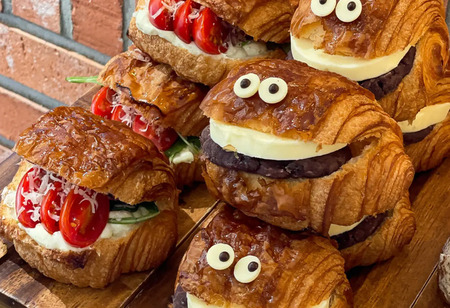
South Korea’s bakery culture has evolved from everyday neighborhood shops into lifestyle destinations that blend food, cafés, tourism, and culture. From global chains such as Paris Baguette and Tous Les Jours to iconic bakeries like Sungsimdang and Lee Sung Dang, the country’s bread scene is winning audiences at home and abroad.
Can a bakery become a tourist attraction? In South Korea, that is far from hypothetical. People queue for famous buns, travel between cities hunting down signature breads, and flock to cafés where the pastries are almost as photogenic as the interiors. In Daejeon, an iconic bakery has even helped give the city a reputation as Korea’s bread capital.
The country’s love affair with baked goods has come a long way from the humble neighbourhood bakery. Today, a Korean bakery can be a breakfast stop, a coffee hangout, a social-media hotspot, a retail brand, or even a reason to plan a weekend trip. Bread has become part of the experience — and brands are finding plenty of creative ways to make that experience memorable.
The secret may lie in Korea’s willingness to play with the familiar. Soft red-bean buns sit alongside kimchi croquettes, cream-filled pastries, savoury sandwiches, and limited-edition creations. Traditional flavours meet global influences, while clever presentation and café culture add another layer to the experience.
The result is a bakery scene that feels less like a category of food and more like a piece of lifestyle culture — one delicious stop at a time.
Why Korea’s Bakery Market is Rising
South Korea’s bakery market is growing as baked goods become a bigger part of everyday meals. According to Spherical Insights & Consulting, the country’s bakery premixes market is projected to reach $ 40.8 million by 2035, growing at a CAGR of 6.50 percent from 2025 to 2035.
Also Read: What Makes South Korea a Trending Abroad Study Destination?
Changing lifestyles are driving demand for fresh, convenient, and packaged bakery products, while trends such as low-sugar and functional foods are shaping new offerings. In January 2026, CU introduced fresh breads including burritos and low-sugar sausage breads with coffee bundle promotions, tapping into the growing ‘cur-bread’ trend of pairing bread and coffee for a quick, affordable breakfast.
From Healthy Loaves to Luxe Bakes
South Korea’s bakery scene is getting a healthier makeover, with more low-sugar, whole-grain, and fiber-rich breads making their way onto shelves. Oats, seeds, and legumes are increasingly finding a place in the mix as consumers look for nutritious options without having to sacrifice flavour. The shift reflects the country’s growing interest in wellness — but thankfully, healthy bread does not have to mean boring bread.
At the same time, premium and handcrafted products are finding their own audience. Consumers are becoming more interested in better ingredients, distinctive flavors, and bakery experiences that feel a little more special. Last year, Paris Baguette launched its premium health bread brand PARAN LABEL nationwide, combining whole grains with advanced fermentation techniques inspired by Nordic baking and tapping into trends such as slow aging and healthy indulgence.
Grab-and-Go Bakes: Bread Meets the Morning Rush
Convenience is becoming a major driver of South Korea’s bakery market, with busy consumers opting for portable options such as stuffed buns, sandwiches, and bite-sized pastries. In December 2025, Starbucks Korea’s Barbecue Two-Cut Beef Sandwich by Yoo Yong-wook sold out on its launch day at Reserve stores, highlighting demand for creative, ready-to-eat bakery offerings.
Convenience stores and retailers are responding with improved packaging, freshness-focused technology, seasonal products, and bakery-and-beverage combinations, making quick bites easier and more appealing for consumers on the go.
What makes these products particularly appealing is their ability to blur the line between a snack and a complete meal, often pairing baked goods with beverages or other food options. Meanwhile, better packaging, freshness-preserving techniques, and limited-edition seasonal launches are giving consumers even more reasons to pick up a bakery treat on the go.
Bakeries Becoming Hangout Spots: Where Coffee, Bread & Community Meet
The bakery boom is often explained as a response to inflation, but there is more to it than finding an affordable treat. At its heart, the trend reflects a simple desire for good food, pleasant surroundings, and a little everyday joy. Cafes and bakeries have become modern “third places” — spaces where people can relax and socialize outside home and work — making them increasingly valuable for brands looking to connect with consumers.
From Luxury Labels to Lifestyle Destinations
It is easy to see why luxury brands are joining the café and restaurant rush. Louis Vuitton, Gucci, and Dior have opened cafés and eateries in major cities, while Valentino partnered with Korean brand Butterful & Creamorous for a pop-up in Shanghai. In New York, Genesis House brings its Korean identity to life through food and tea. Tesla has taken the concept even further with its Tesla Diner, combining EV charging, movies, and casual dining under one roof.
But this growing appetite for experience comes with its own challenges.
The Not-So-Sweet Side of the Bakery Boom
Behind Korea’s bakery boom are a few challenges. Fluctuating prices of ingredients such as flour, dairy, and sugar can squeeze margins, while rapidly changing tastes and social-media trends push bakeries to constantly innovate. For international brands, the challenge is balancing local preferences with a consistent identity. Then there is the cost of location, with prime spots in cities such as Seoul and Busan offering strong footfall but often coming with hefty rents.
Also Read: Nvidia to Deliver Over 260,000 Blackwell AI Chips to South Korea
Yet despite these challenges, the biggest sign of Korea’s bakery obsession may be what happens when a good loaf becomes worth travelling for.
For the Love of Bread: The Great Korean Bread Pilgrimage
In South Korea, bread is more than something to eat — for many enthusiasts, it is a reason to travel. From traditional bakeries making red-bean buns since the 1940s to trendy cafés where salt bread sells out by midday, bakeries have become destinations in their own right.
Known locally as bbang-jisunrae, or “bread pilgrimage,” the trend sees enthusiasts travelling across cities — and sometimes the country — to try famous bakeries and signature bakes.
The trend is even influencing travel patterns. Agoda’s 2026 data showed Goyang recording the biggest increase in accommodation searches among destinations hosting upcoming bakery-related events, followed by Daejeon, Jeongseon, Suwon, and Seoul.
The Cities Worth Travelling for Bread
Goyang saw a 22 percent rise, potentially driven by the 2026 Cafe & Bakery Fair Season 2. Daejeon followed with an 18 percent increase, supported by its reputation as a bread pilgrimage hotspot thanks to Sungsimdang and experiences such as the “Bread Taxi,” which takes visitors on tours of local bakeries. Jeongseon recorded a 17 percent rise, while Suwon saw a 15 percent increase, potentially linked to upcoming coffee and dessert festivals. Together, these destinations show how Korea’s bakery culture is turning a simple trip to the bakery into an experience worth travelling for.
Sungsimdang: The Bakery That Made Daejeon ‘the City of Bread’
If Daejeon has a bakery celebrity, it is undoubtedly Sungsimdang. The nearly 70-year-old bakery helped earn the city its nickname, “the city of bread,” and has turned one humble bun into a must-try attraction.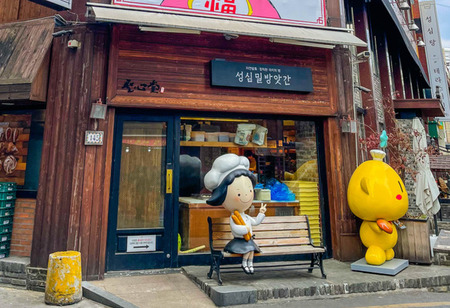
Its star creation is the tuigim soboro — a deep-fried streusel bun filled with sweet red bean paste. Crispy on the outside, soft and sweet inside, it is the kind of treat that makes a “quick bakery stop” surprisingly difficult to keep quick. And despite its fame, Sungsimdang has stayed remarkably affordable, with most breads priced at around 2,000–3,000 won ($1.50–2.50).
The bakery’s popularity has translated into impressive numbers. Revenue crossed 100 billion won in 2022, rising 52 percent from the previous year, with estimates suggesting it could surpass 200 billion won by 2025. What makes the achievement even more striking is Sungsimdang’s deliberately small footprint: just 16 locations, all in Daejeon.
While larger food groups such as CJ Foodville operate around 1,300 outlets across brands including Tous Les Jours, Sungsimdang has chosen not to expand beyond its home city. That regional focus has only made the bakery more special, turning it into a favourite stop for Korea’s growing army of “bread pilgrims” — travellers willing to cross the country for a really good bun.
Paris Baguette: The Bakery That Has a Little Something for Everyone
If there is one bakery chain that feels almost synonymous with everyday life in South Korea, it is Paris Baguette. Run by food giant SPC Group, the chain has around 3,400 locations across the country — meaning you are rarely too far from one.
Launched in 1988, Paris Baguette helped introduce European-style baked goods to Korean consumers and played a major role in shaping the country’s modern bakery culture. But it did not stop at baguettes and loaves. The brand gradually turned the bakery visit into more of an experience, combining fresh bread with coffee, drinks, sandwiches, salads, and cakes.
Its sandwiches, made using traditional sourdough recipes, offered busy consumers something more substantial than a quick snack, while its cream cakes and elaborate Christmas creations became familiar favourites. The brand’s Innovation Lab continues to experiment with new products, including its patented “Korean” yeast.
What makes Paris Baguette particularly interesting is how naturally it fits into everyday Korean life.
It can be a quick breakfast stop, a coffee break, a place to pick up a birthday cake, or simply somewhere to grab a warm pastry.
In doing so, the brand helped turn the humble bakery into something much bigger — a convenient little part of daily life.
Tous Les Jours: Taking Korea’s Bakery Culture Abroad
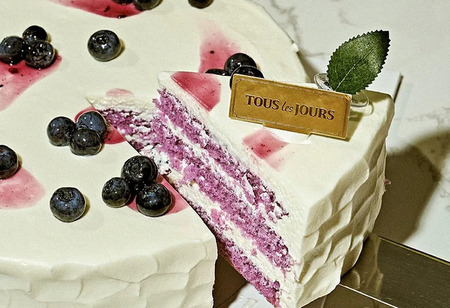 The name Tous Les Jours means “every day” in French, and that is pretty much the idea behind the brand: fresh bread that feels like an everyday treat. Launched by CJ Foodville in 1997, Tous Les Jours opened its first store in Guri/Gyomun and reached its 1,000th Korean outlet by 2008.
What set the brand apart was its focus on baking in the store rather than simply bringing in bread made elsewhere. Specially formulated flour, natural sea salt, xylose sugar, and traditional baking methods were used to create products with a homemade feel. More importantly, customers could see — and smell — the bread being baked fresh, turning a simple bakery visit into a small sensory experience.
And the brand did not keep that experience confined to Korea. Tous Les Jours entered the US in 2004, followed by China in 2005 and Vietnam in 2007, before expanding into markets including Indonesia, the Philippines, Cambodia, Malaysia, Singapore, and Mongolia.
Today, Tous Les Jours has grown into an international bakery brand, but its appeal still comes down to something wonderfully simple: fresh bread, straight from the oven, whenever you fancy it.
Also Read: South Korea, Vietnam Strengthen Nuclear Energy, Tech Partnership
Lee Sung Dang: A Bite of Gunsan’s History
Some bakeries sell bread; others become part of a city’s story. Lee Sung Dang belongs firmly in the second category. Established in 1945 in Gunsan, North Jeolla Province, it is recognized as Korea’s oldest bakery and remains one of the city’s most beloved attractions.
Its best-known treats include yachaeppang, a savoury vegetable-filled bun, and danpatppang, a soft bun packed with sweet red bean paste. But the appeal goes beyond what is on the counter. With its vintage interiors and decades of history, walking into Lee Sung Dang can feel a little like stepping into another era.
The bakery has become closely woven into Gunsan’s identity and local tourism, even earning recognition from the Korean government as a key tourist destination. It is also a popular stop for Korea’s growing ppangji sullye — or “bread pilgrimage” — culture, where bakery lovers travel to specific cities in search of famous bakes.
While Lee Sung Dang has expanded beyond its original store, the Gunsan location at 177 Jungang-ro remains its cultural heart. The bakery also places emphasis on local ingredients and working with nearby farmers, strengthening its connection with the community.
In other words, Lee Sung Dang offers something a little more special than a good bun: a bite of Gunsan’s history.
Soha Salt Pond: Turning a Salt Farm into a Cafe
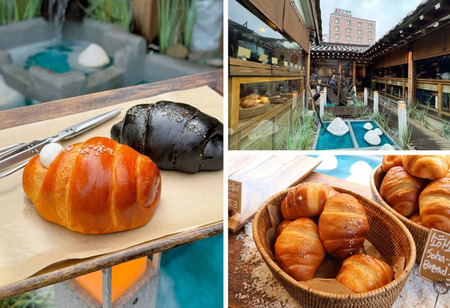 If you have spent any time scrolling through Seoul café recommendations, chances are you have seen Soha Salt Pond. Tucked into the café-filled streets of Ikseon-dong, this visually striking bakery-café is hard to miss — partly because of its charming hanok setting and partly because there are actual piles of salt around it.
And that is precisely the point. The entire space is inspired by a traditional salt farm, or yeomjeon. Set within a Korean hanok courtyard, the café features a miniature salt pond, salt mounds, bamboo partitions, reclaimed wood, and other details inspired by traditional salt-making. The Korea Tourism Organization has highlighted the distinctive interior as part of the café’s appeal.
Rather than simply placing a modern café inside an old building, the designers reimagined the hanok to resemble a traditional salt-pond storage facility. The result is part bakery, part café, and part visual experience — the kind of place where customers come for a pastry but inevitably end up taking a few photos too.
Soha Salt Pond captures a growing side of Korea’s café culture: sometimes, the setting is just as important as what is on the plate.
South Korea’s bakery boom shows how far a humble loaf can go when brands sell more than just bread. From Paris Baguette’s everyday appeal and Tous Les Jours’ global reach to Sungsimdang’s local following and Soha Salt Pond’s visual charm, each has found its own way to make bakery culture memorable.
The bigger lesson is simple: in Korea, bread has become an experience — shaped by flavour, craftsmanship, place, culture, and a little creativity. And for consumers, that can make a bakery stop feel like much more than a bakery stop.