


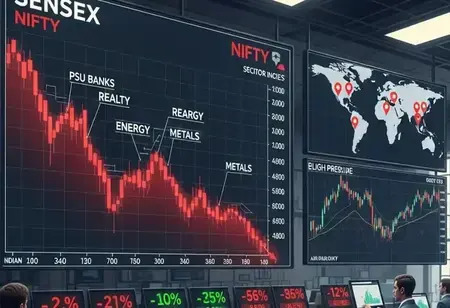
 Asia's main stock indices fell dramatically today due to the sizable increase in global oil prices and the worldwide turmoil in West Asia after the U.S., Israel and Iran have been at war for one month. The Hang Seng Index (Hong Kong) fell 1.69 percent to 24,533; the Weighted Index fell 1.86 percent to 32,488; and the Singapore Straits Times Index also fell by 0.26 percent to 4,885.
The situation has arisen out of major conflict in West Asia and continues to spiral out of control and create problems with inflation and global economic stability. The conflict has interrupted delivery of energy products worldwide. Energy delivery disruptions will result in reduced energy supplies and dramatically increased prices for all countries.
Ajay Bagga, a well-known banking and stock market expert, said that "there are three financial crises that are all happening at the same time right now. The extent of these crises is unknown and it is not yet known how they will interrelate with each other. The scale of some crises could equal the full-blown financial collapse of 2008 or the Dot-Com Crash 2.0."
Massive private credit risk exists and retail investors are currently being dealt with concerning multiple funds suspending their redemptions at once. This would be a historically large energy disruption without an off ramp.
Also Read: Ricoh Hong Kong names Ricky Chong Managing Director from April 2024
Bagga further added that the bond markets are struggling to price the risks of record debt, high fiscal deficits, increasing inflation and decreasing economic output while the actions of the central banks become less and less effective.
Also Read: Zuellig Pharma and Karo Healthcare Strengthen Partnership in Asian Markets
In addition, the UN has expressed concerns about the overall impact of the crisis on the globe. A spokesperson for the UN, Stephane Dujarric, said that Secretary-General Antonio Guterres has created a task force to address the disruption of maritime shipping traffic through the Strait of Hormuz.
Also Read: Hyundai Heavy Industries Expands into Southeast Asian Naval Ship Market
The UN warned that the continued disruption of this important shipping lane could have a devastating impact on the supply of agricultural products and humanitarian aid across many countries.