


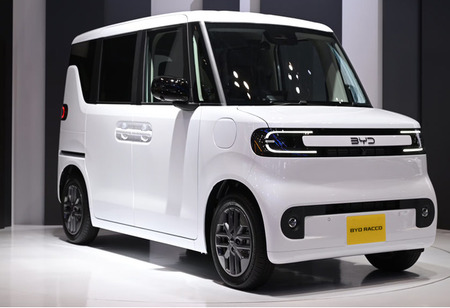
China’s BYD Co is introducing a compact electric vehicle to its range in Japan, aiming to compete with local brands in the nation’s key vehicle segment.
With subsidies included, the base model Racco will be priced at under ¥2 million ($12,210) and provide a minimum range of 210 kilometers (130 miles), stated BYD Auto Japan's CEO, Atsuki Tofukuji, on Tuesday. That places it within reach of Nissan Motor Co’s Sakura — the top-selling EV in Japan.
Affordable and super-small “kei” cars, or light vehicles, make up almost 40 percent of new car sales in Japan. Typically provided as micro vans or trucks, they present an affordability and adaptability suited to the island nation's narrow alleys and rural roads. New gas-engine models start at just ¥1.2 million.
Also Read: Lee Meets Big Tech CEOs for Greater Roles in Korea's AI Plans
Launching a minicar positions BYD alongside the nation’s largest automakers in their domestic market, which has seen limited success from foreign brands. The launch of a kei car indicates that BYD is not retreating from Japan, despite a disappointing beginning since arriving in the country over three years ago.
“Automakers are positioning minicars as a practical entry point, as shorter daily driving distances ease battery requirements and range concerns,” according to BI’s Tatsuo Yoshida and Marie-Christine Yoko Huss.
The small car has attracted a dedicated fan base among certain enthusiasts in the US. They’ve also captured the attention of US President Donald Trump, who last year advocated for Asia’s "adorable" smaller cars to be manufactured and sold in the US, despite worries regarding their safety on American roads.
Also Read: Vietnam Proposes Banning Under-16s from Posting on Social Media
Electric vehicles have encountered a lukewarm response from Japanese consumers, making the Racco's journey difficult as both a foreign brand and a fully electric model.
Nissan's Sakura, accounting for 22 percent of Japan's total EV sales in 2025, is priced from approximately ¥2.44 million and offers a maximum range of 180 kilometers on a full charge. Honda's all-electric compact vehicle — named the “N-One e:” — begins at approximately ¥2.7 million.
Nonetheless, both qualify for significant subsidies that can greatly reduce the price, depending on the location of purchase. For instance, the discount price of a new Sakura bought in Tokyo may drop under ¥1 million.
BYD’s Racco starts at ¥2.15 million, while the premium version approaches ¥2.5 million. Tofukuji stated that all variants will qualify for ¥150,000 in EV incentives. Non-Japanese brands account for only a small portion of new car sales, even with significant attempts by major global companies like Jeep-parent Stellantis NV and Hyundai Motor Co. European brands such as BMW AG and Mercedes-Benz Group AG have been more effective in establishing a niche market for foreign luxury vehicles.
Also Read: Align Partners' BNK-JB Merger Draws Fierce Regional Opposition
Nonetheless, BYD has consistently broadened its range of models and developed a dealership network since it started selling passenger vehicles in Japan over three years ago.
BYD Japan President Liu Xueliang informed reporters in Tokyo that the automaker is set to deliver 10,000 vehicles in Japan by the end of this month. The firm has set up 77 sales sites nationwide, comprising 56 authorized dealerships.
In January, the Chinese electric vehicle giant announced plans to include two hybrids in its Japanese offerings as it aims to increase sales. The Atto 2 and Seal 6 models would join an eight-car lineup that BYD promised to launch in Japan.