


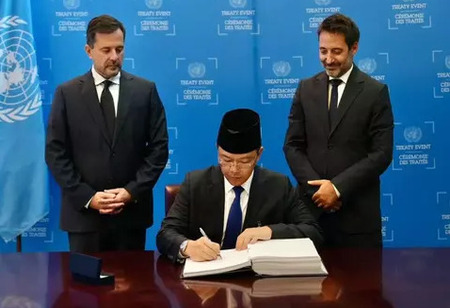
Indonesia has ratified the United Nations Convention against Cybercrime, aligning itself with 90 other nations in supporting the UN’s initial worldwide framework aimed at addressing transnational digital crimes.
Indonesia's Foreign Minister Sugiono emphasized that the treaty offers a significant legal framework for Indonesian law enforcement to enhance international collaboration in combating transnational crimes, such as online fraud, online gambling, and child sexual abuse or exploitation materials.
Also Read: Kyndryl Appoints Megawaty Khie as Asean and Korea Managing Director
The convention, officially adopted on December 24, 2024, after discussions that commenced in 2019, acts as a legal basis for global collaboration against cybercrime and the exchange of electronic evidence.
Indonesia was instrumental during the drafting phase, acting as both negotiator and rapporteur through its diplomatic mission in Vienna.
Although 91 signatories have endorsed the treaty, three countries have finalized the full ratification. The convention will come into effect 90 days after 40 member states submit their instruments of ratification, acceptance, approval, or accession.
Sugiono, heading the Indonesian delegation in New York, stated that Jakarta is currently gearing up to commence the domestic ratification process and harmonize the treaty's terms with national laws. Moreover, the Foreign Minister is set to present Indonesia’s national statement ahead of the UN General Debate.
Also Read: LS Electric Deploys Robotic Dogs for Smarter Factory Automation
Furthermore, Indonesia's Foreign Minister Sugiono emphasized the nation’s experience in fostering peace in Aceh and Maluku through continuous dialogue at the Peacebuilding Commission (PBC) Ministerial Meeting in New York.
Sugiono stated that peacebuilding is a long-term commitment to lasting peace, starting with prevention and extending through recovery and reconciliation.
Every phase of peacebuilding must reinforce national institutions and the social fabric as a basis for enduring peace. Sugiono stated that the PBC was established to assist countries by uniting expertise, political backing, and resources, noting that it could aid in converting national peacebuilding goals into ongoing and consistent international support.
Also Read: Vinatom Strengthens International Nuclear Energy Cooperation
Sugiono urged the PBC to deliver more robust strategic guidance and enhance alignment with the efforts of the UN General Assembly, Security Council, and Economic and Social Council (ECOSOC). He also encouraged the commission to utilize the experiences of nations, especially those from the Global South, focusing on reconciliation, institutional development, recovery, and prevention.