


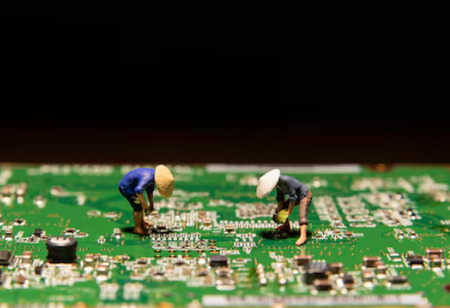
The ongoing turmoil in the Middle East has severely interrupted the supply chain of essential raw materials, consequently leading to a rise in the prices of printed circuit boards (PCBs).
These components are integral to nearly all electronic devices, including smartphones, computers, and AI servers.
Also Read: Vietnam and Ireland Seek Ways to Step Up Bilateral Cooperation
The interruption poses a new challenge to electronics producers, who are already dealing with the escalating costs of memory chips, underscoring the widening effects of the conflict involving Iran, which has severely disrupted supply chains, alongside plastics and oil resources.
In early April, Iran targeted the Jubail petrochemical complex in Saudi Arabia, resulting in the suspension of high-purity polyphenylene ether (PPE) resin production - an essential precursor used in the production of PCB laminates.
SABIC, responsible for around 70 percent of the global supply of high-purity PPE and operating within the Jubail complex on the Gulf coast, has not been able to recommence production, significantly constraining the worldwide availability of this material.
Additionally, the conflict has caused substantial interruptions to shipping activities into and out of the Gulf region. Since the latter part of last year, the cost of PCBs has been on an upward trajectory, spurred by an increasing demand for AI servers.
Also Read: Japan Removes Restrictions on Weapon Exports in Policy Shift
Since March, this demand has intensified significantly as manufacturers rush to procure raw materials and mitigate the effects of rapidly rising expenses. Goldman Sachs analysts noted in a recent report that PCB prices experienced a significant increase of up to 40 percent within the month of April compared to March.
Cloud service providers, anticipating that demand will exceed supply in the years ahead, are prepared to accommodate additional price hikes. According to a recent Prismark report, the worldwide printed circuit board (PCB) sector is anticipated to grow by 12.5 percent, culminating in a valuation of $95.8 billion by the year 2026.
The substantial increase in PCB prices was also influenced by a deficiency in other essential materials, such as glass fiber and copper foil. The price of copper foil has escalated by up to 30 percent since the beginning of this year, with the upward trend intensifying in March.
Also Read: Mercedes-Benz Unveils Electric C-Class at World Premiere, Seoul
According to Victory Giant Technology, a prominent Chinese supplier of PCBs to Nvidia, copper constitutes approximately 60 percent of the overall raw material expenses in PCB production. Earlier this month, the Chinese company cautioned that the ongoing conflict in the Middle East might lead to an increase in the prices of essential materials, such as resin and copper.