


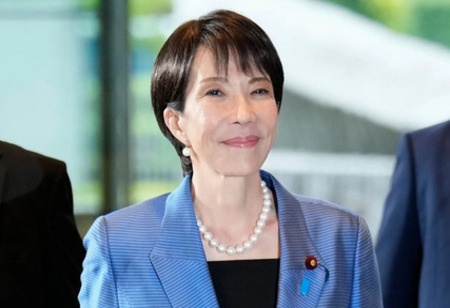
Prime Minister Sanae Takaichi announced during an online summit with Southeast Asian countries that Japan will allocate $10 billion, equivalent to approximately 1.6 trillion yen, to support the maintenance of supply systems for medical supplies and critical goods produced in the region.
In the midst of the continuing conflicts in the Middle East, the objective is to strengthen the acquisition of crude oil in Asia and avoid any potential disruptions in the supply of necessary goods to Japan.
Also Read: Korea, Poland Discuss Middle East, Defense Cooperation at Summit
A conference focused on the "Asia Zero Emission Community" to address energy concerns in Asia took place. Takaichi participated in the meeting alongside prominent figures from Thailand, Vietnam, Malaysia, the Philippines, and other countries.
Takaichi delineated Japan's assistance initiatives within the framework of a "partnership aimed at enhancing Asia's energy and resource supply resilience," categorizing the initiatives into immediate responses to the energy crisis and long-term measures like the accumulation of crude oil reserves.
After the summit, Takaichi briefed the press on the issuance of a chair's statement that reflected the discussions conducted during the meeting. She underscored the significance of financial assistance, affirming that bolstering the supply chains of Asian nations "positively impacts the Japanese economy.
The oil reserves in Southeast Asia countries are relatively smaller compared to Japan's reserves, leading to a growing tension in the balance between supply and demand for crude oil and naphtha, a key raw material in plastic production.
Production operations in the area face the possibility of disruption, with certain petrochemical facilities already halted. This situation has caused a growing sense of urgency within Japan's healthcare industry, which heavily depends on critical petroleum-based materials sourced from Asia, such as containers, tubing, and gloves.
Due to existing legal restrictions and various external factors, Japan is unable to export its own domestic crude oil reserves. As a result, the Japanese government intends to assist Southeast Asian nations in their endeavors to procure crude oil.
Also Read: Qatar Vows to Remain Reliable Energy Supplier to India
The primary focus of the support provided by Japan will revolve around monetary aid to facilitate Asian firms in obtaining crude oil from regions beyond the Middle East, such as the United States. Loans will be sourced from the government-affiliated Japan Bank for International Cooperation, as well as through loan guarantees provided by Nippon Export and Investment Insurance, among other measures.
The government aims to tackle underlying problems by offering assistance for the establishment of storage tanks and implementing additional strategies to enhance the capacity of crude oil reserves in the Asian region. Additionally, efforts will be made to encourage the utilization of power generation systems fueled by liquefied natural gas and biofuels in order to broaden the sources of energy.
Takaichi aims to enhance collaborative partnerships with Southeast Asian nations and other countries using this cooperative framework, in order to promote Japan's foreign policy vision of a "Free and Open Indo-Pacific."
Also Read: Indonesia and Russia Bolster Economic Cooperation through WGTII
Asian nations face the challenge of ensuring their access to fresh supplies of crude oil, potentially from countries like the US. The construction of essential elements like storage facilities and infrastructure is a time-consuming process, therefore obstacles persist in effectively addressing urgent crises.