


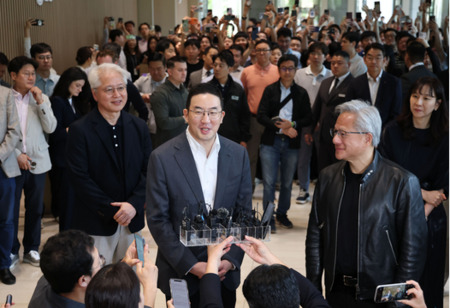
LG Group Chairman Koo Kwang-mo plans to meet with Nvidia Corp. CEO Jensen Huang in Silicon Valley next week, representing an important advancement in their strategic collaboration centered around artificial intelligence infrastructure and advanced robotics.
Reports indicate that the crucial summit will determine investment amounts and set definitive development schedules for next-generation physical AI applications.
Also Read: Top Leader Urges Stronger Planning for Modern Infrastructure
LG Group Chairman Koo Kwang-mo is set to meet Nvidia Corp. CEO Jensen Huang in Silicon Valley next week, highlighting a significant advancement in their strategic alliance centered on artificial intelligence infrastructure and cutting-edge robotics.
The upcoming meeting in California comes after a crucial meeting between the two leaders in Seoul on June 8, 2026, during which Huang pledged Nvidia's collaboration with LG Group on humanoid robots and advanced data centers. In that initial conversation, limited time hindered in-depth technical discussions, leading Huang to extend a personal invitation to Koo for extensive follow-up meetings at Nvidia's headquarters. This swift series of executive meetings highlights the importance both conglomerates assign to leading the developing physical AI industry.
Also Read: Saudi Arabia Names Maritime Defense Alliance Commander
Reports suggest that the discussions will primarily concentrate on merging Nvidia’s cutting-edge GPU designs with LG’s production and robotics frameworks. The partnership seeks to speed up the implementation of autonomous systems in smart factories, logistics centers, and ultimately in consumer spaces. For LG, obtaining preferential access to Nvidia’s advanced silicon is crucial for sustaining its competitive advantage over competitors such as Samsung and Hyundai in the fast-changing robotics sector.
The collaboration goes well beyond just consumer electronics. LG CNS, the IT services division of the group, is anticipated to be instrumental in creating the AI data center framework needed to train the enormous neural networks that drive humanoid robots. Nvidia's Omniverse platform, which supports digital twin simulations for training robots, is expected to be a central element of this collaborative development initiative.
The partnership aims to merge LG's expertise in hardware manufacturing with Nvidia's strength in software and chips, fostering a vertically integrated ecosystem that can rival established competitors such as Boston Dynamics and Tesla's Optimus initiative.
The monetary consequences of this agreement are significant. Although specific investment amounts are confidential, industry experts suggest that partnerships in AI infrastructure might need financial investments surpassing $1 billion within the next three years. This funding will support specialized manufacturing facilities, sophisticated sensor integration laboratories, and the large computational clusters required for real-time robotic analysis.
Also Read: India, Sri Lanka Advance FTA Talks During Vikram Misri’s Visit
The economic consequences of this agreement are significant. Although exact investment numbers are not disclosed, industry experts predict that partnerships in AI infrastructure may need financial commitments surpassing $1 billion within the next three years. These funds will support dedicated manufacturing plants, enhanced sensor integration laboratories, and large computational clusters essential for immediate robotic analysis.